Cover letter examples scholarship applications need to showcase your academic achievements, financial need, and career goals immediately. You’ll state your GPA and major upfront. Then you’ll explain why you deserve this specific scholarship. Finally, you’ll connect your goals to the scholarship’s mission. Strong scholarship cover letters prove you’re the investment they’re looking for.
Most students write generic scholarship letters. They copy templates without customization. You’re competing with hundreds of other applicants for limited funds. Your cover letter needs to prove you’re worth choosing over everyone else.
Research from the National Scholarship Providers Association shows selection committees spend 2-3 minutes per application initially. That opening paragraph determines everything. Weak cover letters get eliminated before anyone reads your essays or transcripts.
What Makes Scholarship Cover Letters Different
Scholarship cover letters aren’t job applications. You’re not selling work experience. You’re proving you deserve financial investment in your education and future. Understanding this distinction helps you write targeted letters.
Proving Your Academic Merit
Scholarship committees want students who’ll succeed academically. Your cover letter should lead with your strongest academic credentials immediately. Don’t bury your GPA three paragraphs in.
Open with achievements like maintaining a 3.8 GPA while working 20 hours weekly, ranking in top 10% of your graduating class, earning AP Scholar or National Merit recognition, completing advanced coursework in your intended major, or receiving academic awards or departmental honors.
Get specific about academic accomplishments. “Maintained 4.0 GPA in all biology courses while volunteering 15 hours weekly at free clinic” proves capability through context. “Strong academic performance” proves nothing. Understanding opportunities across basic industries helps you connect education to career paths.
Demonstrating Financial Need
Most scholarships consider financial circumstances. Your letter should address need honestly without sounding desperate or making excuses.
Explain your financial situation through facts rather than emotions. Talk about family income affecting college affordability, working to help cover educational expenses, siblings in college creating multiple tuition burdens, or circumstances like medical expenses impacting family finances.
Be factual without oversharing. “Working 25 hours weekly to contribute $400 monthly toward tuition while maintaining full course load” shows need through numbers. Long stories about financial struggles lose impact.
Connecting to Scholarship Mission
Every scholarship has specific goals. Some support first-generation students. Others encourage STEM fields. Many honor particular values or communities. Your letter must connect your story to their mission.
Research the scholarship thoroughly. Reference their specific criteria in your letter. Show how you embody what they’re looking for. If they support community service, emphasize your volunteer work. If they encourage minority students in engineering, connect your background to their goals.
Generic letters fail. “I would be honored to receive your scholarship” could apply anywhere. “Your scholarship’s mission supporting rural students pursuing healthcare careers aligns perfectly with my goal of returning to my hometown as a family physician” shows genuine connection. Following professional standards applies throughout scholarship applications.
Essential Elements of Scholarship Cover Letters
Structure your letter addressing what selection committees evaluate. Each section should prove you’re worth their investment in specific, measurable ways.
Opening Paragraph Impact
Start with the scholarship name and your intended major. State your academic standing immediately. Mention one compelling reason you’re applying.
Try something like this. “I’m applying for the [Scholarship Name] as a biology major pursuing pre-med studies. I’ve maintained a 3.9 GPA while working 20 hours weekly and volunteering at our community health clinic. Your scholarship’s focus on supporting first-generation college students in healthcare perfectly matches my background and goals.”
This opening proves you’re qualified academically, demonstrates work ethic, shows relevant experience, and connects to their mission. You’ve answered their key questions in four sentences.
Academic and Extracurricular Achievements
Your middle section details accomplishments proving you’ll succeed. Focus on achievements showing dedication, leadership, and alignment with scholarship values.
Highlight relevant accomplishments through specific examples:
- Academic honors like Dean’s List, honor society membership, or subject awards
- Leadership positions in student organizations or community groups
- Volunteer work especially related to your field or their mission
- Research experience or independent projects in your discipline
- Part-time work demonstrating responsibility and time management
- Overcoming obstacles showing resilience and determination
Quantify everything possible. “Led 15-member environmental club organizing campus recycling program reducing waste 40%” beats “active in environmental club” every time. Numbers prove impact. Like understanding resume formatting, specificity strengthens scholarship applications.
Career Goals and Impact Vision
Scholarship committees invest in your future. Explain what you’ll do with your education. Connect your goals back to their mission when possible.
Describe your career aspirations specifically. Don’t just say “I want to help people” or “I hope to make a difference.” Explain exactly what you plan to do and why.
Example career goal statements include pursuing aerospace engineering to develop sustainable aviation technology, becoming a bilingual social worker serving immigrant communities, researching pediatric cancer treatments at academic medical centers, or teaching mathematics in underserved rural schools.
Make your goals concrete and achievable. Selection committees want students who’ll actually follow through, not dreamers with vague aspirations.
Professional Closing Statement
End by thanking them for considering your application. Restate why you’re an excellent investment. Provide contact information clearly.
Keep your closing confident but humble. Express genuine gratitude for the opportunity. Reference your attached documents like transcripts or recommendation letters.

Common Scholarship Cover Letter Mistakes
These errors kill scholarship applications before committees finish reading. Avoiding them puts you ahead of most applicants making the same predictable mistakes.
Writing Generic Template Letters
Copy-pasting scholarship letter templates without customization fails immediately. Committees read hundreds of applications. They spot generic letters instantly.
Generic phrases that scream template include “I am writing to apply for your scholarship,” “I would be honored to receive this award,” or “education is important to me.” These could apply to any scholarship anywhere.
Customize every letter specifically. Reference the scholarship by name. Mention their specific mission or values. Connect your unique story to their unique goals. Make it impossible for this letter to work for any other scholarship.
Focusing Only on Need
Financial need alone doesn’t win scholarships. Committees want students who’ll succeed academically and make an impact. Your letter needs to balance need with merit.
Don’t make your entire letter about struggling financially. Lead with achievements. Demonstrate capability. Then explain how financial constraints limit your access to the education you’ll use well.
Position need as a barrier you’re determined to overcome, not an excuse for lower performance. “Despite working 30 hours weekly, I’ve maintained a 3.7 GPA and leadership role in student government” shows drive. Just listing financial hardships doesn’t.
Ignoring Instructions
Scholarship applications include specific requirements. Length limits. Required topics to address. Formatting guidelines. Ignoring these gets you eliminated automatically.
Read instructions carefully. If they ask for 500 words, don’t submit 800. If they want you to address community service, make sure you discuss it prominently. If they require specific formatting, follow it exactly.
Attention to instructions proves you’re responsible and detail-oriented. Ignoring them suggests you won’t follow through if selected. Similar to knowing when to follow up on applications, following instructions shows professionalism.
Download Scholarship Cover Letter Templates
We’ve created five scholarship cover letter templates for different situations and scholarship types. Each template balances academic achievement with personal story appropriately.
Each template comes in DOCX, PDF, and TXT formats. Customize them with your specific achievements and target scholarship details.
Tailoring for Different Scholarship Types
Merit-based, need-based, and specific-purpose scholarships want different emphasis. Your letter should reflect what each scholarship values most.
Merit-Based Scholarship Letters
Merit scholarships reward academic excellence, leadership, or achievement. Your letter should lead with accomplishments and minimize financial need discussion.
Focus heavily on GPA, test scores, academic honors, leadership positions, research or creative work, competition wins or recognition, and advanced coursework or special programs.
Financial need becomes secondary or omitted entirely. These scholarships reward achievement regardless of financial circumstances. Prove you’re the most accomplished applicant.
Need-Based Scholarship Applications
Need-based scholarships prioritize financial circumstances. Your letter should address need honestly while still proving academic capability.
Explain your financial situation factually. Discuss family income, siblings in college, work hours to support education, or special circumstances affecting finances. But also prove you’ll succeed academically despite financial challenges.
Balance need with achievement. Show you’re both deserving of help and likely to use it well. Understanding compensation across specialized fields helps students evaluate career paths.
Field-Specific or Mission-Driven Scholarships
Many scholarships support specific majors, career paths, or underrepresented groups. Your letter must align your identity and goals with their mission clearly.
Research their values thoroughly. If they support women in engineering, emphasize both your gender and engineering passion. If they fund rural healthcare students, connect your background to underserved community needs.
Make the alignment explicit. Don’t assume they’ll connect the dots. Spell out exactly how you embody what they’re trying to support.
Optimizing Your Scholarship Applications
Beyond cover letters, your entire scholarship application package needs coordination. These strategies help students create competitive applications.
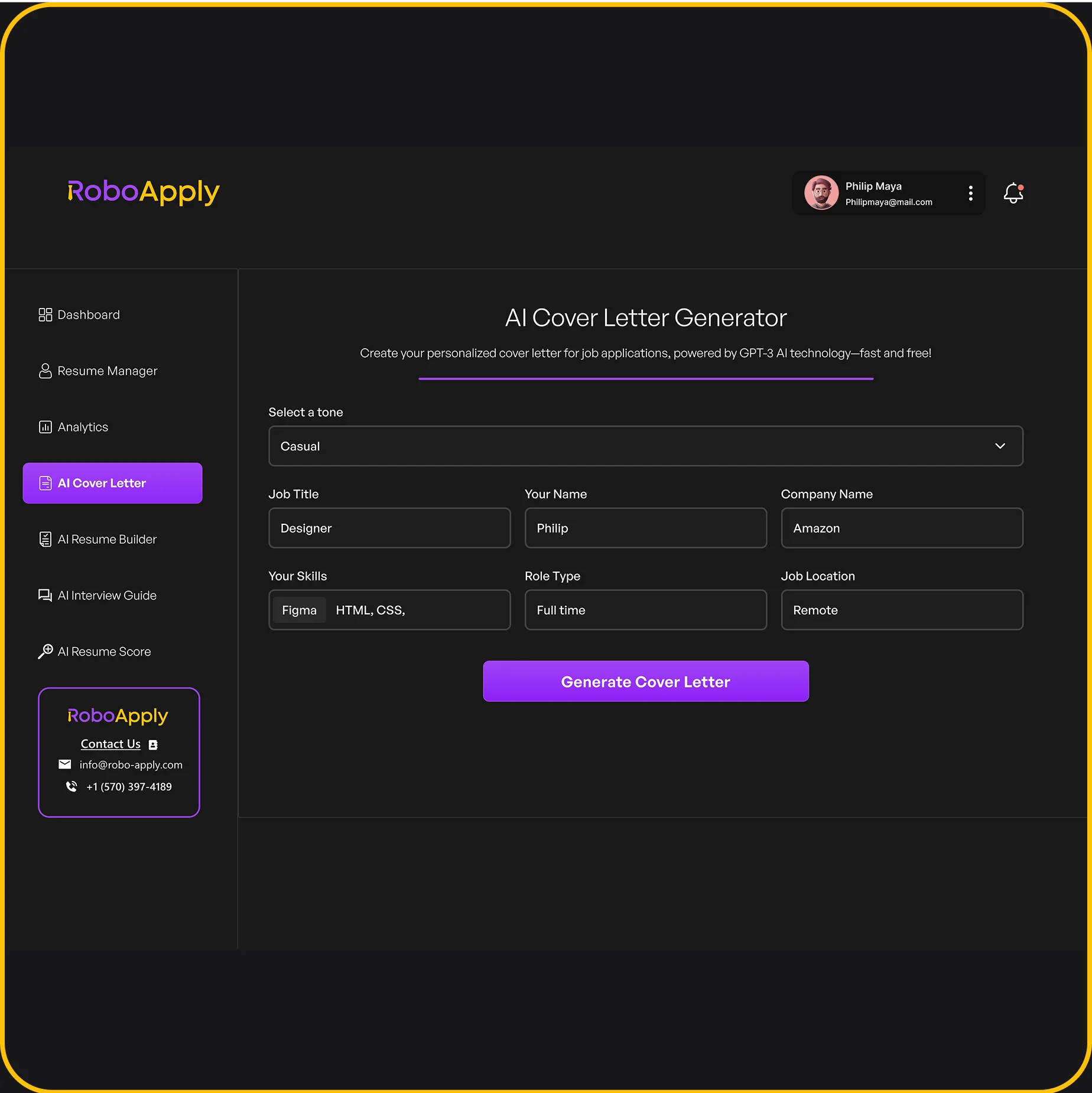
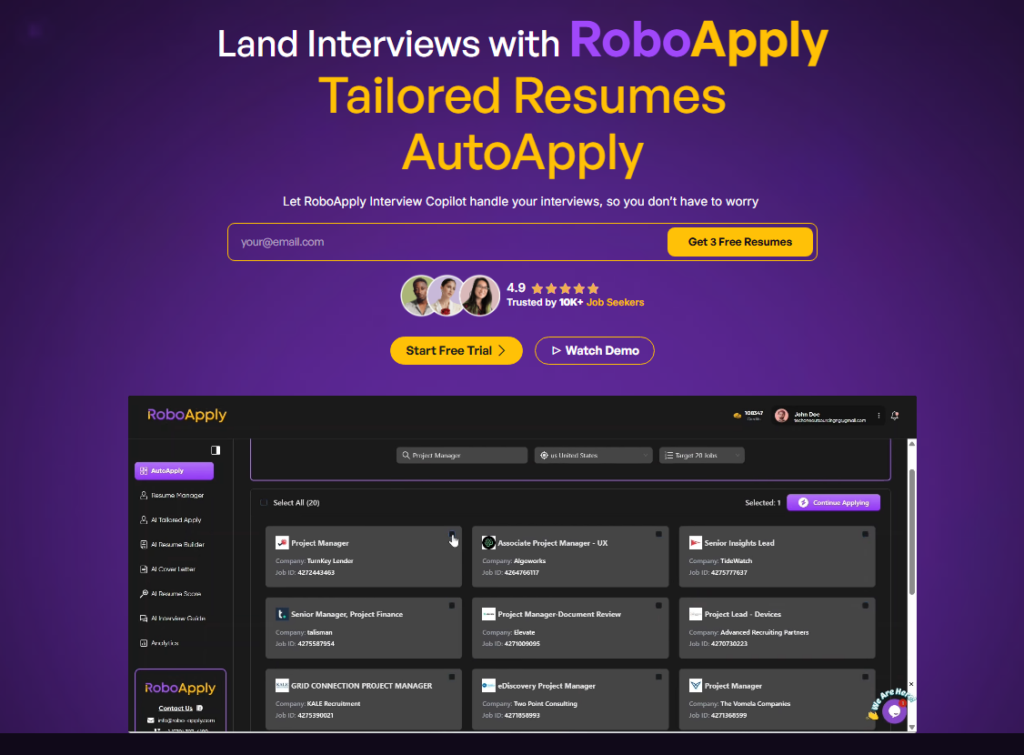
RoboApply’s AI Cover Letter Generator helps create scholarship-specific letters quickly. The platform adapts your achievements to each scholarship’s mission and values naturally.
The AI Resume Builder formats your academic background for scholarship committees. Your achievements appear prominently in formats they expect and understand.
AI Auto Apply manages applications across multiple scholarship opportunities efficiently. You’re not manually filling forms repeatedly. The platform handles submissions while you focus on essays.
Frequently Asked Questions
What should a scholarship cover letter include?
Include academic achievements, career goals, financial need if relevant, connection to scholarship mission, extracurricular involvement, and why you specifically deserve this award over others.
How long should scholarship cover letters be?
Follow their guidelines exactly. Most want 300-500 words, approximately one page. Never exceed stated limits. Concise letters respecting instructions perform better.
Should I mention financial need in scholarship letters?
For need-based scholarships, yes. For merit-based awards, only if instructions request it. Lead with achievements either way, then address need factually.
Can I use the same letter for multiple scholarships?
No, customize each letter for the specific scholarship. Reference their name, mission, and values. Generic letters get rejected. Personalization shows genuine interest.
Do scholarship cover letters need formal tone?
Yes, maintain professional tone while letting personality show. Balance respect with authenticity. Avoid slang but don’t sound robotic. Be yourself professionally.