What is a corporate job? A corporate job is employment at a large company or corporation, typically working in structured office environments with defined roles, hierarchies, and benefits packages. You’ll work regular business hours, receive health insurance and retirement plans, and have opportunities for advancement through promotions. Corporate jobs span industries from finance to tech to healthcare.
Most people use “corporate job” to mean working for big companies rather than small businesses or startups. You’re part of an established organization with formal processes, multiple departments, and clear career ladders. Think Fortune 500 companies, multinational corporations, or large regional firms.
Research from the Bureau of Labor Statistics shows over 60% of American workers are employed by companies with 100+ employees. Corporate jobs dominate the employment landscape. Understanding what they involve helps you decide if this path fits your goals.
Understanding Corporate Work Environments
Corporate environments operate differently from small businesses or startups. The structure, benefits, and culture at large companies create unique working conditions that shape your daily experience and long-term career trajectory.
Organizational Structure and Hierarchy
Corporate jobs exist within defined organizational charts. You report to specific managers who report to directors who report to executives. This chain of command affects how decisions get made and how work flows.
Most corporate hierarchies follow this progression:
- Entry-level positions including analysts, coordinators, and associates
- Mid-level roles like managers, senior analysts, and specialists
- Upper management including directors and senior managers
- Executive leadership such as VPs, C-suite officers, and presidents
You’ll usually start at entry level and work your way up over years or decades. Promotions follow somewhat predictable timelines. Three to five years in one role before moving up is common. Understanding opportunities across basic industries helps you compare corporate paths to other options.
Standard Benefits and Compensation
Corporate jobs typically offer comprehensive benefits packages that small businesses can’t match. This is one of the biggest draws to corporate employment for many people.
Benefits at large corporations usually include:
- Health insurance with employer contributions covering 60-80% of premiums
- Dental and vision insurance often fully employer-paid
- 401(k) retirement plans with company matching of 3-6%
- Paid time off starting at 2-3 weeks annually
- Sick leave separate from vacation time
- Life insurance and disability coverage
- Tuition reimbursement for relevant education
According to the Society for Human Resource Management, benefits packages at large corporations average 30-40% of total compensation on top of salary. This adds serious value beyond your paycheck.
Corporate Culture and Expectations
Corporate culture varies widely by company and industry. Some corporations embrace casual cultures with flexible schedules. Others maintain formal environments with strict dress codes and rigid hours.
You’ll probably spend significant time in meetings. Email becomes your primary communication method. Documentation and reporting happen constantly. These patterns feel normal in corporate environments but might frustrate people used to more flexible settings. Following professional standards throughout corporate applications helps you succeed.

Types of Corporate Jobs
Corporate jobs span every business function imaginable. Understanding major categories helps you identify which areas might interest you based on your skills and preferences.
Corporate roles break down into several core functional areas:
- Finance and accounting handling budgets, financial reporting, and strategic planning
- Marketing and communications managing brand strategy, advertising, and public relations
- Human resources recruiting talent, managing benefits, and overseeing training
- Operations and supply chain keeping products moving and services running
- Information technology maintaining systems, developing software, and managing cybersecurity
- Sales bringing in revenue through client relationships and new business
- Legal and compliance handling contracts, regulations, and risk management
Each functional area offers its own career ladder. You might start as a financial analyst and work toward becoming a CFO eventually. Or begin in HR coordination and progress to Chief Human Resources Officer over decades. Like understanding resume formatting properly, knowing corporate structures helps you navigate applications.
Advantages of Corporate Jobs
Corporate employment offers specific benefits that other work arrangements struggle to match. These advantages significantly impact long-term career satisfaction and financial security for millions of workers.
Job stability tends to run higher at large corporations compared to startups or small businesses. Established companies weather economic downturns better. Your position is less likely to disappear overnight because of funding issues or market changes.
Career advancement opportunities exist through structured promotion paths. You can see where your career might go five or ten years out. Training and development programs help you build skills. Lateral moves between departments let you explore different areas without leaving the company.
Higher earning potential comes through regular raises, bonuses, and stock options at many corporations. Salaries at big companies often exceed what small businesses pay for similar roles. Benefits packages add tremendous value on top of base compensation.
Professional networking happens naturally when you work with hundreds or thousands of colleagues. You’ll build relationships across departments and industries. These connections help throughout your career. Understanding compensation across specialized fields gives you perspective on corporate earning potential.
Disadvantages of Corporate Jobs
Corporate environments aren’t perfect for everyone. Understanding potential drawbacks helps you make informed decisions about whether this career path suits your personality and goals.
Common corporate frustrations include these challenges:
- Bureaucracy and slow decision-making requiring multiple approval layers
- Limited autonomy following established procedures rather than creating approaches
- Office politics navigating interpersonal dynamics and competing priorities
- Diluted impact feeling like a small cog in a huge machine
- Rigid processes that prevent innovation and creative problem-solving
Work-life balance varies tremendously by company and role. Some corporations respect boundaries and encourage time off. Others expect constant availability and long hours. The “always-on” culture at some companies leads to burnout. Like knowing when to follow up appropriately, understanding corporate expectations helps you succeed.
How to Land Corporate Jobs
Breaking into corporate employment requires specific strategies different from applying to small businesses or startups. Large companies use formal hiring processes with multiple screening stages.
Corporate applications typically go through applicant tracking systems that scan for keywords. Your resume needs optimization for these automated systems. Include job-specific keywords from postings. Use standard formatting ATS systems can read properly.
Networking opens more corporate doors than cold applications. Attend industry events and career fairs. Connect with employees at target companies through LinkedIn. Employee referrals dramatically increase your chances of getting interviews.
Prepare thoroughly for multi-round interviews. Corporate hiring processes often include phone screens, panel interviews, skills assessments, and final executive meetings. Research common corporate interview questions. Practice behavioral responses using the STAR method.
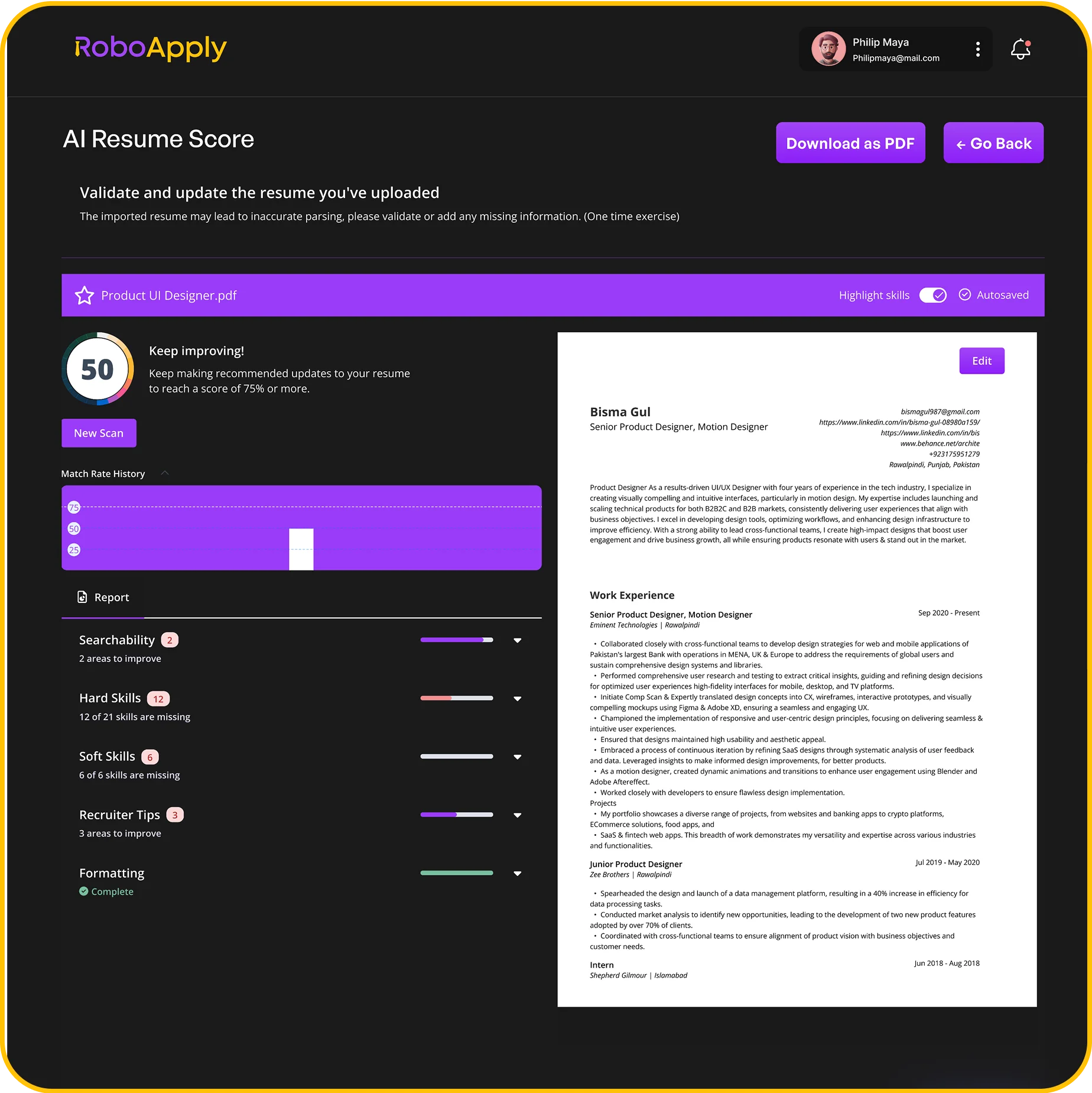
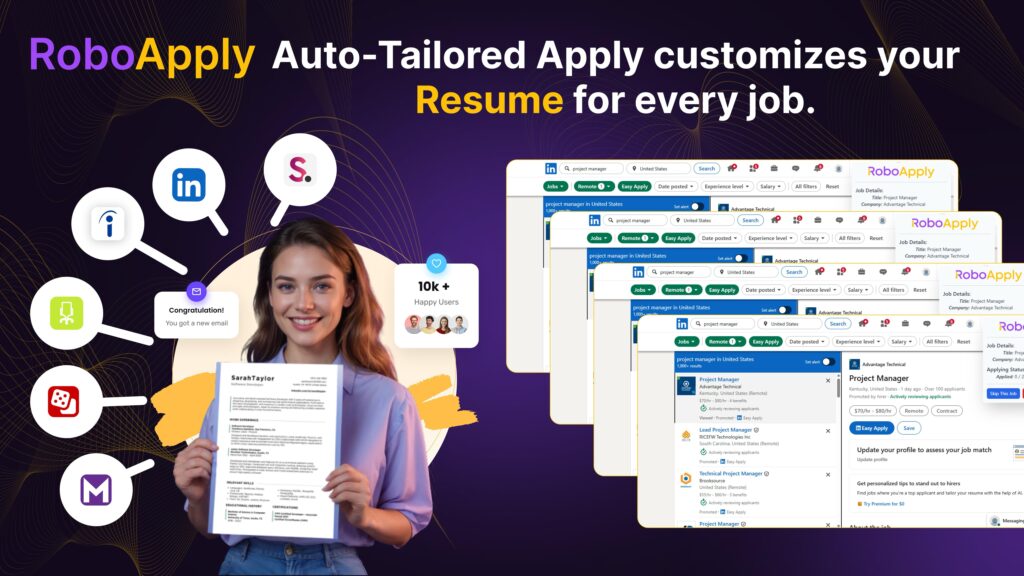
RoboApply’s AI Resume Builder helps you create corporate-optimized resumes emphasizing relevant experience. The Resume Score feature analyzes your resume against corporate standards. AI Auto Apply submits applications to multiple corporations efficiently.
Frequently Asked Questions
What is a corporate job exactly?
A corporate job is employment at a large company with structured hierarchies, defined roles, comprehensive benefits, and formal processes within established organizational systems.
What’s the difference between corporate and regular jobs?
Corporate jobs are at large companies with formal structures and extensive benefits. Other jobs might be at small businesses, nonprofits, or government with different environments.
Do corporate jobs pay better than small business jobs?
Generally yes. Large corporations typically offer higher salaries and better benefits than small businesses can afford. Compensation varies widely by industry and role though.
Are corporate jobs more stable?
Usually. Established corporations weather economic downturns better than startups or small businesses. However, corporate layoffs do happen during restructuring or recessions periodically.
How do I get a corporate job without experience?
Start with internships, entry-level positions, or rotational programs. Leverage your network for referrals. Emphasize transferable skills from school projects or other work.