Learning how do I write a 2 weeks notice letter is a skill every professional needs. Most job seekers pour all their energy into getting hired. Very few think carefully about how to leave. Your resignation letter stays on file. It shapes how former managers answer reference calls for years after you’re gone.
According to the U.S. Bureau of Labor Statistics, voluntary job separations in the U.S. average over 3 million per month. That’s a lot of notice letters written every year, and many of them hurt people’s careers unnecessarily.
Your two weeks notice letter creates an official record. HR departments file it with your employment history. Future employers contact former managers. How you write that letter directly influences those conversations.
What a Two Weeks Notice Letter Actually Does
A resignation letter is more than a formality. It has real professional and legal weight that most people don’t consider until they’re already mid-transition.
The date on your letter officially starts your two-week notice period. That date ties directly to your final paycheck calculation, PTO payout, and benefits continuation. Some state wage laws use this date to determine what your employer owes you at separation.
The Paper Trail It Creates
Your written notice protects both you and your employer from disputes. If any question arises about your final pay or last day, your letter serves as documentation.
SHRM notes that written resignation notices significantly reduce end-of-employment conflicts. Email delivery with a CC to HR creates a clear, time-stamped record. Keep a copy in your personal files as well.
How Former Managers Remember Your Exit
Most hiring managers call your previous employer before sending a final offer. They ask simple questions. Did this person resign professionally? Would you rehire them?
Harvard Business Review found that managers remember how employees leave more vividly than day-to-day performance. Your notice letter sets the tone for that memory. A clean, professional exit creates goodwill. That goodwill has real value in your next job search.
How Do I Write a 2 Weeks Notice Letter
Every effective notice letter has a single purpose. It formally notifies your employer you are leaving in two weeks. It does not need to explain your reasons. It does not need to justify your decision. Short and professional wins every time.
These are the five elements every letter needs:
- A clear resignation statement in your opening sentence
- Your specific last day of employment
- A brief and genuine thank-you
- An offer to help with the transition if possible
- Your full name and contact information
Most effective notice letters stay under 200 words. Brevity is the point, not a limitation.
How Do I Write a 2 Weeks Notice Letter Without Burning Bridges
This is the step most people overthink. The letter is not the place to air frustrations or offer feedback. Your goal is to close the chapter cleanly.
Follow these specific steps to write a bridge-preserving letter:
- Open with: “I am writing to formally resign from my position as [Title] at [Company Name].”
- State your last day: “My last day will be [Date], two weeks from today.”
- Add one genuine line of gratitude. Reference something specific, like a project or skill you gained.
- Offer brief transition help: “I’m happy to help train my replacement or document my current work.”
- Close with: “Thank you for the opportunity.”
Leave out anything about pay disputes, management frustrations, or reasons you’re leaving. Save that for an in-person exit interview, never a written letter.
How Do I Write a 2 Weeks Notice Letter That Looks Professional
Your formatting signals professionalism before the reader even reads a word. Follow a standard business letter structure to make the right first impression.
Use this simple layout:
- Date at the top of the page
- Your manager’s full name and title below the date
- Company name and address on the next line
- A standard greeting: “Dear [Manager’s Name],”
- One to three short paragraphs for the body
- A professional close: “Sincerely” or “Best regards”
Save the final version as a PDF. Email it to your direct manager and CC your HR department. Store a copy in your personal records.
Indeed’s career advice recommends email delivery with a printed backup for companies with formal HR processes.
Common Mistakes That Weaken Your Letter
Even experienced professionals make preventable errors in resignation letters. Knowing what weakens a letter helps you write a much stronger one.
These mistakes consistently hurt professional exits:
- Using vague language like “I feel it’s time to move on”
- Including reasons for leaving, especially negative ones
- Mentioning your new employer or your new salary
- Adding passive-aggressive lines that seem polite on the surface
- Making the letter too long or too emotional
One specific mistake stands out. Many people use the notice letter as a place to give workplace feedback. Save that for your formal exit interview. Your written letter stays strictly neutral.
Glassdoor’s career blog confirms that employees who resign professionally are more likely to receive strong references and stay connected within their industry networks long-term.

How Do I Write a 2 Weeks Notice Letter for Specific Situations
Standard advice covers most cases. Some situations need a slightly adjusted approach. Here are the most common scenarios and exactly how to handle each one.
Leaving After a Short Tenure
Short stints can feel awkward to resign from. Keep your letter even simpler. State your last day, add one line of genuine appreciation for what you learned, and close professionally. The format stays the same regardless of how long you’ve been there.
Leaving Without Full Two Weeks
Life doesn’t always allow for a standard timeline. If you can only give one week or less, acknowledge the shorter notice in a single sentence. Offer what help you realistically can. Keep the tone professional and avoid excessive apology.
Leaving a Specialized Role
Healthcare, education, and government positions sometimes require formal paperwork alongside your letter. Check your employment contract before sending anything. Some specialized roles have contractual obligations around notice periods.
Before your last day, make sure your supporting job search documents are ready. Knowing whether to put references on your resume is a detail many people skip during a career transition. Also review how many bullet points per job on your resume to clean up your work history before applying anywhere new.
Download these Sample Templates
What to Do After You Submit Your Notice
Submitting your letter starts your final two weeks. How you spend that time reinforces the professionalism your letter promised.
Stay fully engaged through your last day. Wrap up open projects, document your workflows clearly, and help your team prepare. These actions build goodwill that pays off in strong references and ongoing industry connections.
Use this period to sharpen your job search materials. Review your full resignation letter approach to make sure all your professional documents stay consistent in tone. Before re-entering the market, check how many jobs are available in basic industries to size up demand in your target sector.
Salary research also pays off during this window. Looking at what different specializations earn, like reviewing how much underwater welders make, helps you set realistic benchmarks before your next negotiation.
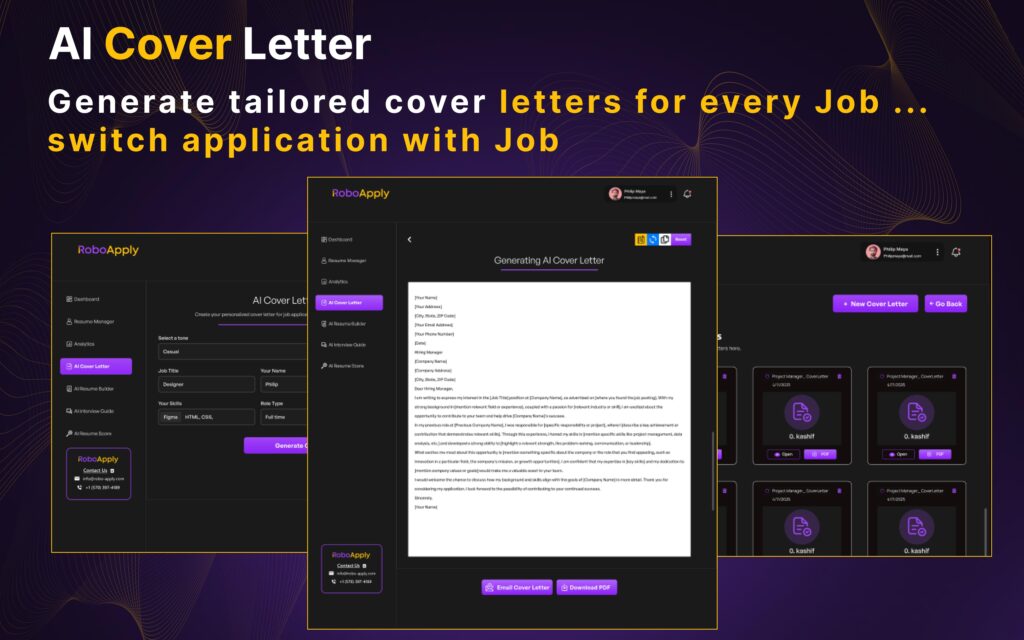
Once your search begins, application volume stacks up fast. RoboApply’s AI Auto Apply submits applications automatically across major platforms while you’re still wrapping up your current role. The AI cover letter generator creates position-specific letters in seconds. And for a structured approach to your search, job application strategy examples gives you a clear playbook to follow.
After your last day, stay in contact with former colleagues and managers when appropriate. When you’re ready to follow up with new employers, calling a job after applying walks you through the right way to reach out without coming across as pushy.
Conclusion
A 2 weeks notice letter works best when it’s short, professional, and positive. State your last day, thank your employer, offer transition help, and close cleanly. The entire letter fits comfortably under 200 words. Write it with care, and it becomes a quiet asset to your professional reputation long after you’ve moved on.
Frequently Asked Questions
How do I write a 2 weeks notice letter if I dislike my job?
Keep it professional and brief. Include only your final date and a simple thank-you. Never put frustrations in writing.
How long should a 2 weeks notice letter be?
Under 200 words is ideal. One to three short paragraphs cover everything your letter needs.
Can I send my 2 weeks notice letter by email?
Yes. Email is widely accepted. Send to your manager and CC HR for a clear, time-stamped record.
Do I need to give a reason for resigning in my letter?
No. Reasons are not required. Keeping your letter brief and neutral is completely professional and widely accepted.
What happens if I skip giving a two weeks notice?
You risk losing a positive reference and may forfeit certain benefits depending on your employment contract terms.