An example of poor resume includes typos, vague job descriptions, outdated email addresses, and unprofessional formatting. You’ll see walls of text without white space. Generic objectives replace compelling summaries. Responsibilities get listed instead of achievements. These mistakes cost you interviews immediately.
Hiring managers spend 6-7 seconds scanning resumes initially. Poor resumes get rejected in that brief window. Your formatting, content quality, and professionalism determine whether they keep reading.
Research from TopResume shows 75% of resumes never reach human reviewers. Applicant tracking systems reject them first. Poor formatting, missing keywords, and basic errors cause most eliminations.
Visual and Formatting Disasters
Poor resumes fail visually before content gets evaluated. Formatting problems signal careless candidates. Your resume’s appearance matters as much as its content.
Inconsistent or Chaotic Formatting
Bad resumes use random fonts, sizes, and styles. They mix bullet points with paragraphs randomly. Spacing varies throughout. Nothing aligns properly.
Common formatting failures include:
- Using 3-4 different fonts on one page
- Mixing bullet styles (circles, squares, dashes randomly)
- Inconsistent date formats (01/2020, January 2021, Feb ’22)
- Random bolding and italics without purpose
- Margins that vary by section
- Text that runs off the page edges
Professional resumes maintain consistency. One font family throughout. Same bullet style everywhere. Dates formatted identically. Clean alignment. Understanding resume standards prevents these mistakes.
Dense Text Blocks Without White Space
Poor resumes cram text into every available space. They create intimidating walls of words. No breathing room exists between sections.
Hiring managers skip dense resumes immediately. Reading them requires too much effort. White space guides eyes naturally through content. Lack of it overwhelms readers instantly.
Good resumes use strategic spacing. Margins of at least 0.5 inches. Line spacing of 1.15 or more. Clear section breaks. Bullet points instead of paragraphs.
Unprofessional Design Choices
Bad resumes include clipart, photos, colored backgrounds, or graphics. They use fancy fonts meant for invitations. They prioritize style over substance completely.
Skip these unprofessional elements:
- Headshots or personal photos
- Decorative borders or frames
- Colored backgrounds or watermarks
- Script or decorative fonts
- Tables that break in ATS systems
- Text boxes or columns that confuse scanners
Resume design should disappear. Content should shine. Fancy formatting distracts from qualifications.
Content Quality Problems
Beyond formatting, poor resumes fail through weak content. They don’t prove capability. They waste space on irrelevant information.
Vague Job Descriptions Without Results
Poor resumes list duties everyone already knows. “Responsible for answering phones.” “Managed social media.” “Attended meetings.” These phrases tell hiring managers nothing.
Bad content examples:
- “Responsible for customer service tasks”
- “Helped with various projects as needed”
- “Managed team members and daily operations”
- “Performed administrative duties”
These descriptions could apply to anyone. They don’t prove your specific value. They don’t quantify accomplishments. Understanding career opportunities helps you describe work meaningfully.
Good resumes quantify everything. “Resolved 50+ customer complaints daily maintaining 95% satisfaction.” “Managed $2M budget across 3 departments.” Numbers prove capability immediately.
Generic Objectives and Summaries
Poor resumes open with useless objectives. “Seeking a challenging position where I can grow professionally.” “Looking for opportunities to utilize my skills.” These waste precious space.
Nobody cares what you want. Employers care what you offer them. Your summary should prove value immediately.
Bad opening examples:
- “Recent graduate seeking entry-level position”
- “Experienced professional looking for new challenges”
- “Hard-working individual seeking employment”
Strong summaries lead with results. “Marketing Manager with 7 years driving 40% revenue growth through digital campaigns.” This proves capability in one sentence.
Irrelevant Personal Information
Poor resumes include information employers don’t need. Age, marital status, hobbies unrelated to work. These waste space and create legal concerns.
Remove these details completely:
- Birth date or age
- Marital status or children
- Social security number
- Height, weight, or physical characteristics
- Hobbies unless directly relevant
- High school information (if you have college degree)
Focus exclusively on qualifications. Everything else distracts from your value. Similar to understanding professional standards, knowing what to exclude matters.
Spelling and Grammar Errors
Poor resumes contain typos, misspellings, and grammar mistakes. These errors prove carelessness. They suggest you’ll make similar mistakes at work.
Common errors that kill applications:
- Misspelling company names or your own job titles
- Mixing verb tenses within descriptions
- Subject-verb disagreement throughout
- Missing punctuation or random capitals
- Using “their” instead of “there” or “they’re”
Proofread multiple times. Read backwards sentence by sentence. Have someone else review it. One typo might be forgiven. Multiple errors guarantee rejection.

Poor Resume Content Red Flags
Beyond formatting and basic quality, certain content choices signal problems. These red flags make hiring managers question your judgment.
Employment Gaps Without Explanation
Poor resumes show unexplained 6-12 month gaps. Employers wonder what happened. Silence creates suspicion. Similar to following up appropriately, transparency matters in resumes.
Address gaps honestly. “Career break for family care.” “Freelance consulting during job search.” “Returned to school for certification.” Brief explanations eliminate concerns.
Job Hopping Without Context
Five jobs in three years looks problematic. Poor resumes don’t explain why. Good resumes provide context when necessary.
If you changed jobs frequently:
- Note contract positions clearly
- Explain company closures or layoffs
- Show promotions at same company separately
- Group short-term projects appropriately
Context transforms red flags into neutral or positive information.
Overqualification for Applied Position
Poor resumes don’t customize for specific roles. They show advanced experience for entry positions. This confuses hiring managers about your intentions.
Customize your resume for each application. Remove qualifications that make you seem overqualified. Emphasize relevant experience matching their needs. Understanding specialized compensation helps across industries.
Here are some examples:
What Strong Resumes Do Differently
Examining poor examples shows what to avoid. Understanding good practices shows what to emulate instead.
Clear Visual Hierarchy
Strong resumes organize information logically. Section headers stand out clearly. Eye moves naturally from most to least important details.
Professional structure includes:
- Contact information prominently at top
- Professional summary leading content
- Experience listed reverse chronologically
- Education after experience (unless recent graduate)
- Skills section near end but before references note
This structure matches how hiring managers scan. Important information appears first. Supporting details follow logically.
Achievement-Focused Content
Strong resumes prove value through specific accomplishments. Every bullet point demonstrates results you achieved.
Transform responsibilities into achievements:
- Before: “Managed social media accounts”
- After: “Grew Instagram following from 2K to 25K in 8 months”
- Before: “Responsible for customer service”
- After: “Maintained 98% customer satisfaction across 200+ daily interactions”
Numbers prove capability. Results matter more than duties.

Fixing Your Resume Effectively
Transforming poor resumes into strong ones requires systematic improvement. You need efficient tools for optimizing multiple resume versions.
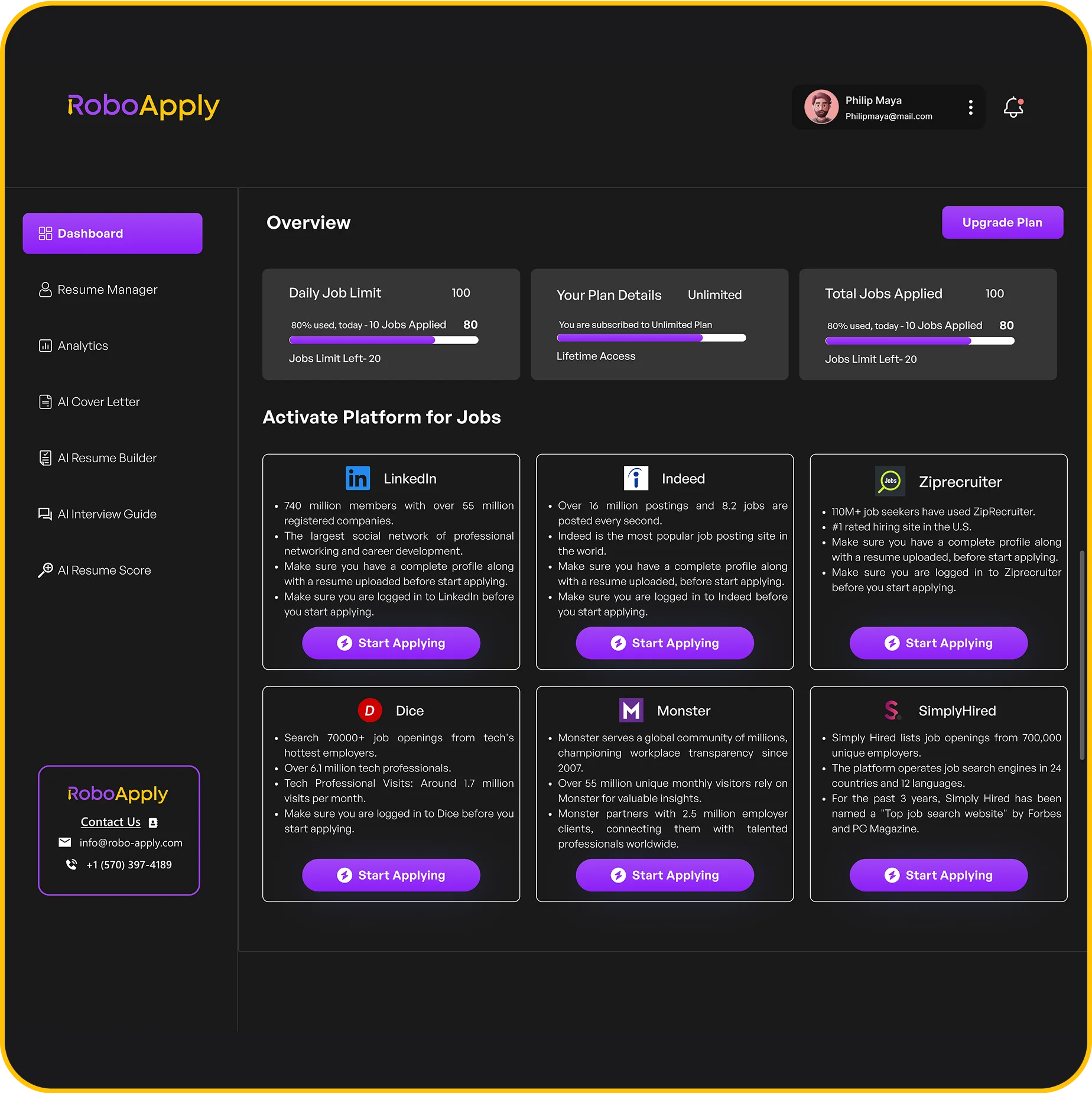
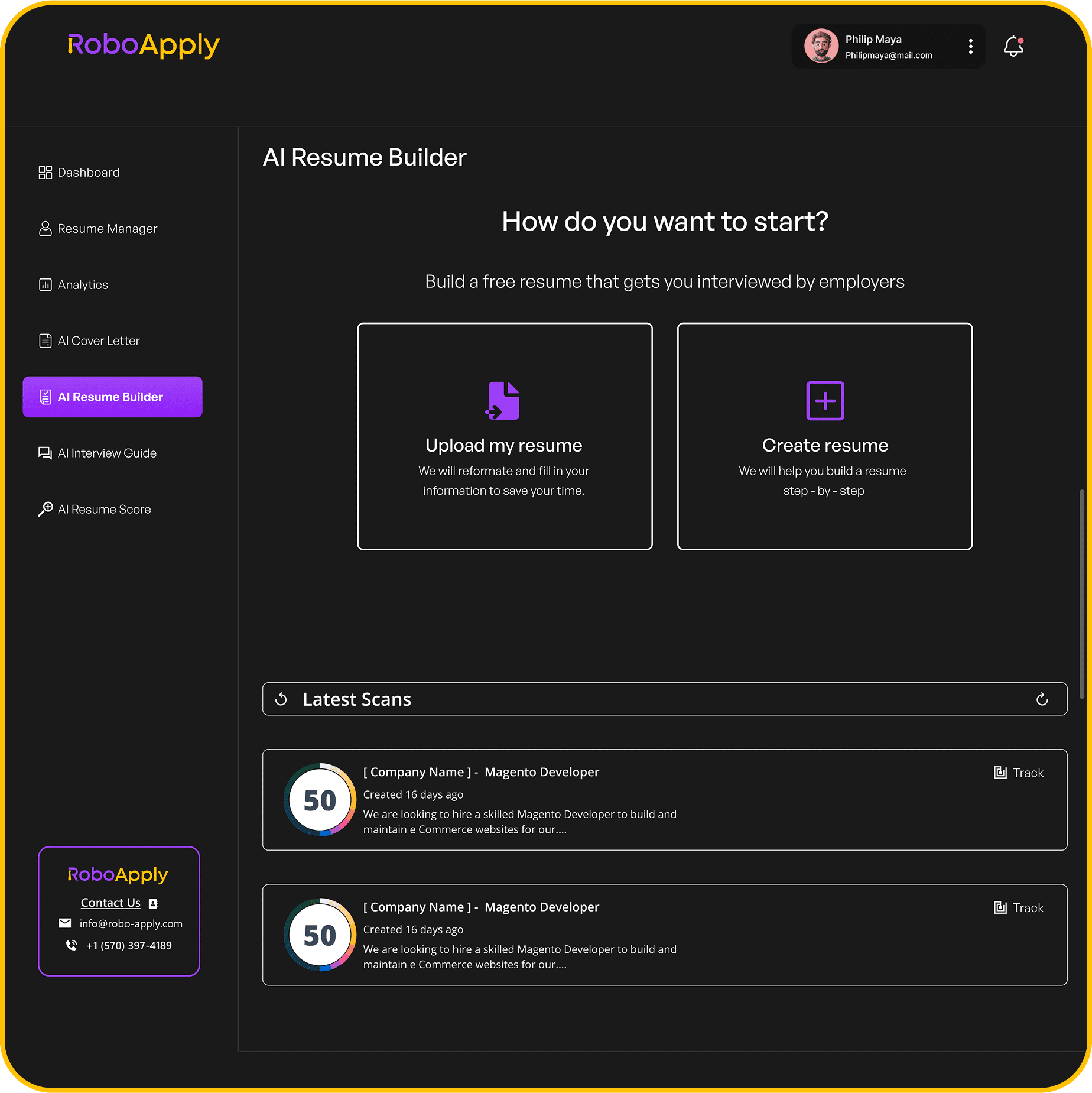
RoboApply’s AI Resume Builder identifies common resume mistakes automatically. The platform reformats content for ATS optimization. Your resume meets professional standards without manual editing.
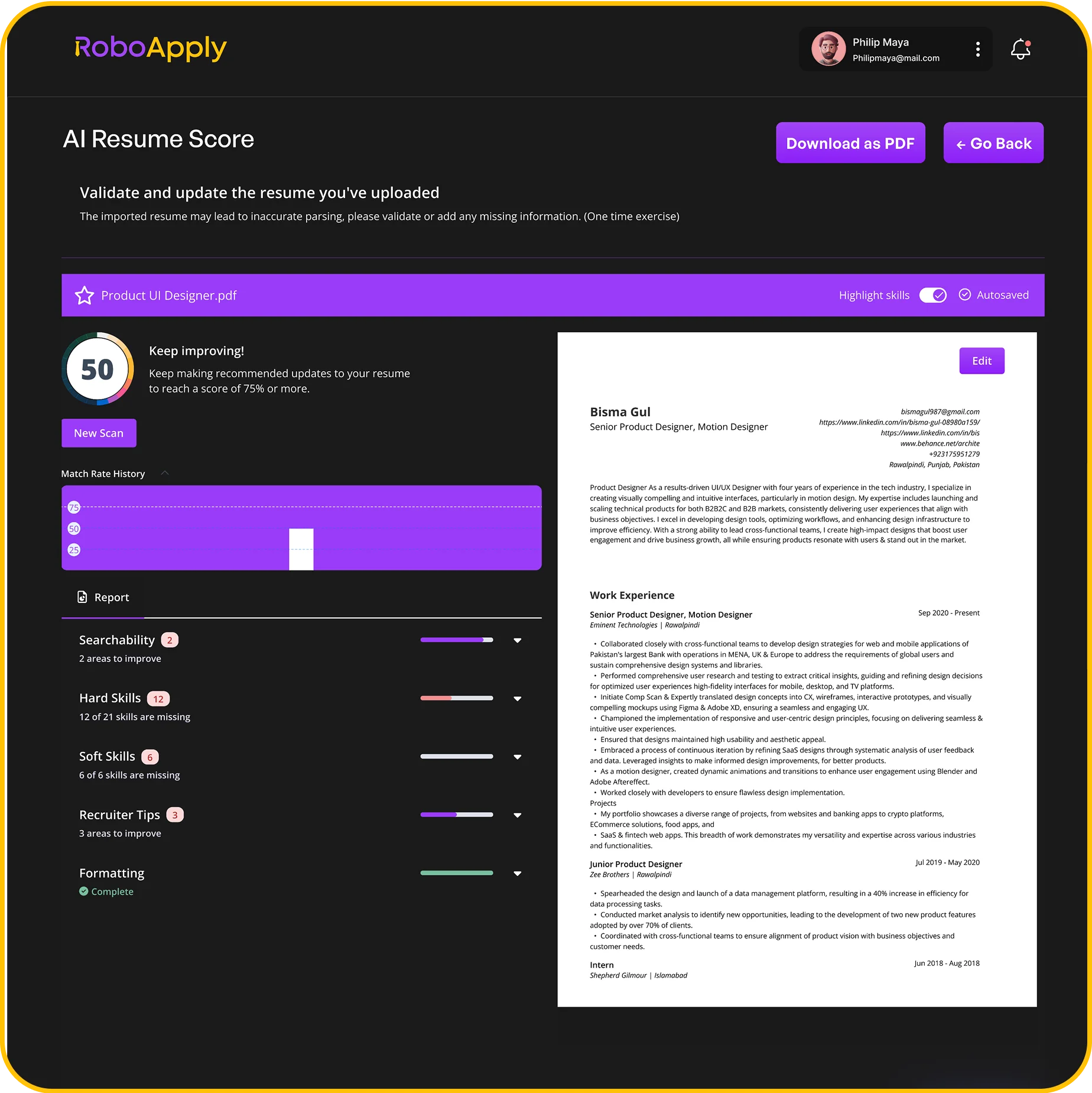
The Resume Score feature analyzes your current resume against industry standards. You’ll see specific problems to fix. The system provides actionable improvement suggestions immediately.
AI Auto Apply uses your optimized resume across hundreds of applications. You’re not manually customizing and submitting repeatedly. The platform handles distribution while you focus on interview preparation.
Interview Copilot prepares you to discuss resume content confidently. You’ll practice explaining employment gaps or career transitions naturally. The tool ensures consistency between written resume and verbal explanations.
Frequently Asked Questions
What makes a resume poor quality?
Poor resumes contain typos, vague descriptions, unprofessional formatting, dense text blocks, generic objectives, and irrelevant personal information that wastes valuable space unnecessarily.
Should I include a photo on my resume?
No, exclude photos from resumes in the United States. Photos create legal concerns and waste space. Focus exclusively on qualifications and achievements.
How do I fix employment gaps on my resume?
Address gaps briefly with honest explanations like “Family care leave” or “Freelance consulting.” Short context eliminates hiring manager concerns without over-explaining.
Can I use colored fonts or graphics?
No, stick to black text on white background. Applicant tracking systems can’t read colored or decorative fonts properly. Simple formatting ensures scannability.
How long should my resume be?
Keep resumes to one page for 0-10 years experience, two pages maximum for 10+ years. Concise content outperforms lengthy descriptions always.