An application letter of a civil engineer puts your best stuff right up front. First paragraph states the position and your main qualification. Second paragraph details relevant projects with real numbers. Third covers technical skills and certifications. Keep everything under one page.
Civil engineering jobs get flooded with applications. Your letter needs to grab attention fast. Hiring managers spend maybe ten seconds scanning each one. Generic letters? Straight to the trash.
Your application letter isn’t your resume. It’s your pitch. You’re proving why you’re perfect for this exact role. That takes strategy, not just listing what you’ve done.
This guide shows what actually works. You’ll see proven structures and real examples. We’ll cover what makes hiring managers stop and read.
What Makes Your Application Letter Actually Work
Your letter has one job. Getting you an interview. That’s it. Every single sentence should push toward that goal.
Strong letters connect your experience directly to what they need. You’re not just describing past projects. You’re showing how your background solves their specific problems right now.
The best letters prove you understand the role completely. You’ve read the posting carefully. You know what they need. Your letter shows you can deliver exactly that.
Research from the National Society of Professional Engineers shows targeted application letters increase callbacks by 40%. Specificity beats generic every time.
What Goes in Every Civil Engineer Application Letter
Your letter needs specific pieces to work. Missing any weakens everything else significantly.
Opening That Actually Grabs Attention
Your first paragraph needs three things. The position. Where you saw it posted. Your strongest qualification.
Don’t waste words with “I am writing to apply for…” Everyone knows that. Jump straight to value.
Strong openings look like this:
“As a licensed PE with seven years in transportation infrastructure, I’m applying for your Senior Civil Engineer position posted on LinkedIn.”
“Your bridge rehab project matches perfectly with my five years managing structural assessments for aging systems.”
“I’m applying for the Water Resources Engineer role. My master’s in hydraulic engineering plus three years designing stormwater systems match your requirements exactly.”
These work because they communicate value immediately. You’re not just interested. You’re qualified.

Middle Section Proving Your Worth
Your middle paragraphs demonstrate why you’re the right choice. This needs specific examples, not vague claims about being a “team player” or having “excellent skills.”
Focus on relevant projects with measurable results. Don’t say you “worked on highway design.” Tell them what you accomplished. “Designed 12-mile highway expansion cutting traffic congestion by 30% while staying 5% under budget” proves capability.
Include these when relevant:
- Specific project types you’ve managed
- Technical software you actually use (AutoCAD, Civil 3D, STAAD.Pro, Revit)
- Budget sizes you’ve handled
- Team sizes you’ve led
- Certifications that matter (PE license, EIT, LEED AP)
- Your specialty areas (structural, geotechnical, transportation, environmental)
The American Society of Civil Engineers career guidance emphasizes that quantified accomplishments seriously strengthen engineering applications. Numbers prove impact.
Connect everything back to what they need. Read their posting carefully. They emphasize sustainable design? Highlight your green infrastructure work. They mention public sector? Focus on government projects.
Closing With Clear Next Steps
Your final paragraph does three things. Restates interest briefly. Mentions interview availability. Thanks them.
Keep closings short. You’ve already made your case. Don’t rehash everything again.
Effective closings:
“I’m excited about contributing to your infrastructure projects. I’m available for interviews anytime. Thanks for considering my application.”
“My background in sustainable transportation design fits your firm’s mission well. I’d love discussing how I can contribute to your projects.”
“I look forward to talking about how my structural engineering experience supports your commercial development portfolio. Contact me whenever works.”
These closings work because they’re confident without being pushy. You’re interested and available. Done.
Structuring Your Letter for Maximum Impact
Format determines whether anyone reads your content. Poor structure kills strong qualifications. You need clarity.
Start with your contact info at the top. Full name, address, phone, email, LinkedIn if you’ve got one.
Skip fancy formatting. Simple left-aligned text works best. Many companies scan applications through ATS systems. Complex layouts get scrambled badly.
Follow with the date and employer’s info. Address your letter to someone specific whenever possible. “Dear Hiring Manager” works if you can’t find a name. Never use “To Whom It May Concern.” Sounds ancient.
Your letter body should have three to four short paragraphs max. Each serves a specific purpose.
Paragraph one introduces you. Paragraph two highlights your most relevant experience. Paragraph three covers additional qualifications like technical skills and certifications. Paragraph four closes with next steps.
Keep paragraphs between three to five sentences. White space matters a lot. Dense text blocks kill readability instantly.
Studies from Engineering News-Record confirm that concise, scannable letters perform way better than lengthy detailed ones. Hiring managers appreciate brevity.
End with a professional sign-off. “Sincerely” works universally. “Best regards” or “Respectfully” work fine too.
Mistakes That Kill Your Application
Certain errors appear constantly on rejected applications. Avoiding these improves your chances immediately.
Generic Letters
Sending identical letters to every employer kills your chances. Hiring managers spot generic applications instantly. They want candidates who actually want this specific job.
Customize every single letter. Reference the company name multiple times. Mention specific projects they’ve completed. Connect your background to their stated needs.
Takes extra time? Yeah. Worth it? Absolutely. One customized application beats ten generic ones.
Focusing on What You Want
Weak letters focus on what the job offers you. “This position would help me develop skills” or “I’m looking for growth opportunities” sounds self-centered.
Strong letters focus on what you offer them. How does your experience solve their problems? What value do you bring immediately?
Your career goals don’t matter to hiring managers. Their project needs matter. Address those needs directly.
Missing Specifics and Numbers
Writing “extensive experience in structural design” tells them nothing. Every applicant claims extensive experience. Prove yours.
“Designed structural systems for 15 commercial buildings ranging from $2M to $50M budgets” demonstrates actual capability. Numbers prove scope and impact.
Include metrics wherever truthful. Project values. Team sizes. Completion timelines. Budget performance. Safety records. Efficiency improvements.
Research from the Society of Women Engineers shows quantified accomplishments increase engineering offers by 35%. Data beats claims.
Poor Grammar and Typos
Typos and grammar mistakes destroy credibility instantly. You’re applying for professional engineering positions. Sloppy applications suggest sloppy work.
Proofread multiple times. Read your letter aloud. Check formatting consistency. Verify company names and contact info.
Have someone else review it too. Fresh eyes catch mistakes you’ve missed.
Getting Past ATS Systems
Many firms use applicant tracking systems for initial screening. Your letter needs to pass automated checks before humans see it.
Read job postings carefully. Identify repeated terms and required qualifications. Incorporate this exact language naturally throughout your letter where truthful.
Posting mentions “transportation infrastructure design”? Use that exact phrase. Don’t substitute “road planning.” ATS systems look for precise matches.
Common keywords to include when relevant: AutoCAD Civil 3D, Revit, MicroStation, STAAD.Pro, structural analysis, site development, hydraulic modeling, PE license, EIT, LEED AP, BIM, sustainable design.
Jobscan research on engineering applications confirms keyword optimization increases ATS pass rates by over 50%. This matters enormously.
Save your letter as .docx unless they specifically request PDF. Many ATS systems parse Word documents more accurately.
Use standard fonts. Arial, Calibri, or Times New Roman between 10-12 points. Avoid decorative fonts completely.
Name your file professionally. “FirstName_LastName_Cover_Letter.docx” works perfectly.
Download Your Professional Templates
Download Your Complete Civil Engineer Application Letter Template Package
We’ve created professional templates for different specialties and experience levels. Each follows proven structures passing ATS screening while engaging human readers. Includes entry-level, experienced, and specialty-focused versions in Word and PDF formats.
How RoboApply Speeds Up Your Applications
Creating customized letters for every position takes forever. You need company research. Position analysis. Keyword optimization. Customized examples for each role.
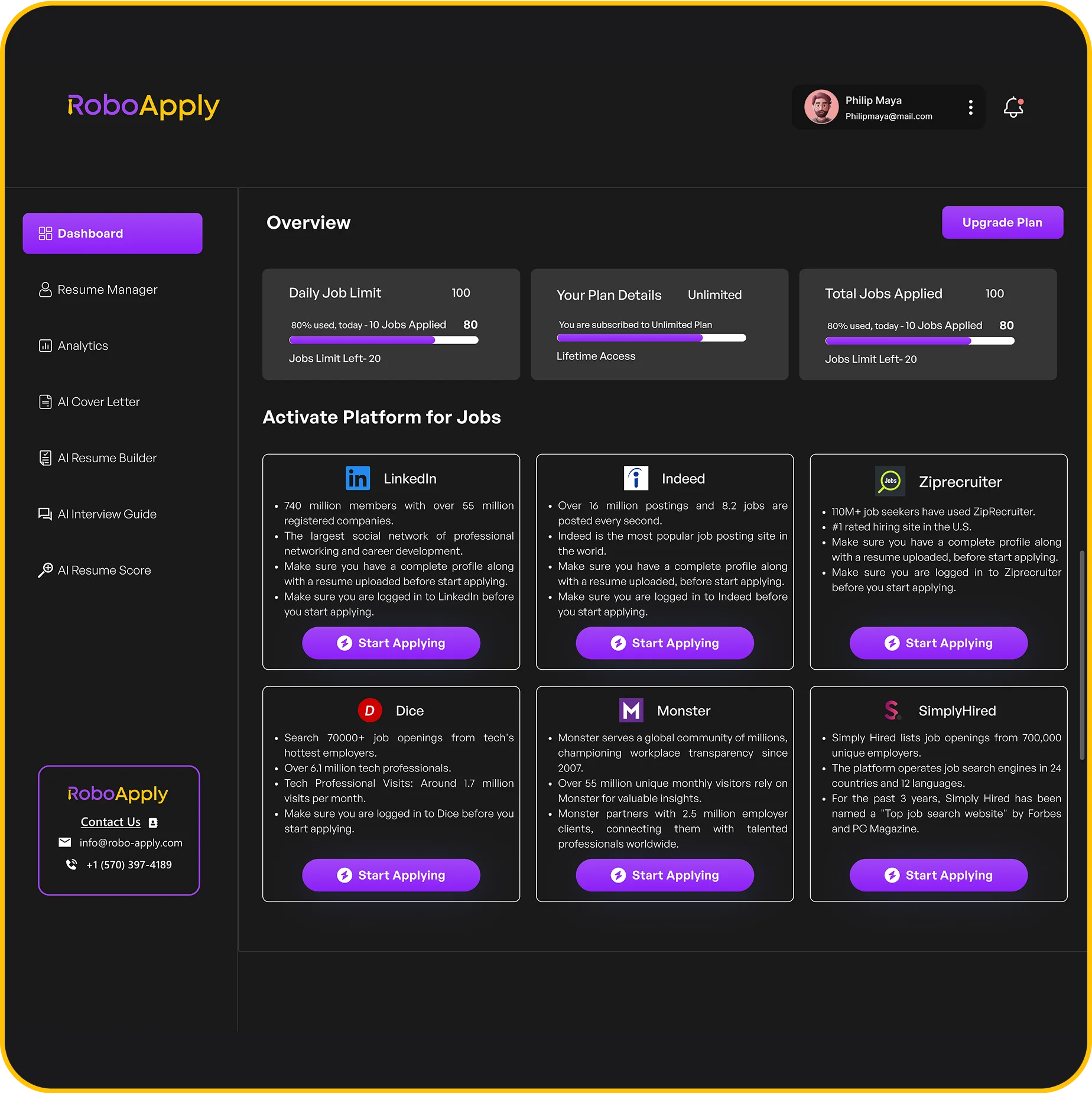
RoboApply automates this entire process. The platform doesn’t create generic letters. It generates customized versions for every civil engineering position you target.
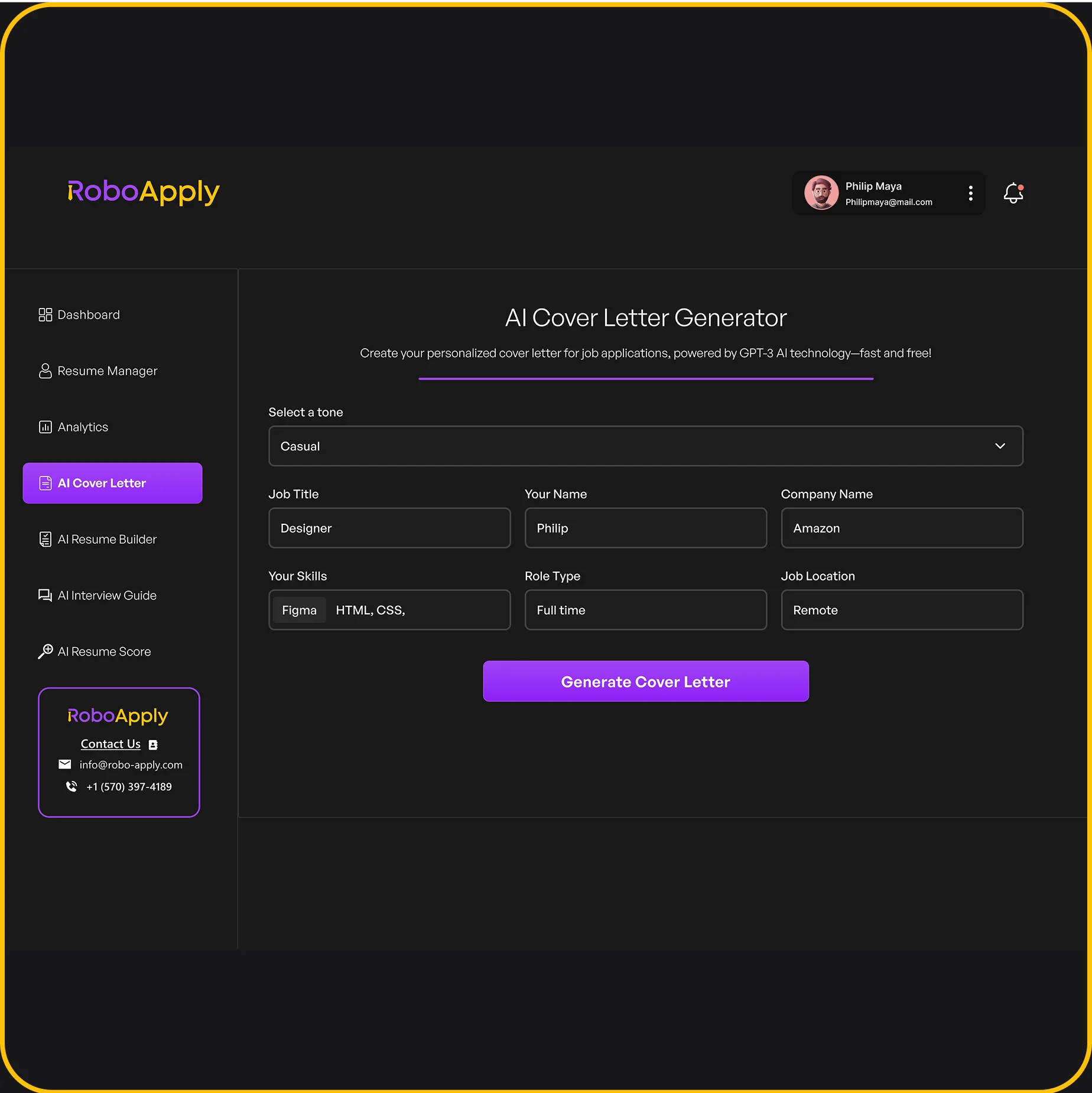
The AI Cover Letter generator understands civil engineering requirements across specialties. Analyzes job descriptions automatically. Emphasizes your most relevant experience for each opportunity.
Every letter includes proper ATS optimization. Keywords integrate naturally. Formatting stays clean. Letters pass automated screening while engaging humans.
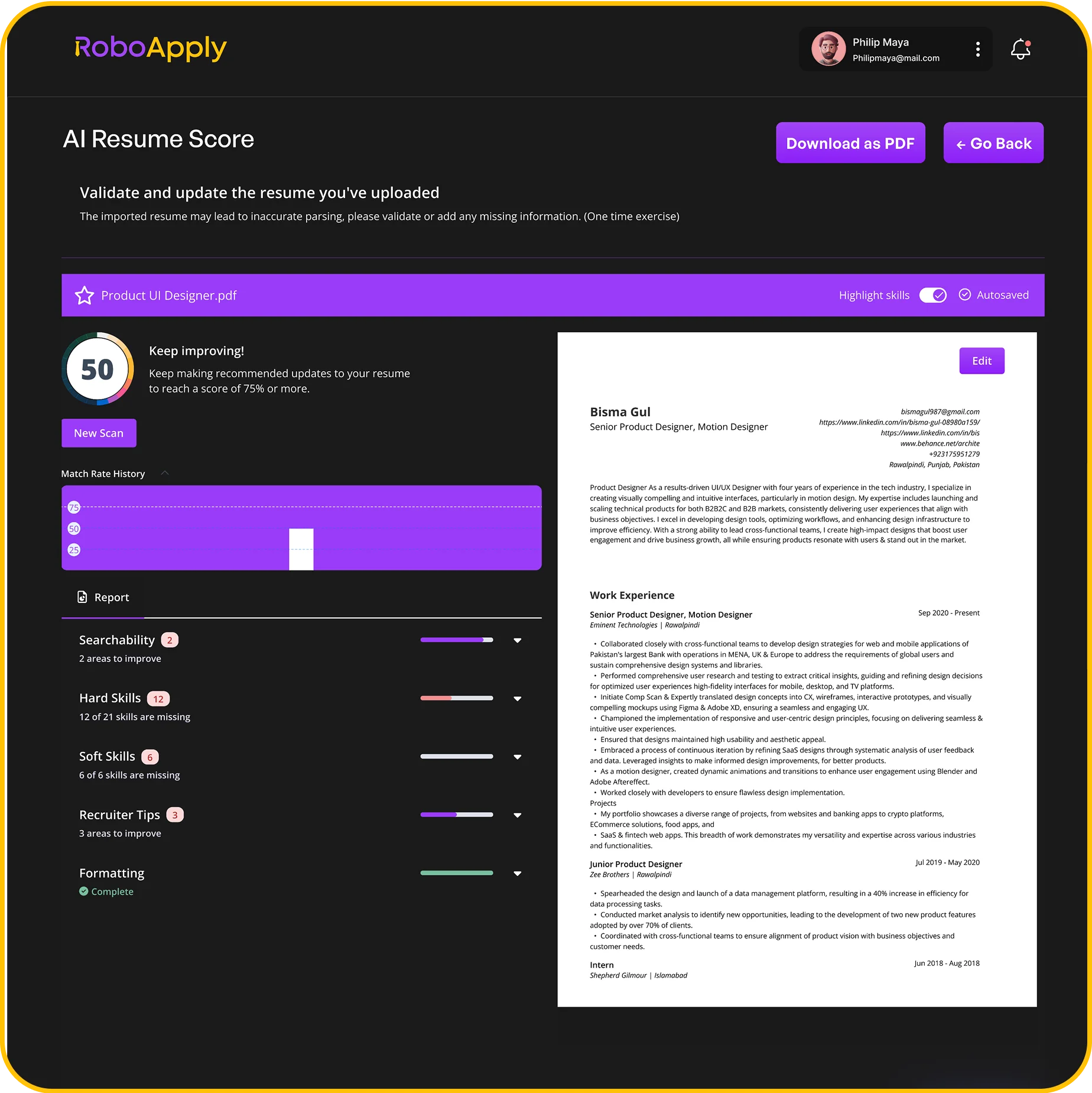
Your resume gets the same treatment. The AI Resume Builder creates ATS-optimized documents. The Resume Score shows exactly what systems see.
AI Auto Apply finds matching positions across LinkedIn, Indeed, and other boards. Customizes materials. Submits everything automatically while you prep for interviews.
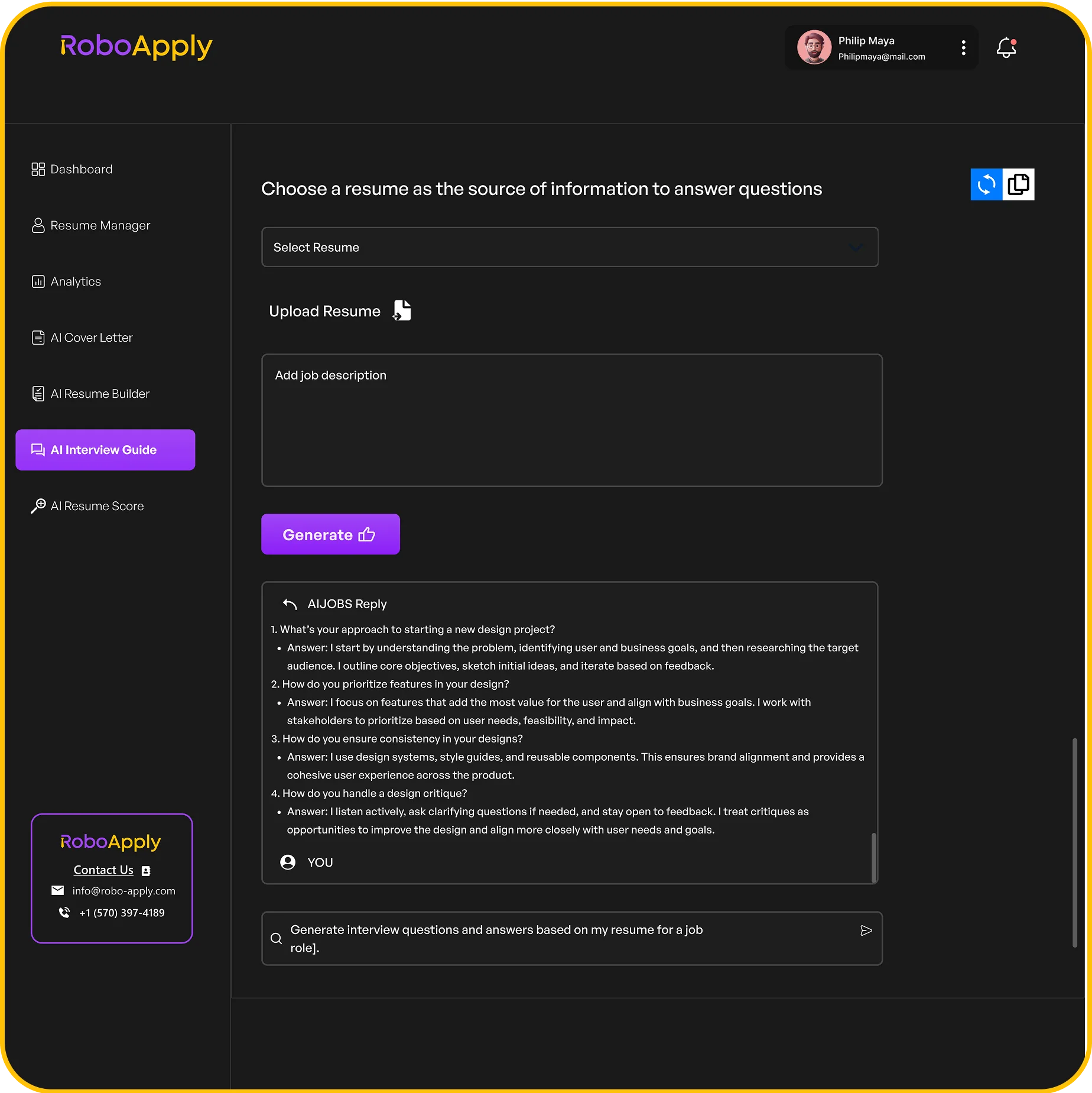
The AI Interview Copilot prepares you for technical conversations. Practice with role-specific questions. Real-time feedback improves responses.
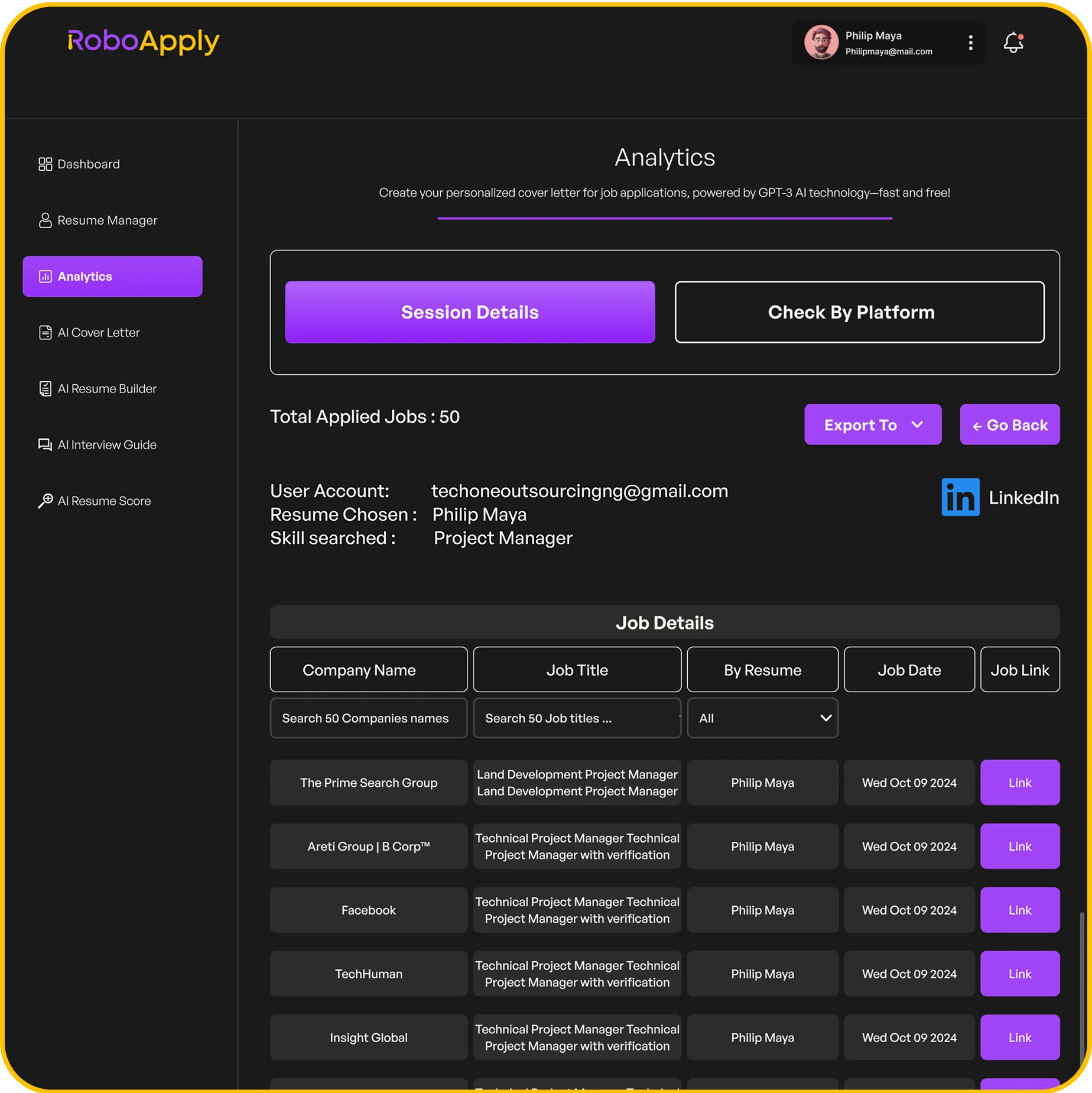
Tracking stays simple through Analytics. See which versions generate most responses. Everything appears in one dashboard.
Start with the free plan. Three free applications let you test functionality. The 90-day guarantee eliminates risk.
Frequently Asked Questions
What should an application letter of a civil engineer include?
Include position interest, relevant project experience with metrics, technical skills and software proficiency, certifications like PE license, and specific connection to employer needs.
How long should a civil engineer application letter be?
Keep it under one page, approximately 250-400 words maximum. Three to four short paragraphs covering introduction, experience, qualifications, and closing.
Should I mention my PE license in my application letter?
Yes, mention your PE license prominently in the opening paragraph if you have one. It’s a critical qualification that immediately strengthens applications.
How do I customize civil engineering application letters for different specialties?
Highlight projects and skills matching the specialty. Emphasize structural experience for structural roles, hydraulic projects for water resources positions, and so on.
What technical skills should civil engineers highlight in application letters?
List relevant software (AutoCAD Civil 3D, Revit, STAAD.Pro), technical methodologies (BIM, sustainable design), and specialty expertise (geotechnical analysis, traffic engineering, etc).