A cover letter postdoc should be 1-2 pages addressing your research experience, specific interest in the PI’s work, and how your skills advance their research agenda. Open with your current position and research focus. Explain why this specific lab excites you. Detail your relevant technical skills and publications. Close expressing enthusiasm for contributing to their ongoing projects.
Most PhD graduates make the same mistake writing postdoc cover letters. You’re treating them like job applications for industry positions. Academic postdocs require different emphasis, language, and structure than corporate roles.
Research from Nature Careers shows PIs spend less than 3 minutes reviewing each postdoc application. Your cover letter must immediately demonstrate research fit and genuine interest in their specific work. Generic academic cover letters get rejected instantly.
What Makes Postdoc Cover Letters Different
Postdoc cover letters differ fundamentally from other academic or industry job applications. Understanding these distinctions helps you write letters that resonate with principal investigators evaluating candidates.
Academic postdoc positions focus almost exclusively on research fit rather than teaching ability or service contributions. PIs want to know whether your skills and interests align with their funded projects and lab direction. Your letter proves you understand their research and can contribute meaningfully from day one.
The relationship between postdoc and PI operates more like a mentor-apprentice dynamic than employer-employee. You’re not just seeking employment. You’re pursuing specialized training advancing your independent research career. This collaborative aspect affects how you frame your interests and qualifications.
Research Fit Takes Priority
Research alignment matters more than any other qualification for postdoc positions. PIs need postdocs who can execute funded research projects while developing complementary skills.
Your cover letter must demonstrate deep familiarity with the PI’s recent publications, current projects, and research direction. Vague statements like “I’m interested in your neuroscience research” fail completely. Specific references like “Your recent Cell paper on dopamine circuit mapping using optogenetics aligns perfectly with my dissertation work on reward pathways” prove genuine engagement. Understanding opportunities across basic industries provides context for academic career paths.
Technical Skills Matter Immediately
Unlike faculty positions emphasizing future potential, postdocs require immediate technical contributions. PIs want researchers who can start producing results within weeks, not months of onboarding.
Detail your specific technical competencies relevant to the lab’s methods. Don’t just list techniques. Explain your proficiency level and how you’d apply these skills to their projects. “I have extensive experience with two-photon calcium imaging in behaving mice, having collected and analyzed data from 50+ recording sessions” beats “Familiar with imaging techniques.”
Essential Elements of Postdoc Cover Letters
Effective postdoc cover letters include specific components proving your research qualifications and genuine interest. Understanding these essential elements helps you construct compelling applications that stand out.
Every strong postdoc cover letter contains these critical sections:
- Opening paragraph stating your current position, research focus, and the specific postdoc position you’re applying for
- Research background summarizing your dissertation or current work with emphasis on relevant skills and findings
- Specific interest explaining why this particular lab excites you based on their publications and funded projects
- Technical expertise detailing methods you’ve mastered and how they apply to the PI’s research
- Publication record highlighting your peer-reviewed papers, preprints, and works in progress
- Future contributions describing how you’d advance the lab’s research agenda and develop your independent program
- Professional references mentioning that recommendation letters are forthcoming or attached
Tailor each element to the specific lab and project. Generic cover letters suggesting you’d fit anywhere get rejected. PIs want postdocs passionate about their particular research questions. Following professional standards includes customizing every application.

How to Write Your Postdoc Cover Letter
Writing compelling postdoc cover letters requires strategic organization and specific detail demonstrating research competence. These approaches help you construct letters that convince PIs you’re the right candidate.
Start with a strong opening paragraph identifying yourself and the position. “I am writing to apply for the postdoctoral position in your lab studying neural mechanisms of addiction. I recently defended my PhD dissertation on dopamine signaling in reward learning at University X under Dr. Y’s mentorship.” This immediately establishes your credentials and interest.
Dedicate your second paragraph to research background relevant to the position. Explain your dissertation focus, key findings, and technical approaches. Connect your work to the PI’s research showing natural progression. “My dissertation investigated how dopamine neurons encode prediction errors during associative learning. This work directly complements your lab’s studies on dopamine circuit function in addiction-related behaviors.”
Use your third paragraph for specific interest in their research. Reference recent papers by name and explain what excites you. “Your recent Nature Neuroscience paper revealing distinct dopamine neuron populations encoding reward magnitude versus probability fascinated me. I’m eager to extend these findings using the optogenetic tools I developed during my PhD.”
Detail your technical skills in paragraph four. List specific methods with proficiency levels. “I have extensive hands-on experience with stereotaxic surgery, viral injections, fiber photometry, optogenetics, and behavioral analysis in rodents. I’ve personally performed over 200 surgeries with 90%+ success rates.” Numbers prove competence better than adjectives. Like understanding resume formatting, specifics strengthen applications.
Close expressing enthusiasm and availability. “I’m excited about contributing to your research program and developing complementary projects during my postdoc. I’m available to start as early as June 2026. Thank you for considering my application. I look forward to discussing this opportunity further.”
Common Postdoc Cover Letter Mistakes
Certain errors weaken postdoc applications significantly regardless of your research qualifications. Avoiding these mistakes ensures your cover letter helps rather than hurts your candidacy.
Never write generic letters substituting different PI names and institutions. Reviewers immediately recognize mass-produced applications. Every sentence should reference specific details about this particular lab, researcher, and project. Generic applications suggest you’re desperate rather than genuinely interested.
Don’t focus excessively on what the postdoc offers you. While mentioning training opportunities briefly is fine, emphasize what you bring to the lab. PIs want contributors, not students needing extensive mentoring. Frame your interests around advancing their research agenda.
Avoid lengthy autobiographical narratives about your research journey. PIs don’t need your complete academic history. Focus on directly relevant experience and skills. Keep cover letters to 1-2 pages maximum. Longer letters suggest poor communication skills.
Never criticize your current or previous advisors, departments, or institutions. Academic communities are small. Negative comments about others raise red flags about your professionalism and collegiality. Stay positive throughout. Like knowing when to follow up appropriately, professional communication matters.
Don’t submit applications with typos, grammatical errors, or wrong PI names. Sloppy applications suggest you’ll produce sloppy research. Proofread meticulously. Have colleagues review your letter before submission.
Download Templates
Tailoring Letters for Different Research Areas
Different scientific disciplines and research approaches require emphasis on different qualifications and experiences. Understanding field-specific expectations helps you customize postdoc cover letters appropriately.
Wet lab biology and biochemistry postdocs emphasize technical bench skills, troubleshooting ability, and productivity metrics. Highlight your publication record, grant writing experience, and specific molecular techniques. Mention successful protocols you’ve optimized or developed.
Computational and data science postdocs prioritize programming languages, statistical methods, and algorithm development. Detail your coding proficiency in Python, R, MATLAB, or other relevant languages. Describe datasets you’ve analyzed and computational pipelines you’ve built.
Human subjects research postdocs require IRB experience, participant recruitment skills, and clinical knowledge. Emphasize your experience with human protocols, data privacy compliance, and working with diverse populations. Similar to understanding compensation across specialized fields, different research areas value different skills.
Theoretical and mathematical research postdocs focus on analytical skills and novel theoretical frameworks. Highlight your mathematical background, modeling experience, and ability to develop testable hypotheses from theoretical work.

Streamlining Your Postdoc Application Process
Beyond just the cover letter, managing complete postdoc applications across multiple labs requires organization and efficiency. These tools help you apply strategically to appropriate positions.
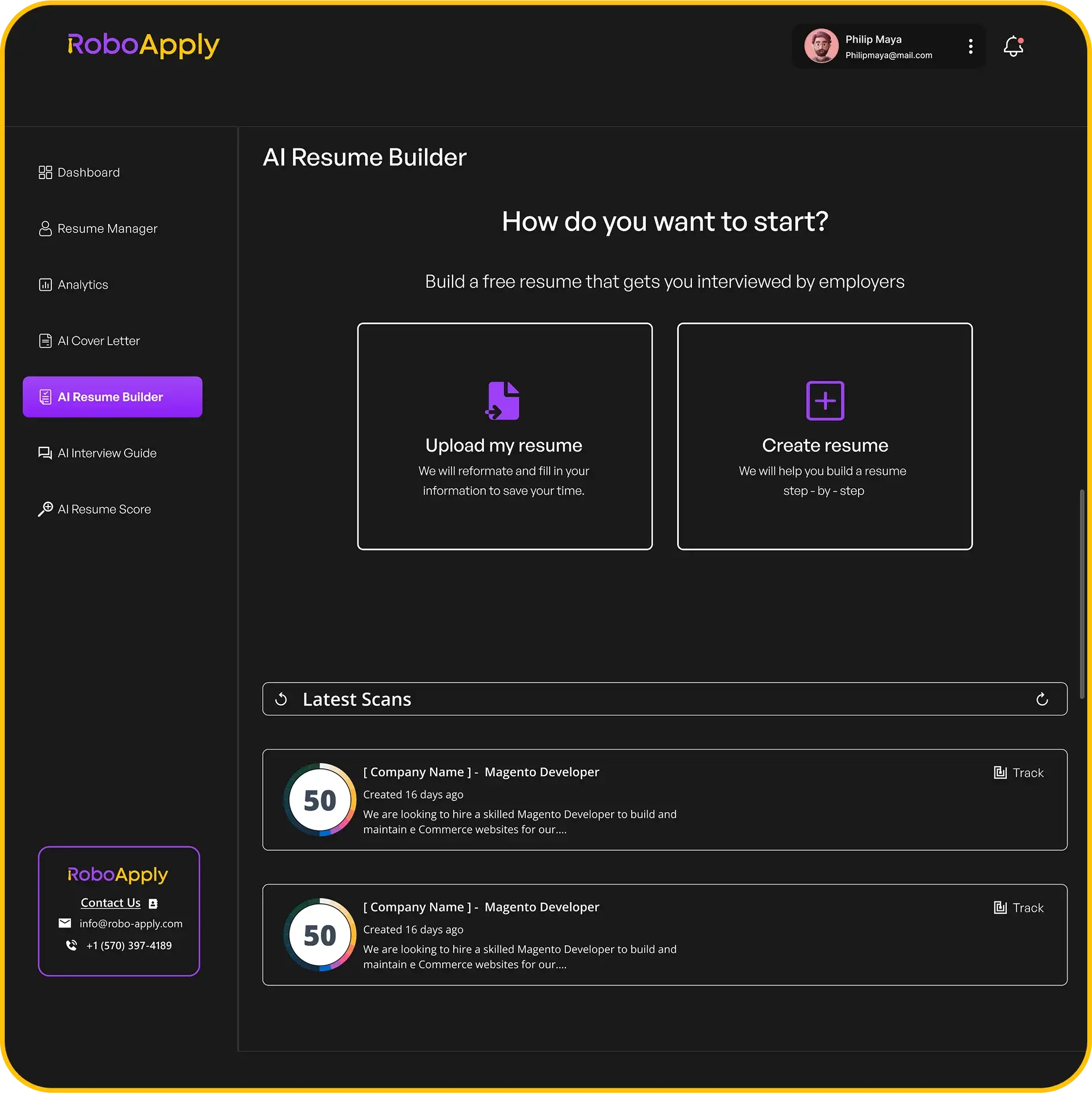
RoboApply’s AI Resume Builder creates academic CVs optimizing your research experience and publications. The platform formats your background for academic hiring committees.
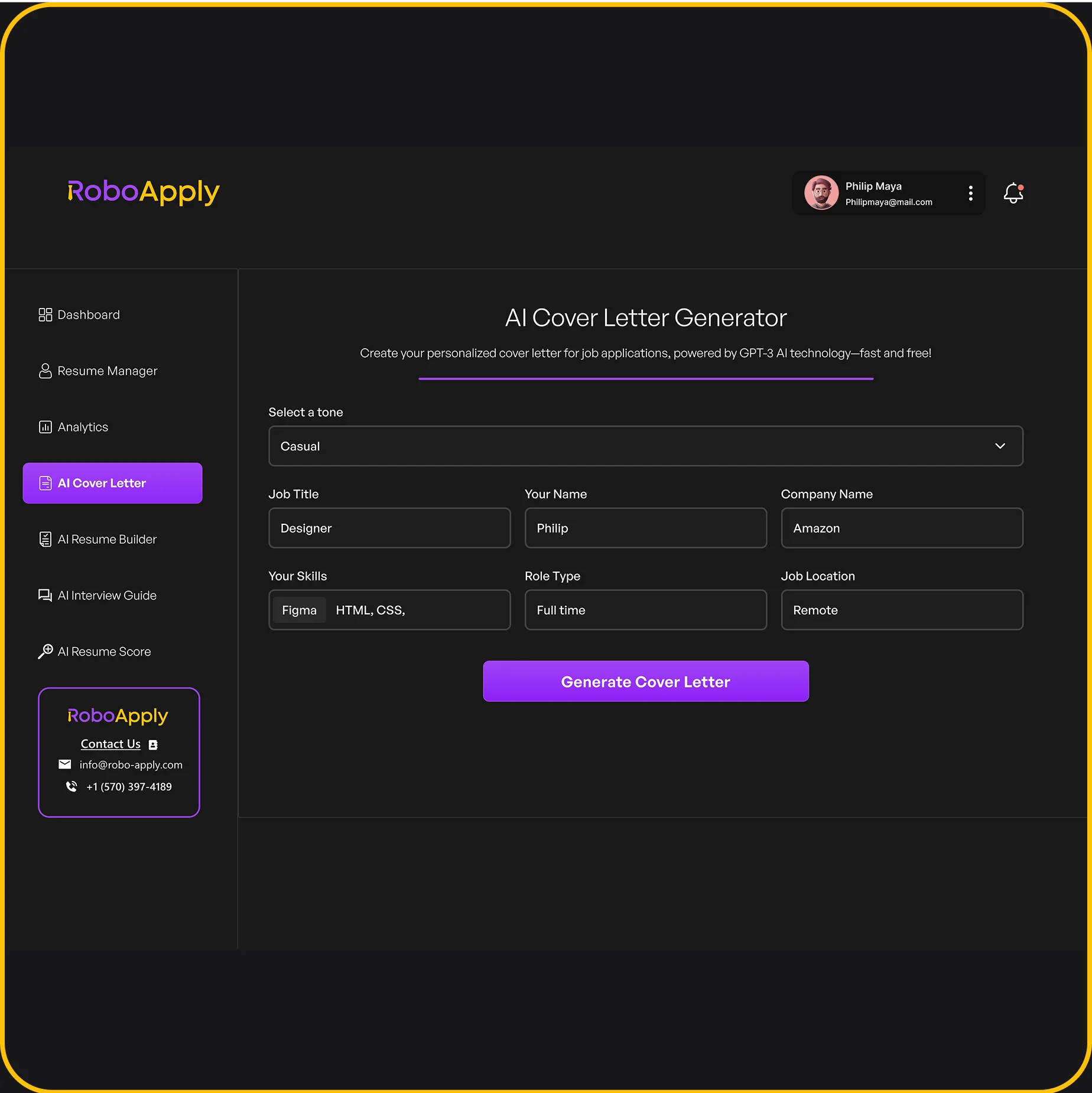
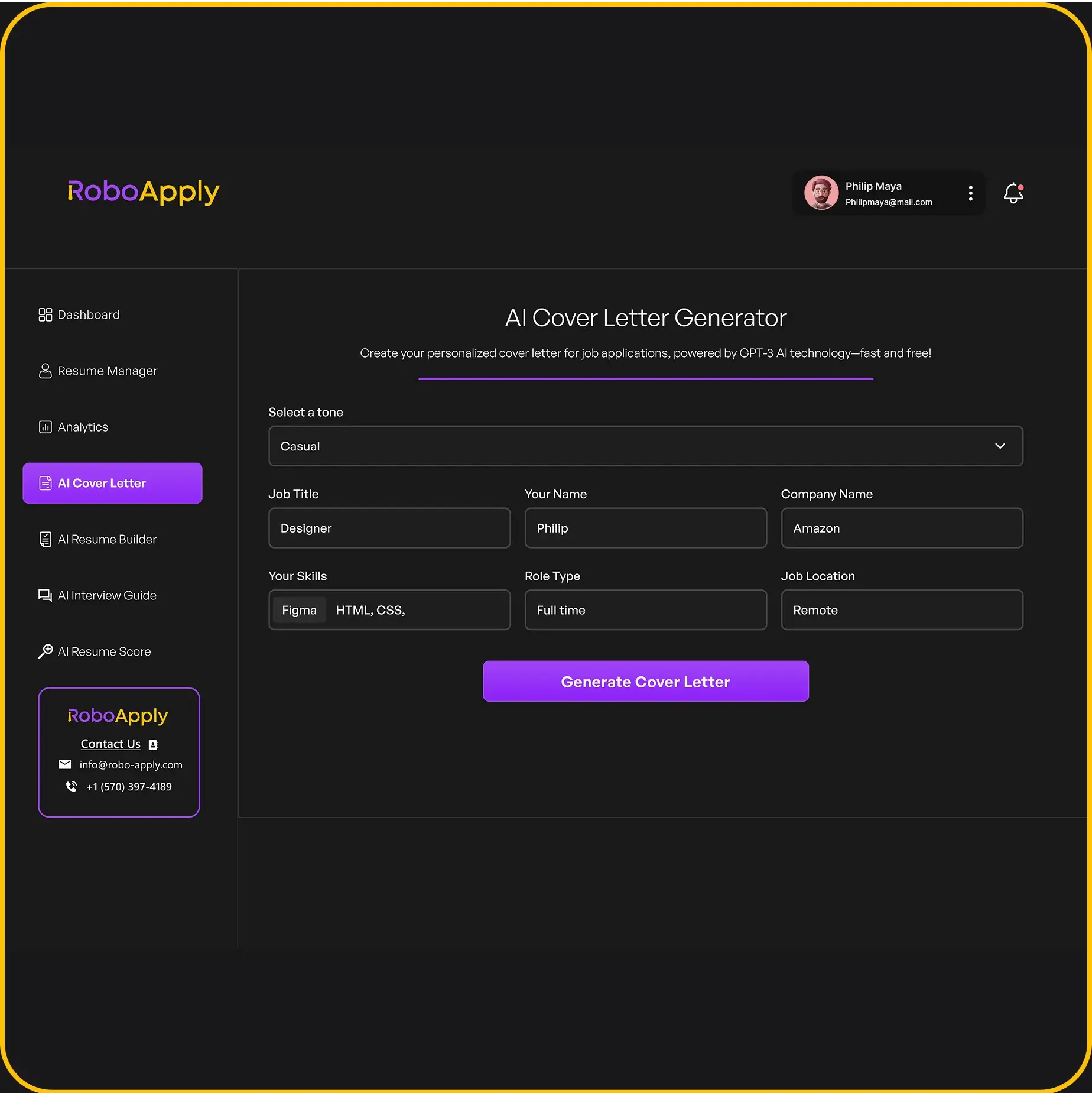
The AI Cover Letter Generator produces customized letters for each postdoc application. You’re not starting from scratch for every position.
AI Auto Apply manages applications across multiple postdoc positions efficiently. You’re not manually filling repetitive forms at different universities.
Frequently Asked Questions
How long should a postdoc cover letter be?
Postdoc cover letters should be 1-2 pages maximum. Focus on relevant research experience, technical skills, and specific interest in the PI’s work.
What should you include in postdoc cover letters?
Include your current position, research background, specific interest in their work, relevant technical skills, publications, and how you’d contribute to their projects.
How do you address a postdoc cover letter?
Address cover letters to the specific PI by name and title. “Dear Dr. Smith” works. Avoid “To Whom It May Concern” for academic applications.
Should postdoc cover letters mention publications?
Yes, briefly mention your peer-reviewed publications, manuscripts in preparation, and conference presentations. Quantify your productivity when possible showing research output.
How do you show research fit in postdoc letters?
Reference specific recent papers by the PI, explain how your skills apply to their projects, and describe how you’d advance their research agenda.