What should I include in a cover letter? Include your contact information, a professional greeting, an opening paragraph explaining why you’re writing, body paragraphs highlighting your relevant qualifications and accomplishments, a closing paragraph with a call to action, and a professional sign-off. Each section should connect your experience to the specific job requirements while demonstrating genuine interest in the position and company.
A well-crafted cover letter bridges the gap between your resume and the interview. Your resume lists what you’ve done. Your cover letter explains why it matters for this specific role.
Essential Contact Information to Include
Your cover letter needs proper contact information at the top so hiring managers can easily reach you. Start with your full name, phone number, email address, and LinkedIn profile URL if you have one. Skip your full street address unless the job posting specifically requests it.
Add the date below your contact information. Then include the hiring manager’s name, title, company name, and company address. Take the time to research and find the specific person’s name rather than using generic greetings.
According to research on application materials, cover letters with specific recipient names get opened and read 40% more often than those with generic salutations.
If you can’t find the hiring manager’s name, use “Dear Hiring Manager” or “Dear [Department] Team” as your greeting.
Opening Paragraph Elements
Your opening paragraph needs to grab attention immediately while stating your purpose clearly. Hiring managers spend literal seconds deciding whether to keep reading.
State the specific position you’re applying for and where you found the job posting. Mention if someone referred you or if you have a connection to the company.
Include one compelling reason why you’re a strong candidate right away. Lead with your most relevant achievement that directly addresses what they need.
For example: “As a marketing manager who increased social media engagement by 150% at Tech Startup, I’m excited to apply for the Senior Marketing Manager position at Your Company.”
This opening identifies the role, establishes credibility with real numbers, and connects experience to company needs.
For guidance on other application materials, resources on whether to put references on a resume can help you understand what information belongs where.
Body Paragraph Content
The body of your cover letter should span one to two paragraphs highlighting your most relevant qualifications. This is where you make your case for why the company should interview you.
Here’s what should I include in a cover letter body section:
- Specific accomplishments with measurable results that match job requirements
- Relevant skills demonstrated through concrete examples
- Connection to company goals showing you researched their challenges
- Unique value you bring that other candidates might not offer
- Career progression that prepared you for this next step
Focus on two to three key points rather than trying to cover everything. Your resume provides comprehensive history. Your cover letter highlights the most compelling pieces.
Use the job description as your guide. If they emphasize team leadership, share a specific story about leading a successful project.
Avoid simply repeating resume content. Where your resume says “Managed team of 5,” your cover letter might explain “Led a cross-functional team of 5 through a complete system migration, delivering the project two weeks ahead of schedule.”
According to studies on hiring practices, cover letters that demonstrate specific knowledge about the company receive interview requests 60% more often.
Understanding professional document preparation helps across contexts. Resources on how many bullet points per job on resume provide insights into effective written communication.
Closing Paragraph Requirements
Your closing paragraph should accomplish three goals: reiterate interest, suggest next steps, and thank the reader.
Restate your enthusiasm for the position and company in a specific way. Include a clear call to action that shows confidence without being pushy. Mention your availability for an interview and indicate you’ll follow up.
Thank them for their time. Acknowledge that reviewing hundreds of applications takes serious effort.
Example closing: “I’m excited about the opportunity to bring my digital marketing expertise to Company Name’s expansion. I’d welcome the chance to discuss how my background could contribute to your goals. I’m available for an interview at your convenience.”
Sign off with “Sincerely” or “Best regards” followed by your full name.
For more on professional communication, calling a job after applying offers insights that can strengthen your follow-up strategy.

Common Elements to Avoid in Cover Letters
Knowing what should I include in a cover letter also means understanding what to leave out. These mistakes weaken your application:
Don’t start with “I am writing to apply for…” This wastes your opening sentence. Jump straight into why you’re qualified instead.
Skip salary requirements unless specifically requested. Mentioning money too early can eliminate you from consideration.
Avoid explaining employment gaps or weaknesses. This document should emphasize strengths, not draw attention to concerns.
Don’t include personal information unrelated to the job. Stay focused on job-relevant qualifications.
Skip weak phrases like “I believe I would be a good fit.” State your qualifications directly and definitively.
According to research on application mistakes, cover letters with five or more of these errors get rejected 75% more often.
If you’re exploring opportunities in other industries, checking out resources like how many jobs are available in basic industries can help you understand employment trends.
Tailoring Your Cover Letter Content
Generic cover letters get rejected immediately. Every cover letter you send should feel written specifically for that role and company.
Research the company thoroughly. Read their website, recent news coverage, and social media posts. Reference specific initiatives or values in your letter.
Match your language to the job description. If they use certain terminology or emphasize particular skills, incorporate that exact language naturally.
Address their specific challenges. If the company recently announced expansion plans, explain how your experience with scaling operations could help.
Customize your examples to mirror their priorities. If the job emphasizes collaboration, highlight team achievements.
For those considering specialized career paths, exploring topics like how much do underwater welders make shows how different fields have varying expectations.
Formatting and Length Guidelines
Proper formatting makes your cover letter easy to read. Keep your cover letter to one page. Three to four paragraphs work best, totaling 250 to 400 words.
Use standard business letter format with your contact information at the top. Choose a clean font like Arial or Times New Roman in 11 to 12-point size.
Set one-inch margins on all sides. Use single spacing within paragraphs and double spacing between paragraphs.
Save your file as a PDF. Name the file professionally like “JohnSmith_CoverLetter_MarketingManager.pdf.”
According to professional writing standards, proper formatting increases readability by up to 60%.
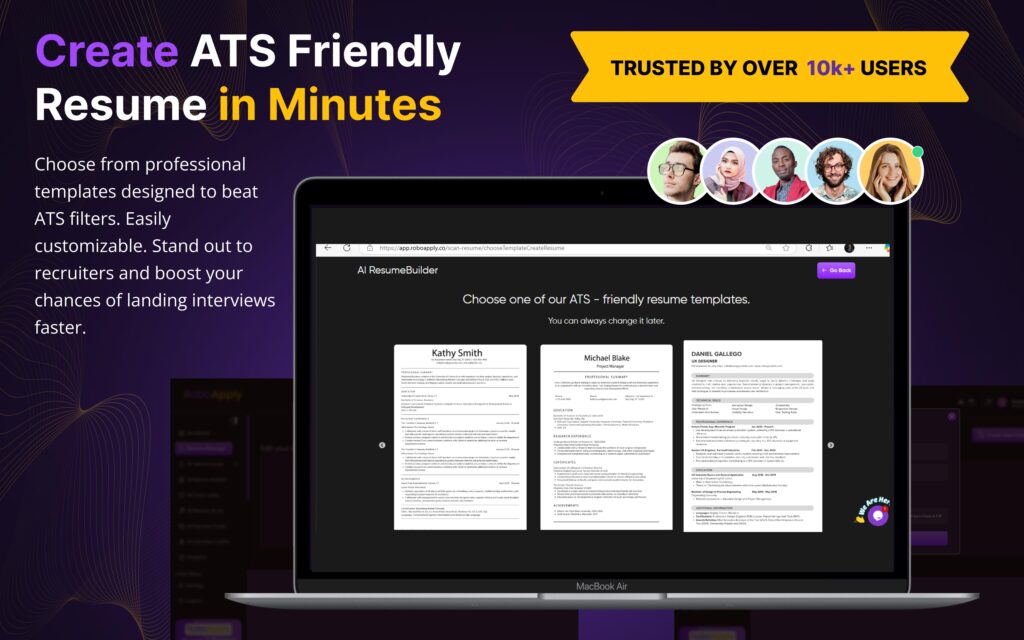
Streamlining Your Cover Letter Creation
Creating tailored cover letters for multiple applications requires organization. These tools help you manage cover letter creation while maintaining quality.
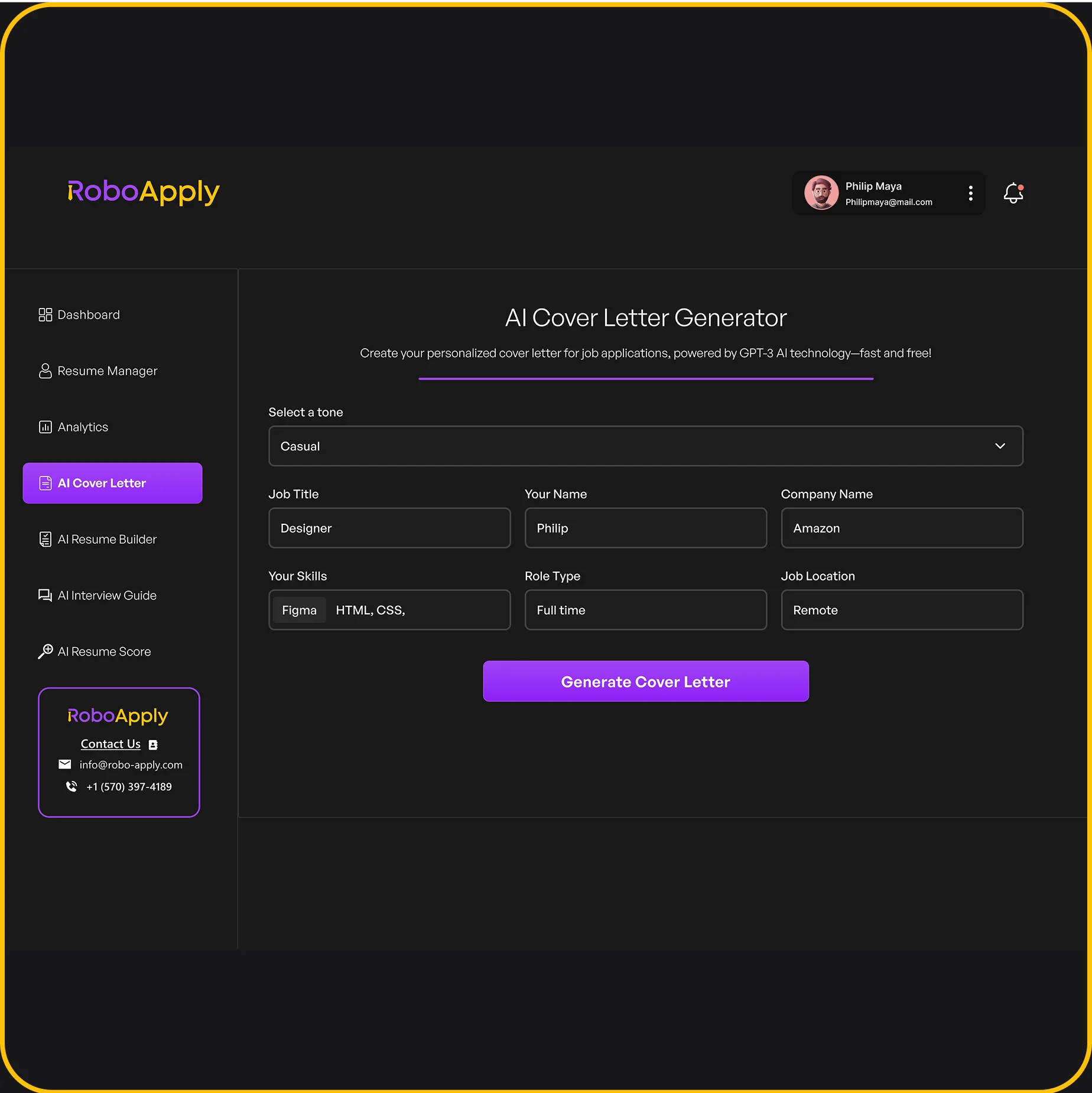
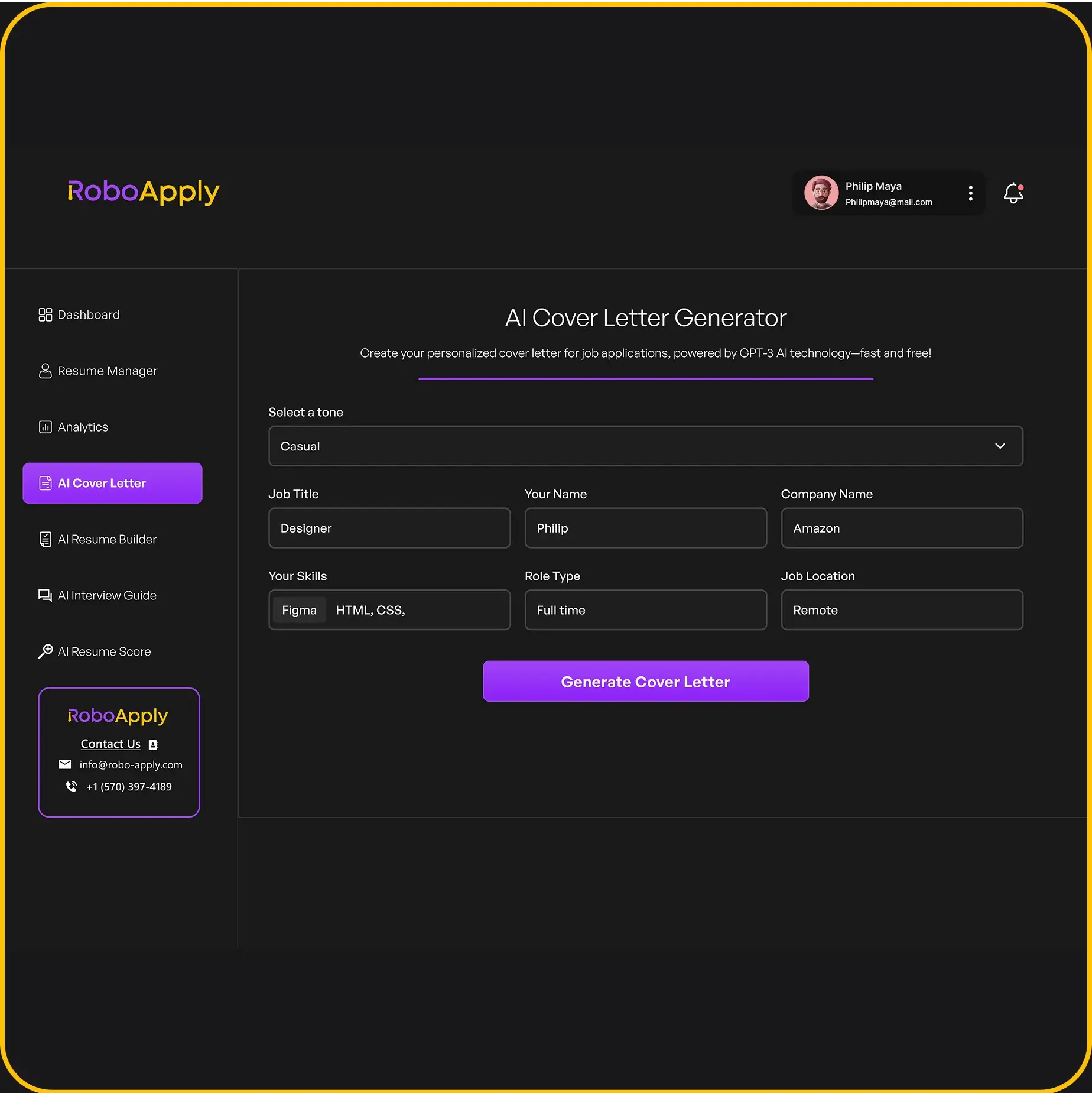
RoboApply’s AI Cover Letter generator creates optimized cover letters that include all essential elements for each position.
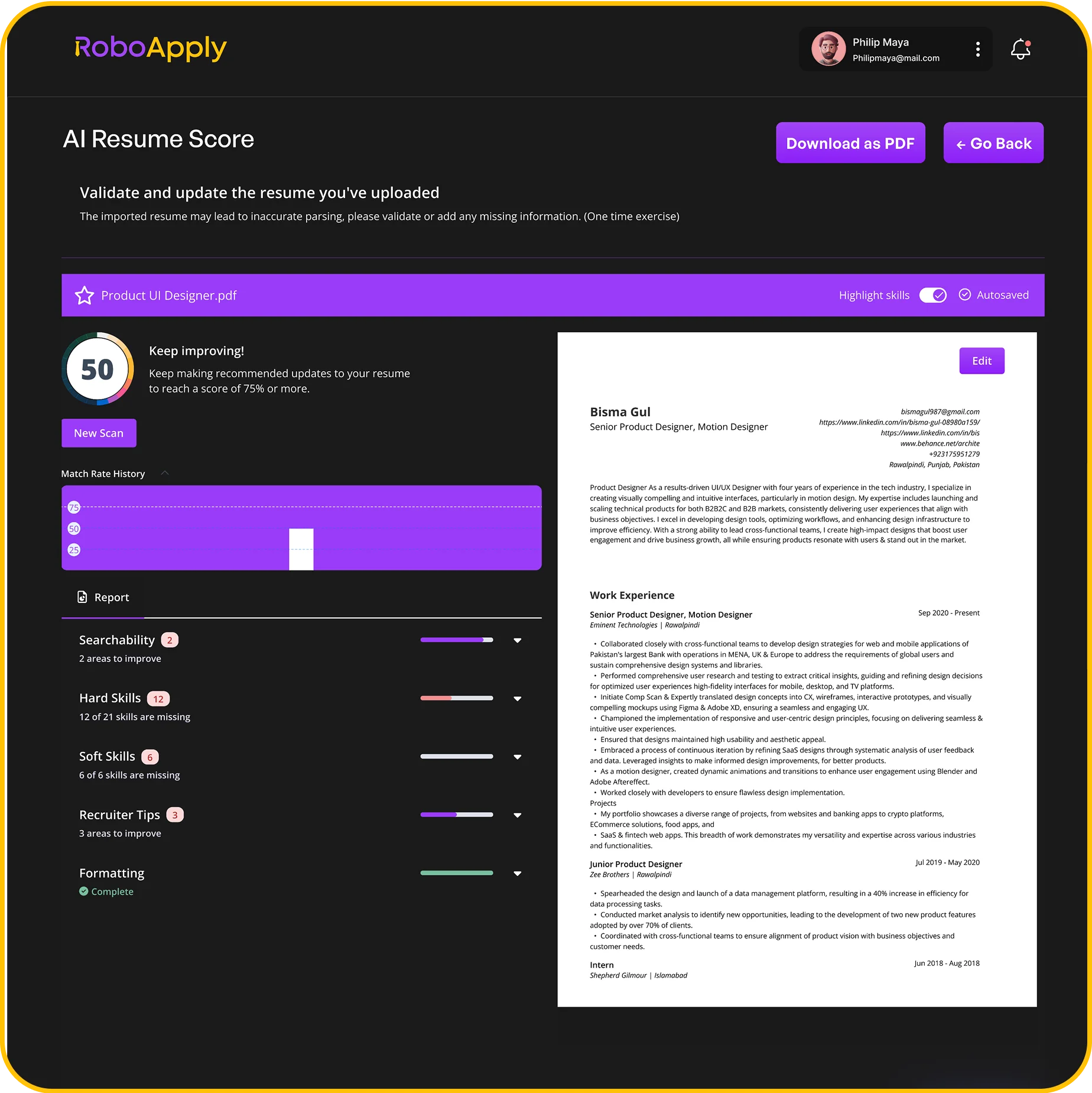
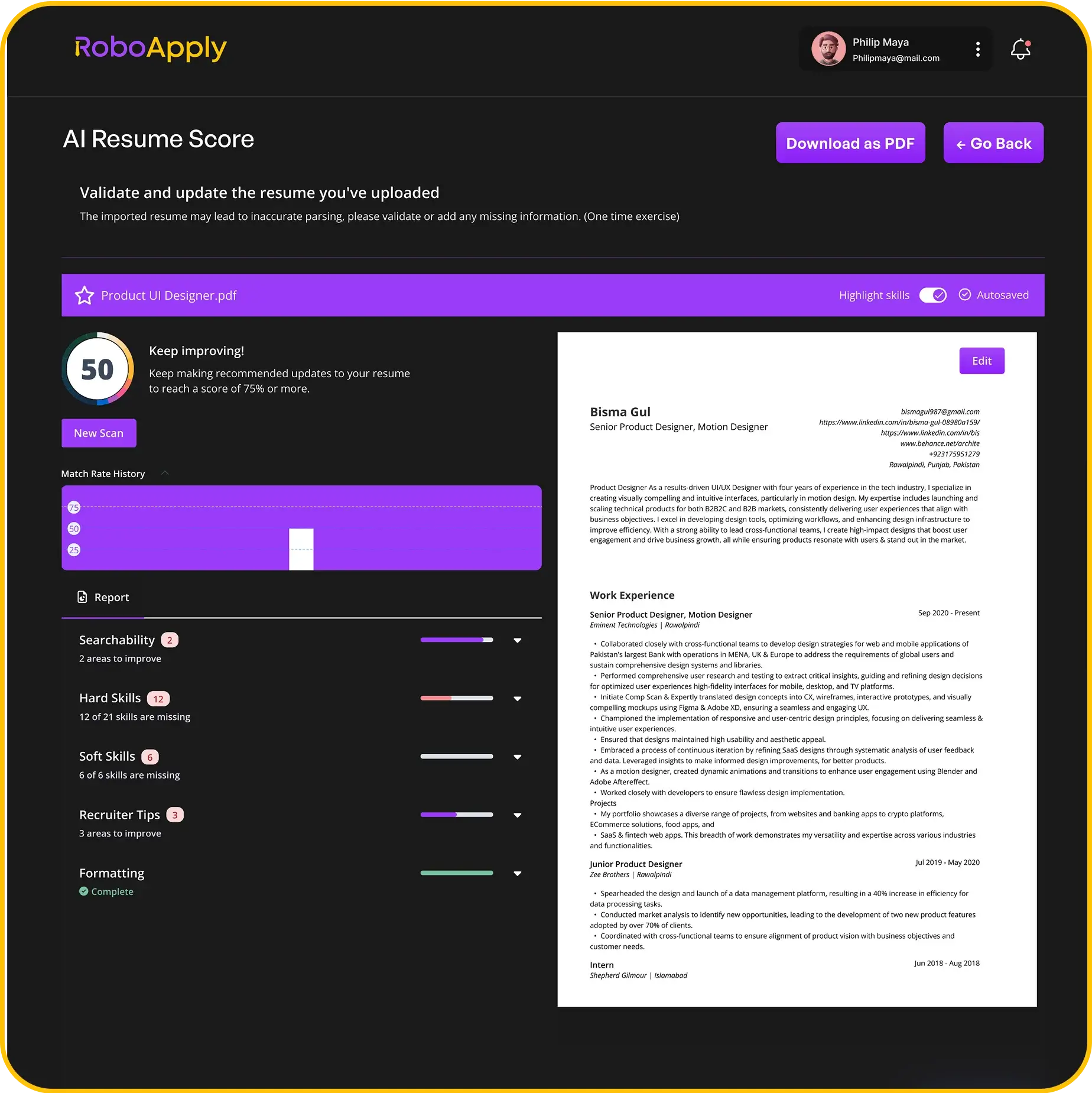
The Resume Score feature helps you understand which qualifications to emphasize based on job requirements.
AI Auto Apply manages applications across hundreds of positions, generating appropriate cover letters for each one.
Frequently Asked Questions
What should I include in a cover letter opening?
Include the specific position you’re applying for, where you found the job, one compelling qualification, and a statement connecting your experience to company needs.
How long should my cover letter be?
Your cover letter should be 250 to 400 words, fitting on one page. Three to four paragraphs work best for most applications.
Should I include salary expectations in my cover letter?
No, avoid including salary expectations unless the job posting specifically requests them. Save salary discussions for later in the interview process.
What contact information goes on a cover letter?
Include your full name, phone number, email address, and LinkedIn profile URL at the top. Add the date and recipient’s contact information below.
Can I use the same cover letter for multiple jobs?
No, customize each cover letter for the specific role and company. Generic letters get rejected while tailored letters improve your interview chances.