Adjectives for resumes should be specific, quantifiable, and prove your capabilities rather than make vague claims. Strong resume adjectives include “analytical,” “strategic,” “proficient,” and “certified” because they describe concrete skills. Weak adjectives like “hardworking,” “passionate,” and “team player” are overused and meaningless without proof. The best resumes use adjectives sparingly while focusing on achievement-focused action verbs and numbers.
Most job seekers stuff resumes with generic adjectives thinking they sound impressive. “Dedicated professional with excellent communication skills” appears on thousands of resumes. Hiring managers ignore this fluff instantly because it proves nothing about your actual capabilities.
Research from Jobscan shows resumes with specific, measurable language get 35% more callbacks than those filled with generic adjectives. Your word choices determine whether recruiters keep reading or move to the next candidate.
Understanding Adjective Use on Resumes
Adjectives describe qualities, characteristics, or attributes of nouns. On resumes, they theoretically enhance how you present your skills and experience. However, most people use adjectives poorly, weakening their resumes instead of strengthening them.
The problem with resume adjectives comes down to proof. When you write “excellent communicator,” you’re making a claim without evidence. Anyone can say they’re excellent at something. Hiring managers want proof through specific examples and measurable results.
Strong resume adjectives work differently. They describe verifiable qualities or provide specific context. “Certified project manager” uses an adjective that can be verified. “Proficient in Python” describes a measurable skill level. “Strategic marketing plan” gives context about the type of work you did.
Generic self-descriptive adjectives fail because they’re subjective opinion rather than objective fact. You think you’re “creative” or “innovative” but hiring managers want to see what you created or innovated. They judge your creativity based on achievements, not self-proclaimed labels. Understanding opportunities across basic industries requires specific rather than vague language.
Strong Adjectives That Add Value
Certain adjectives strengthen resumes when used correctly because they provide specific, meaningful information. These words describe verifiable qualities or give useful context about your experience and capabilities.
Technical and Skill-Based Adjectives
Technical adjectives describe your proficiency level or specialization in specific areas. These work well because they provide concrete information about your capabilities.
Effective technical adjectives include:
- Proficient (in software, languages, or technical skills)
- Certified (followed by the specific certification)
- Advanced (describing skill level in tools or methods)
- Specialized (in particular systems or approaches)
- Licensed (for professional credentials)
- Bilingual or Multilingual (specifying languages)
Examples of proper use include “Proficient in Salesforce CRM with 5+ years daily use” or “Certified Project Management Professional (PMP).” These adjectives add genuine value because they describe verifiable qualifications.
Results-Oriented Adjectives
Adjectives describing the type or nature of your work add context when paired with specific achievements. They help hiring managers understand the scope and impact of your contributions.
Valuable result-focused adjectives include:
- Strategic (planning, initiatives, decisions)
- Analytical (approach, methods, skills)
- Comprehensive (audits, reviews, reports)
- Collaborative (projects, efforts, partnerships)
- Cost-effective (solutions, improvements, strategies)
- Revenue-generating (programs, campaigns, activities)
These work when combined with specifics like “Strategic marketing initiative increasing brand awareness 40%” or “Comprehensive financial audit identifying $250K savings opportunities.” The adjective provides context while numbers prove impact. Following professional standards includes using meaningful language.

Weak Adjectives That Hurt Your Resume
Certain adjectives appear constantly on resumes but add zero value. They’re so overused and vague that hiring managers ignore them completely. Eliminating these weak adjectives immediately improves your resume.
Generic Personality Claims
Self-descriptive adjectives claiming positive personality traits sound good but prove nothing. Every candidate claims the same qualities, making these words meaningless differentiators.
Adjectives to eliminate include:
- Hardworking (everyone claims this)
- Dedicated (meaningless without context)
- Passionate (subjective and unprovable)
- Motivated (assumed if you’re applying)
- Dynamic (vague and overused)
- Results-driven (cliché that proves nothing)
Replace these with specific achievements showing these qualities. Instead of “Hardworking sales professional,” write “Exceeded quarterly sales targets by 25% for eight consecutive quarters.” The achievement proves your work ethic better than the adjective ever could.
Overused Soft Skill Adjectives
Soft skill adjectives suffer from overuse and lack of proof. Thousands of candidates claim identical qualities using identical language.
Worn-out adjectives to avoid include:
- Excellent (communicator, leader, problem-solver)
- Strong (skills in various areas)
- Effective (too vague to mean anything)
- Proven (everything on your resume should be proven)
- Detail-oriented (claimed by everyone)
- Team player (expected in most roles)
These adjectives waste valuable resume space. You’re using words without adding information. Hiring managers skim past them looking for actual substance. Understanding resume formatting includes avoiding these traps.
How to Use Adjectives Effectively
When you do use adjectives on your resume, follow specific strategies ensuring they add value rather than fluff. These approaches help you incorporate adjectives appropriately without weakening your application.
Pair adjectives with specifics and numbers. Never let an adjective stand alone without supporting evidence. “Comprehensive training program” means nothing. “Comprehensive training program serving 200+ employees across 5 locations” provides context and scale.
Use adjectives to describe your work, not yourself. Writing about “strategic initiatives” or “collaborative projects” works better than calling yourself “strategic” or “collaborative.” The focus stays on what you did rather than self-promotion.
Choose adjectives that match industry terminology. If your field uses specific adjectives describing work types, include those terms. “Agile development” makes sense for software. “Patient-centered care” fits healthcare. Industry-specific adjectives show you understand the field. Like knowing when to follow up on applications, context-appropriate language improves results.
Replace weak adjectives with stronger alternatives backed by evidence. Instead of “excellent project manager,” write “project manager with 15 successful launches averaging 95% on-time completion.” The specific details prove excellence better than the adjective.
Limit adjective use overall. Action verbs and concrete details create stronger resumes than adjective-heavy descriptions. If removing an adjective doesn’t change meaning, cut it. Every word should add value.
Adjectives for Different Resume Sections
Different resume sections benefit from different types of adjectives. Understanding where various adjectives work best helps you use them strategically throughout your application.
Professional summaries can include adjectives describing your experience level and specialization. “Senior marketing executive” or “entry-level software engineer” both use adjectives appropriately setting context for your background.
Skills sections use technical proficiency adjectives. “Advanced Excel skills” or “intermediate Spanish fluency” both provide useful information about capability levels. These adjectives help hiring managers gauge your expertise.
Experience sections need adjectives describing projects and initiatives rather than personal qualities. “Led cross-functional team” or “developed proprietary system” both use adjectives adding context without empty self-promotion.
Education and certifications sections use achievement-based adjectives when relevant. “Graduated summa cum laude” or “earned professional certification” both include adjectives describing verified accomplishments. Understanding compensation across specialized fields helps you position experience appropriately.
Industry-Specific Adjective Considerations
Different industries and roles value different types of adjectives on resumes. Tailoring your adjective choices to match industry expectations improves your application effectiveness.
Technical fields like IT and engineering prefer precise, technical adjectives. “Full-stack developer,” “embedded systems engineer,” or “cloud-based infrastructure” all use adjectives describing specific technical domains. Avoid soft skill adjectives in these fields.
Creative industries like marketing and design accept more creative adjectives when they describe work output. “Award-winning campaign” or “innovative brand strategy” work for these roles when backed by portfolio evidence.
Healthcare uses patient-focused and compliance-related adjectives. “Patient-centered care,” “HIPAA-compliant systems,” or “evidence-based practices” all demonstrate understanding of healthcare priorities.
Finance and accounting prefer conservative, results-focused adjectives. “Cost-effective solutions,” “risk-adjusted returns,” or “regulatory-compliant processes” all speak the language of these industries.
Optimizing Your Complete Resume
Beyond adjective choices, your entire resume needs optimization for both ATS systems and human reviewers. These tools help you create polished applications that get results.
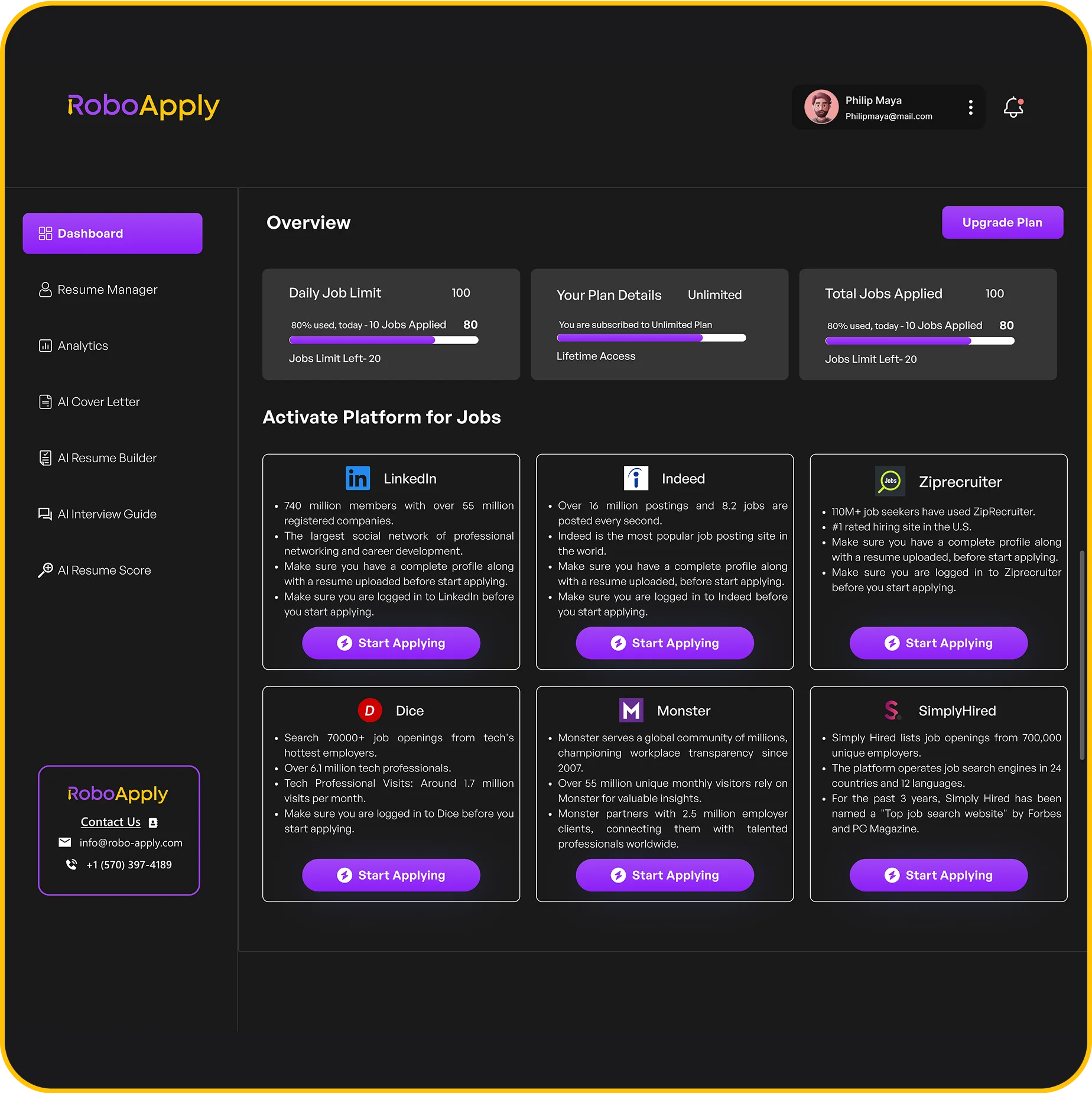
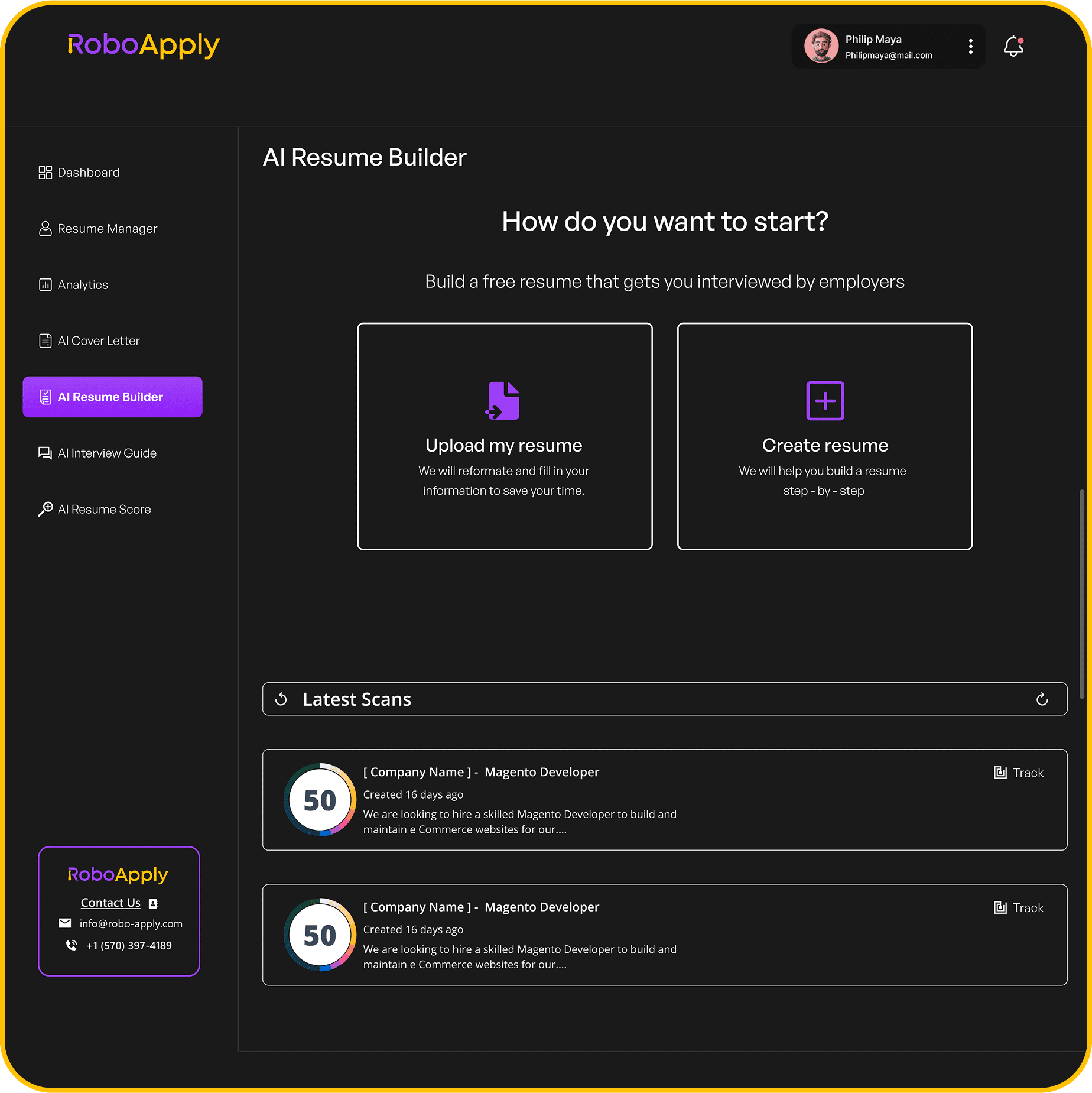
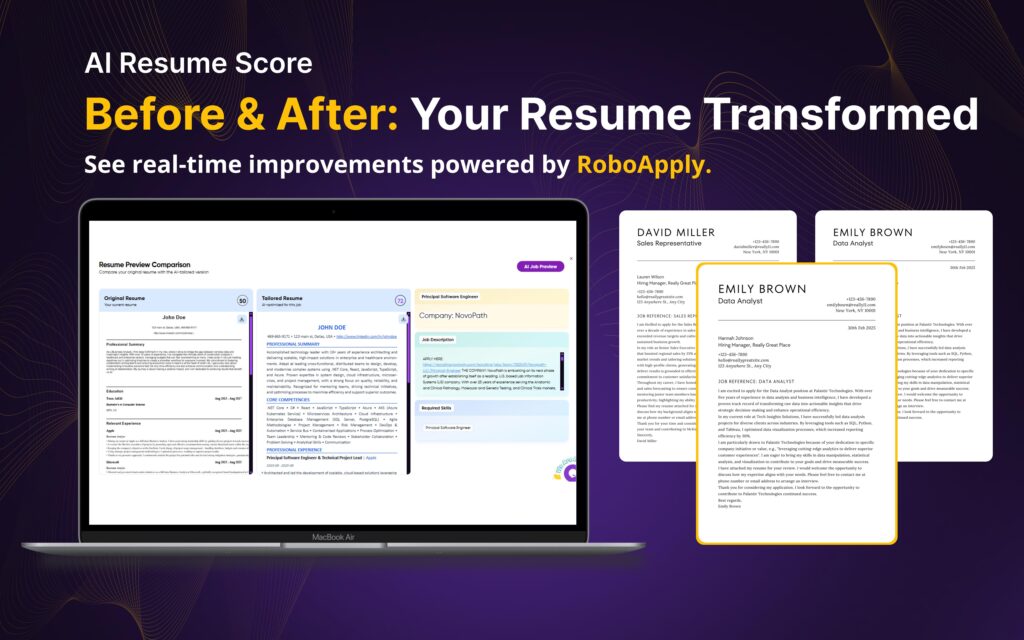
RoboApply’s AI Resume Builder helps you create optimized resumes with appropriate adjective use. The platform suggests industry-appropriate language while avoiding weak, generic terms that hurt applications.
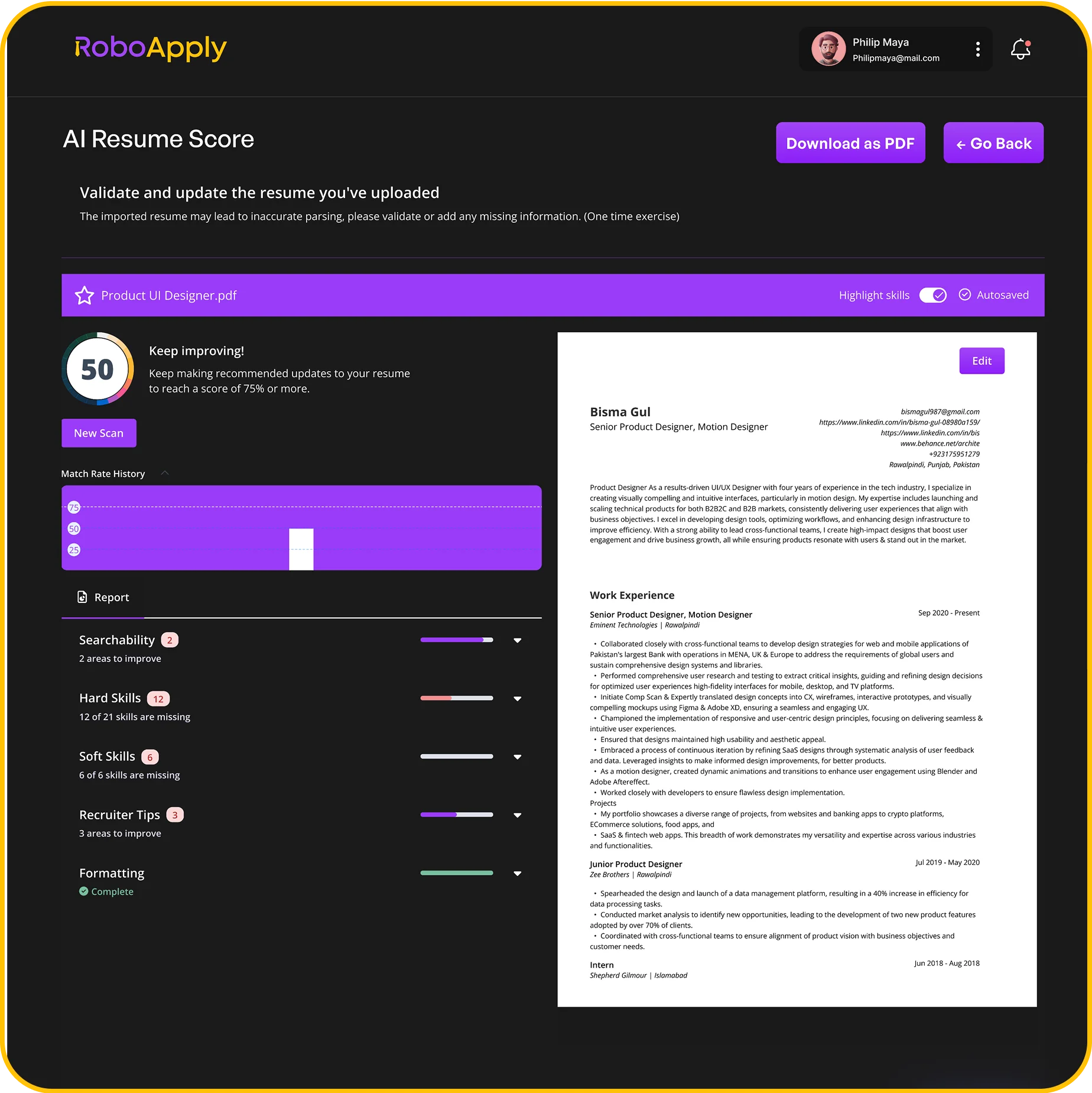
The Resume Score feature analyzes your complete resume including adjective use. You’ll see where you’re relying too heavily on weak descriptors and get specific suggestions for stronger alternatives.
AI Auto Apply uses your optimized resume across hundreds of applications. You’re not manually customizing repeatedly. The platform handles distribution while you focus on interview preparation.
Interview Copilot prepares you to discuss the experience described on your resume. You’ll practice explaining your background confidently so your interview responses align with your resume content.
Frequently Asked Questions
What are the best adjectives for resumes?
Best resume adjectives are specific and verifiable like “certified,” “proficient,” “strategic,” and “analytical.” These describe concrete skills and work types rather than making unprovable claims.
Should I use adjectives on my resume?
Use adjectives sparingly and strategically. Focus on action verbs and concrete achievements. Include adjectives only when they add specific, meaningful context about your experience.
What adjectives should I avoid on resumes?
Avoid generic adjectives like “hardworking,” “dedicated,” “passionate,” “motivated,” “excellent,” and “team player.” These are overused, vague, and provide no meaningful information to hiring managers.
How many adjectives should be on a resume?
There’s no specific number. Use adjectives only when they add value. If you can remove an adjective without changing meaning, cut it. Every word should serve a purpose.
Can adjectives help my resume pass ATS?
Technical adjectives describing skills can help ATS matching. But generic personality adjectives don’t improve ATS performance. Focus on industry keywords and specific qualifications instead.