A thank you letter email after interview subject line should be clear, professional, and specific. Use formats like “Thank You – [Position] Interview,” “Following Up on [Position] Discussion,” or “Appreciated Our Conversation Today.” Keep it under 50 characters. Include the position name when possible. Your subject line determines whether hiring managers open your email.
Most candidates send generic thank you emails. They use vague subject lines like “Thanks!” or “Following Up.” These get buried in crowded inboxes. Your subject line isn’t decoration. It’s your first impression after the interview.
Research from CareerBuilder shows 80% of hiring managers appreciate thank you emails. However, 57% of candidates never send them. Your follow-up email separates you from lazy competitors. But only if it gets opened and read.
Why Subject Lines Matter for Thank You Emails
Your thank you email subject line determines open rates. Hiring managers receive dozens of emails daily. Generic subject lines get ignored or deleted without reading.
Standing Out in Crowded Inboxes
Hiring managers scan subject lines quickly. They decide to open, skip, or delete in two seconds. Your subject line must communicate value immediately.
Strong subject lines accomplish three things:
- Identify who you are instantly
- Reference the specific position or interview
- Signal professional follow-up rather than spam
Weak subject lines fail because they’re vague. “Thank you” could be from anyone about anything. Hiring managers won’t waste time opening mystery emails.
Reinforcing Your Candidacy
Your subject line starts reinforcing your fit before they open the email. It shows attention to detail and professional communication skills.
Employers evaluate everything during hiring. Your subject line proves you communicate clearly. You follow proper business etiquette. You take the process seriously. These qualities matter for every role. Understanding professional standards applies throughout applications.
Best Thank You Email Subject Line Formats
Different subject line approaches work for different situations. Choose based on your interview type, industry, and company culture. Here are proven formats that get opened consistently.
Direct and Professional Formats
These subject lines work universally across industries. They’re safe choices when you’re uncertain about company culture.
Effective direct formats include:
- “Thank You – [Position Title] Interview”
- “Thank You for Your Time – [Your Name]”
- “Appreciated Meeting with You Today”
- “Thank You for the [Position] Interview Opportunity”
- “Following Up on Our [Day] Conversation”
- “Thank You – [Your Name] – [Position Title]”
These formats clearly identify the purpose. They reference the specific position. They include your name for easy identification. Hiring managers know exactly what to expect when opening.
Personalized Reference Formats
When you discussed specific topics during the interview, reference them. This personalization shows genuine engagement and strong memory.
Personalized examples:
- “Re: Marketing Strategy Discussion – Thank You”
- “Following Up on Our Product Development Conversation”
- “Excited About the [Specific Project] Opportunity”
- “Thank You – Looking Forward to Contributing to [Team Name]”
These work best when you had substantive discussions. They remind the interviewer of your conversation. They demonstrate you paid attention. Similar to following up strategically, personalization matters.
Position-Specific Formats
Always include the job title when possible. Multiple candidates interview for different positions. Clarity prevents confusion.
Position-specific examples:
- “Thank You – Senior Marketing Manager Interview”
- “Appreciated Discussing the Data Analyst Role”
- “Thank You for Considering Me for Account Executive”
- “Following Up – Software Engineer Position”
These subject lines work especially well at larger companies. They help HR teams and hiring managers organize candidates properly.

What to Avoid in Thank You Email Subject Lines
Certain subject line approaches hurt your chances. These mistakes make you look unprofessional or desperate. Avoid them completely.
Overly Casual Language
Thank you emails are business correspondence. Your subject line should match this formality level. Casual language seems unprofessional.
Don’t use:
- “Hey, thanks for meeting!”
- “Great chatting with you :)”
- “Just wanted to say thanks!”
- “Quick follow-up”
Save casual language for personal emails. Business requires professional tone even in subject lines.
Generic or Vague Lines
Subject lines without context get ignored. Hiring managers can’t identify who sent them or what they’re about.
Avoid:
- “Thank you”
- “Following up”
- “From our meeting”
- “Checking in”
These could be from anyone about anything. They don’t communicate value. They waste the reader’s time.
Desperate or Pushy Phrasing
Don’t make your subject line sound needy. Confidence works better than desperation. You’re expressing gratitude, not begging.
Skip these approaches:
- “Please Consider My Application Again”
- “I Really Need This Job – Thank You”
- “Why You Should Hire Me”
- “Waiting to Hear Back – Thank You”
These signal desperation or pushiness. Neither quality attracts employers. Maintain professional confidence instead.
Timing Your Thank You Email
Send your thank you email within 24 hours. Sooner is better. Prompt follow-up demonstrates enthusiasm and strong organizational skills. Understanding career opportunities helps prioritize applications.
Same-Day Sending Benefits
Sending your thank you the same afternoon or evening shows exceptional interest. You’re top of mind for the interviewer. Your conversation feels fresh to both of you.
Aim for 2-6 hours after your interview. This timing feels prompt without seeming overeager. It shows you prioritize professional follow-up.
Next-Day Sending Limits
Waiting until the next business day is acceptable. Send it first thing in the morning. Your email arrives when they’re checking messages.
Don’t wait longer than 24 hours. Delays suggest disinterest or poor time management. Both hurt your candidacy significantly.
Multiple Interviewers Coordination
When you interviewed with several people, send individual emails. Customize each message referencing your specific conversation with that person.
Use similar subject lines with personalization:
- “Thank You – [Position] Interview with [Their Name]”
- “Appreciated Our Discussion Today – [Your Name]”
- “Thank You for Your Time and Insights”
Don’t send one group email to all interviewers. Individual messages show greater effort and personalization.
Crafting the Email Body Content
Your subject line gets the email opened. Your body content closes the deal. Structure your thank you email for maximum impact. Understanding formatting standards helps across communications.
Opening Paragraph Structure
Start by thanking them for their time. Reference the specific position and interview date. Express continued interest clearly.
Example: “Thank you for taking the time to meet with me yesterday about the Marketing Manager position. I enjoyed learning about your team’s upcoming product launch.”
Keep it brief. Two to three sentences maximum. Get to the point quickly.
Middle Paragraph Value
Your middle paragraph should reinforce why you’re qualified. Reference something specific from the interview. Connect your experience to their needs.
Address:
- A specific challenge they mentioned you could help solve
- Skills you have that match their requirements perfectly
- Your enthusiasm for particular aspects of the role
- How your background aligns with their company culture
Keep this section to 3-4 sentences. You’re reminding them of your value, not rewriting your resume.
Closing Call to Action
End by reiterating interest. Offer to provide additional information. Express willingness to answer questions. Keep it professional and confident.
Example: “I’m excited about the opportunity to contribute to your team. Please let me know if you need any additional information. I look forward to hearing from you.”
Close with a professional sign-off like “Best regards” or “Sincerely.” Include your full name and contact information.
Streamlining Your Post-Interview Follow-Up
Managing thank you emails for multiple interviews gets complicated. You’re customizing messages while maintaining quality. You need efficient systems for staying organized. Similar to specialized opportunities, organization matters.
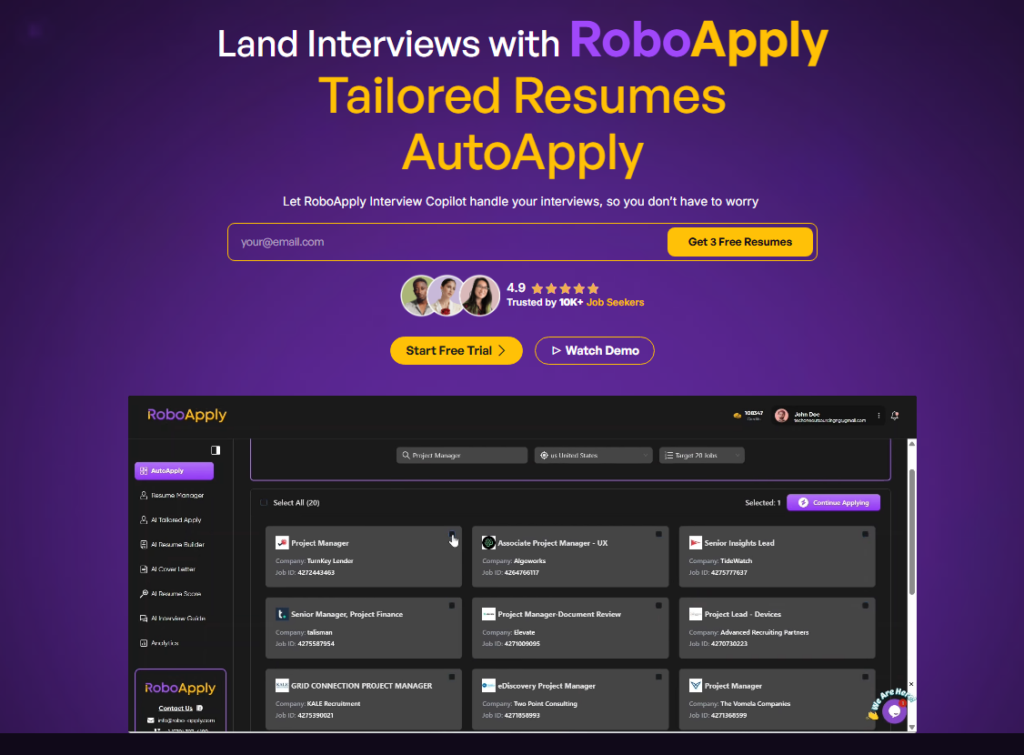
RoboApply’s Interview Copilot helps you prepare professional follow-up emails. The system suggests personalized content based on your interview discussion points. You’ll maintain customization without starting from scratch.
The AI Cover Letter Generator creates professional business correspondence quickly. Your communication maintains consistent quality across all employer interactions. The system optimizes for professional tone automatically.
Analytics dashboard tracks your application and interview progress. You’ll see which follow-up approaches generate responses. This data helps you refine your post-interview strategy.
AI Auto Apply manages your entire application pipeline. You’ll know when to send thank you emails based on interview timing. The system keeps all candidate communications organized efficiently.
Frequently Asked Questions
What’s the best thank you letter email after interview subject line?
Use “Thank You – [Position Title] Interview” or “Thank You for Your Time – [Your Name].” Include the position name for clarity and professionalism.
How soon should I send thank you email after interview?
Send within 24 hours, ideally 2-6 hours after your interview. Same-day sending shows enthusiasm and strong follow-up skills that employers value.
Should I send separate thank you emails to multiple interviewers?
Yes, send individual emails to each interviewer. Customize each message referencing your specific conversation with that person for maximum impact.
Can I send thank you email on weekends?
Yes, but schedule it to send Monday morning if possible. Weekend emails might get buried. Monday arrival ensures visibility when they check messages.
Do hiring managers really read thank you emails?
Yes, 80% of hiring managers appreciate them. They use thank you emails to evaluate communication skills, enthusiasm, and attention to professional details.