Job application AI uses artificial intelligence to automate resume optimization, application submission, and cover letter generation. These tools analyze job descriptions, match your qualifications, and submit applications across multiple platforms automatically. Popular features include ATS optimization, keyword matching, and personalized content creation. AI tools save 10-15 hours weekly while increasing application volume 5-10x.
Most job seekers waste hours filling repetitive application forms manually. You’re typing the same information into different systems, customizing each resume slightly, and writing similar cover letters over and over. AI automation changes this completely.
Research from LinkedIn shows job seekers using AI tools apply to 3-5x more positions weekly than those using manual methods. The technology isn’t replacing human effort. It’s eliminating tedious tasks so you focus on interview preparation and strategic career decisions.
Understanding Job Application AI Technology
Job application AI represents the intersection of artificial intelligence and recruitment technology. These platforms use machine learning algorithms to understand job requirements, match candidate qualifications, and optimize application materials for both human reviewers and automated systems.
The technology works by analyzing vast amounts of employment data including successful resumes, job descriptions, and hiring patterns. AI systems learn which keywords, formats, and content structures generate the highest response rates. They then apply this knowledge to individual applications creating customized materials for each position.
How AI Processes Job Applications
AI application systems follow structured workflows processing your information through multiple stages. Understanding this process helps you provide better inputs generating stronger outputs.
The AI workflow includes these key steps:
- Data collection where you input your work history, skills, education, and target job preferences
- Analysis phase when AI examines job descriptions identifying required qualifications and key terminology
- Matching algorithm comparing your background against job requirements calculating compatibility scores
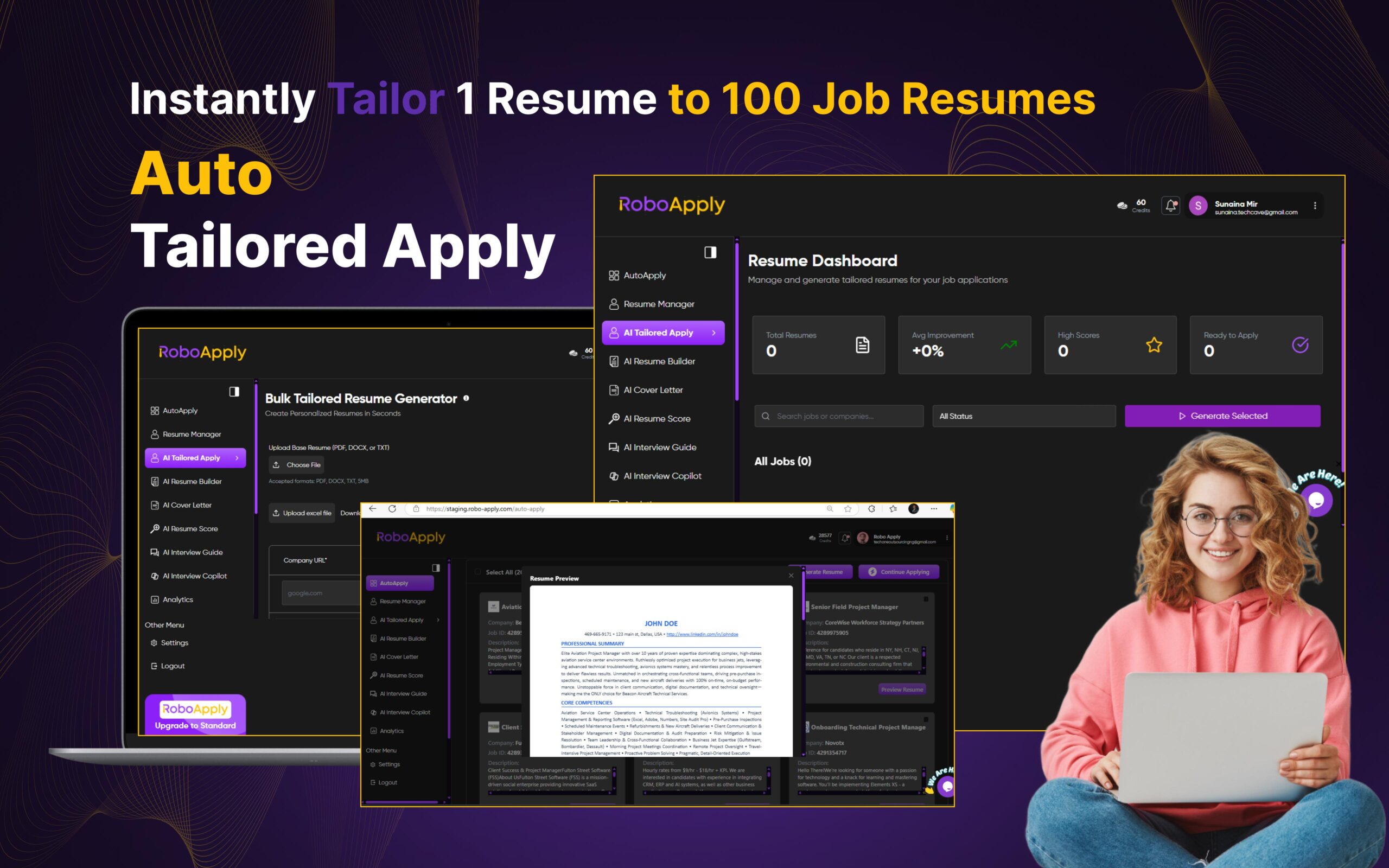
- Content generation creating tailored resumes and cover letters emphasizing relevant experience
- Optimization formatting documents for ATS compatibility and human readability
- Submission automatically filling application forms and submitting to employer systems
This automated workflow handles tasks that traditionally consumed hours of manual effort. You’re not just saving time. You’re ensuring consistency and optimization across every application. Understanding opportunities across basic industries helps you target AI tools appropriately.
Evolution of AI in Recruitment
Job application AI evolved significantly over the past decade transforming from basic keyword matching to sophisticated content generation. Early systems simply scanned resumes for specific terms. Modern platforms understand context, generate original content, and predict hiring outcomes.
First-generation tools from 2015-2018 focused on resume parsing and basic keyword optimization. They could identify skills and experience but couldn’t create customized content. Second-generation systems from 2019-2021 added automated form filling and basic cover letter templates. Current third-generation platforms use advanced natural language processing generating completely customized application materials indistinguishable from human-written content.
This evolution mirrors broader AI advancement in natural language understanding. Tools like RoboApply represent the cutting edge applying GPT-level language models specifically to job search challenges. Following professional standards remains important even with AI assistance.

Key Features of Modern AI Application Tools
Contemporary job application AI platforms offer comprehensive feature sets addressing every aspect of the application process. Understanding available capabilities helps you select tools matching your specific needs and job search strategy.
Automated Application Submission
Automated submission represents the core value proposition of job application AI. Instead of manually completing forms on dozens of employer websites, AI handles the entire process from form population through final submission.
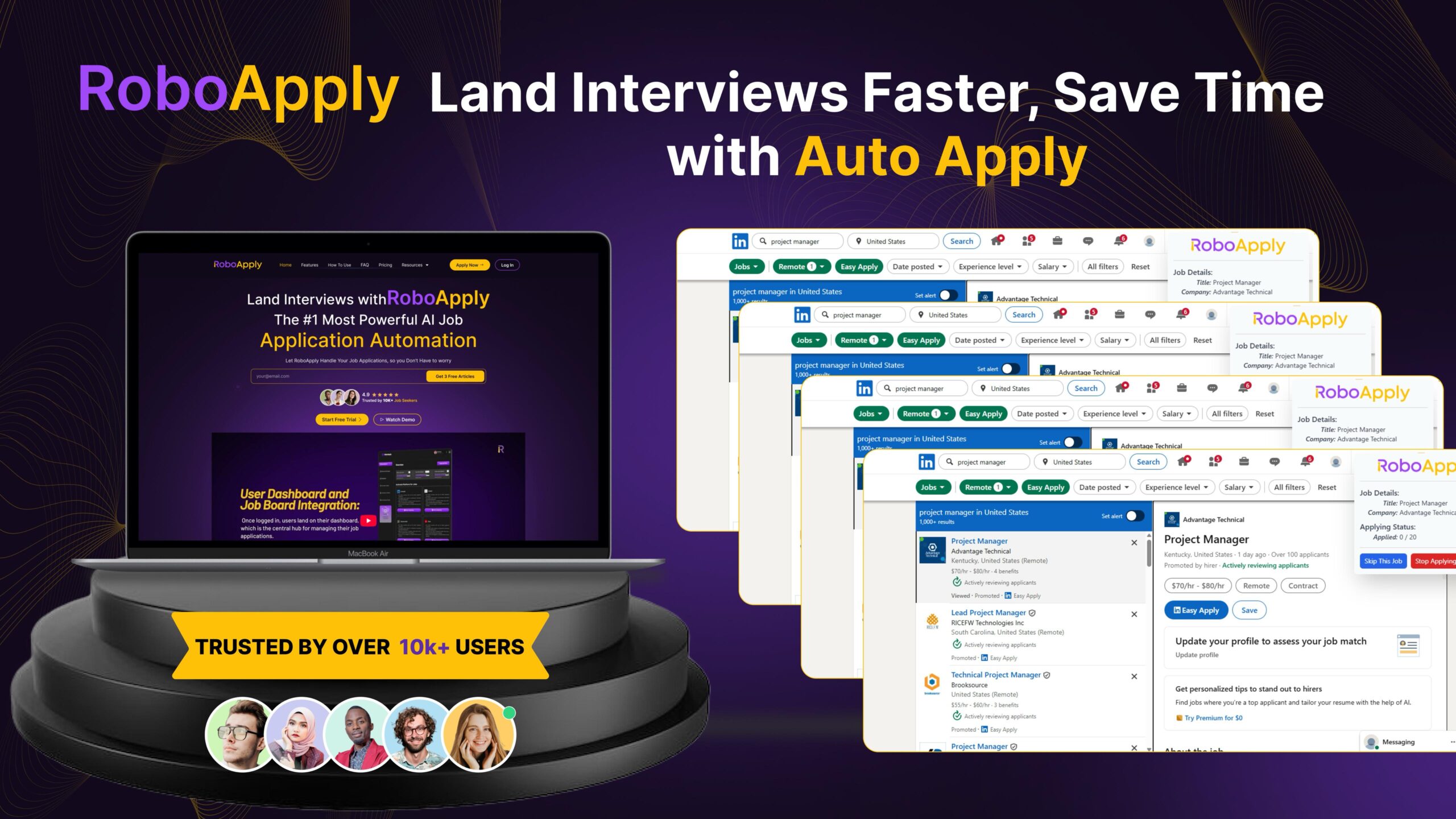
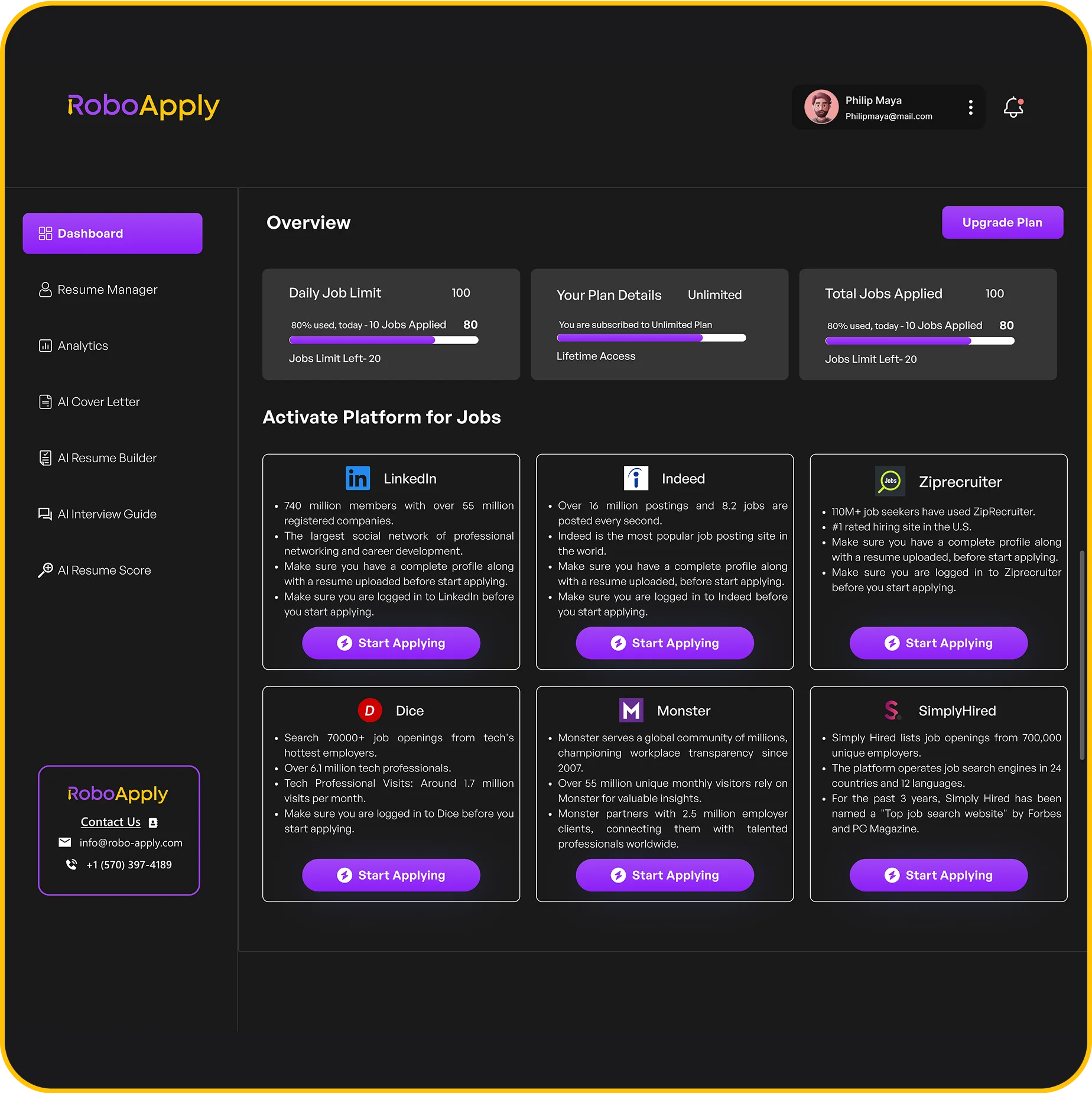
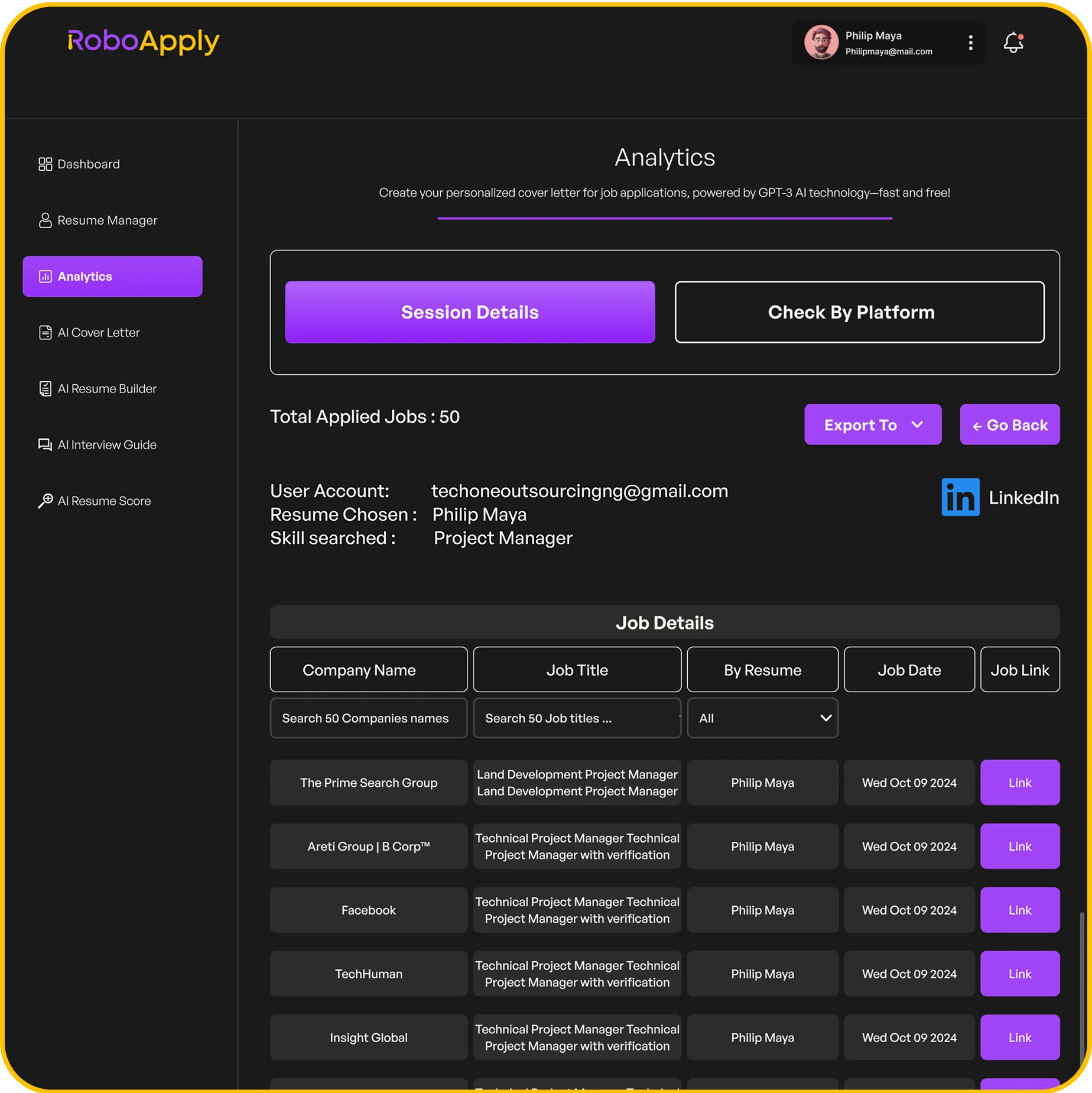
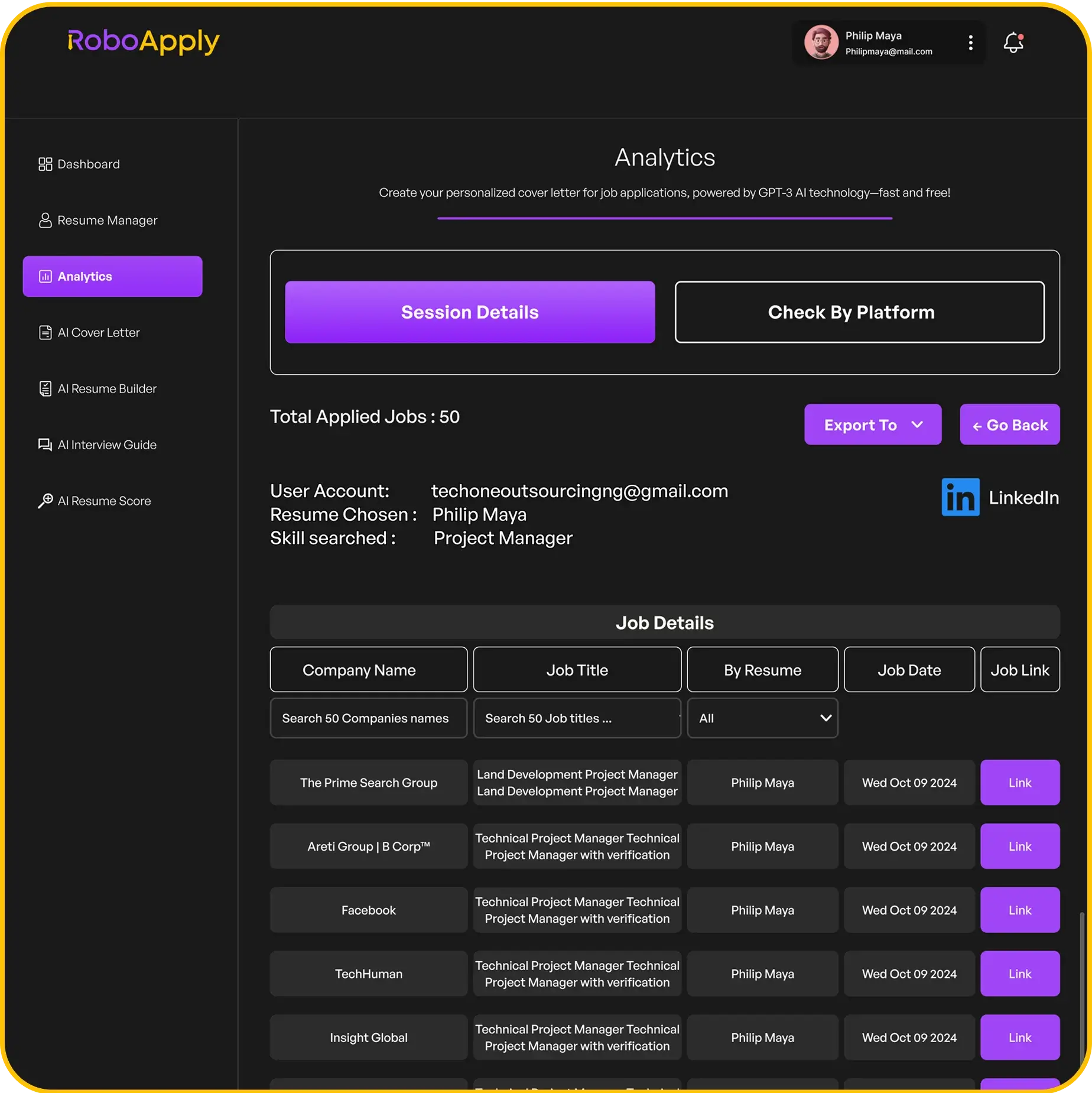
The automation works across multiple platforms including major job boards like Indeed and LinkedIn, company career pages, and applicant tracking systems. The AI extracts relevant information from your profile filling each field appropriately. You’re applying to 50-100 positions in the time manual methods handle 5-10 applications.
Quality automation maintains accuracy despite speed. Modern systems verify information before submission reducing errors that disqualify applications. They also track submitted applications preventing duplicate submissions that annoy recruiters. Like knowing when to follow up on applications, automation timing helps.
Resume and Cover Letter Optimization
AI optimization transforms generic application materials into targeted documents highlighting relevant qualifications for specific positions. This customization significantly improves response rates compared to one-size-fits-all approaches.
Resume optimization features analyze job descriptions identifying key skills, experience requirements, and preferred qualifications. The AI then restructures your resume emphasizing matching elements. It adjusts keyword density for ATS compatibility while maintaining natural language for human readers.
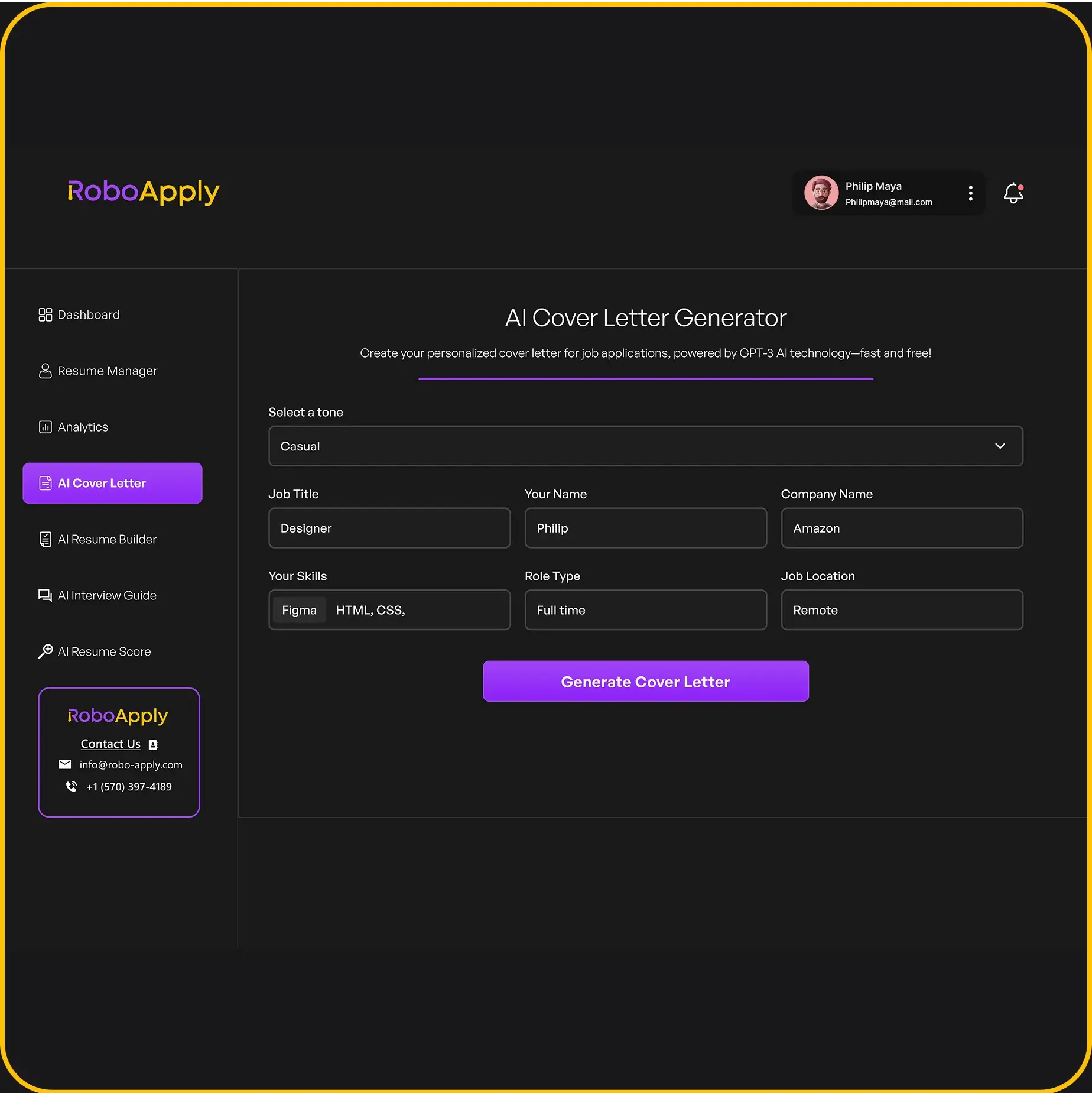
Cover letter generation creates personalized letters for each application. The AI references specific job requirements, company information, and your relevant experience. Generated letters sound authentic because they’re constructed from your actual background rather than generic templates. Understanding resume formatting principles applies to AI-generated content too.
Strategic Use of Job Application AI
Effective AI tool usage requires strategic thinking beyond simple automation. Smart job seekers use AI to amplify their efforts while maintaining quality and authenticity throughout the application process.
Provide detailed, accurate information to AI systems for best results. The quality of AI output directly correlates with input quality. Include comprehensive work history, specific skills with proficiency levels, detailed accomplishments with metrics, career goals and target roles, and preferences for company culture and values.
Target applications strategically rather than applying everywhere. AI tools make high-volume applications easy but quality matters more than quantity. Focus on positions genuinely matching your qualifications and interests. Use AI to quickly assess fit then apply to strong matches.
Review and customize AI-generated content before submission. While AI creates strong drafts, adding personal touches improves authenticity. Adjust phrasing to match your voice, add specific examples the AI might miss, and ensure technical accuracy in specialized fields. Similar to understanding specialized compensation, different roles need different emphasis.
Beyond Automation: AI for Interview Preparation
Job application AI extends beyond just getting interviews. Modern platforms include features helping you prepare for conversations with hiring managers and succeed throughout the hiring process.
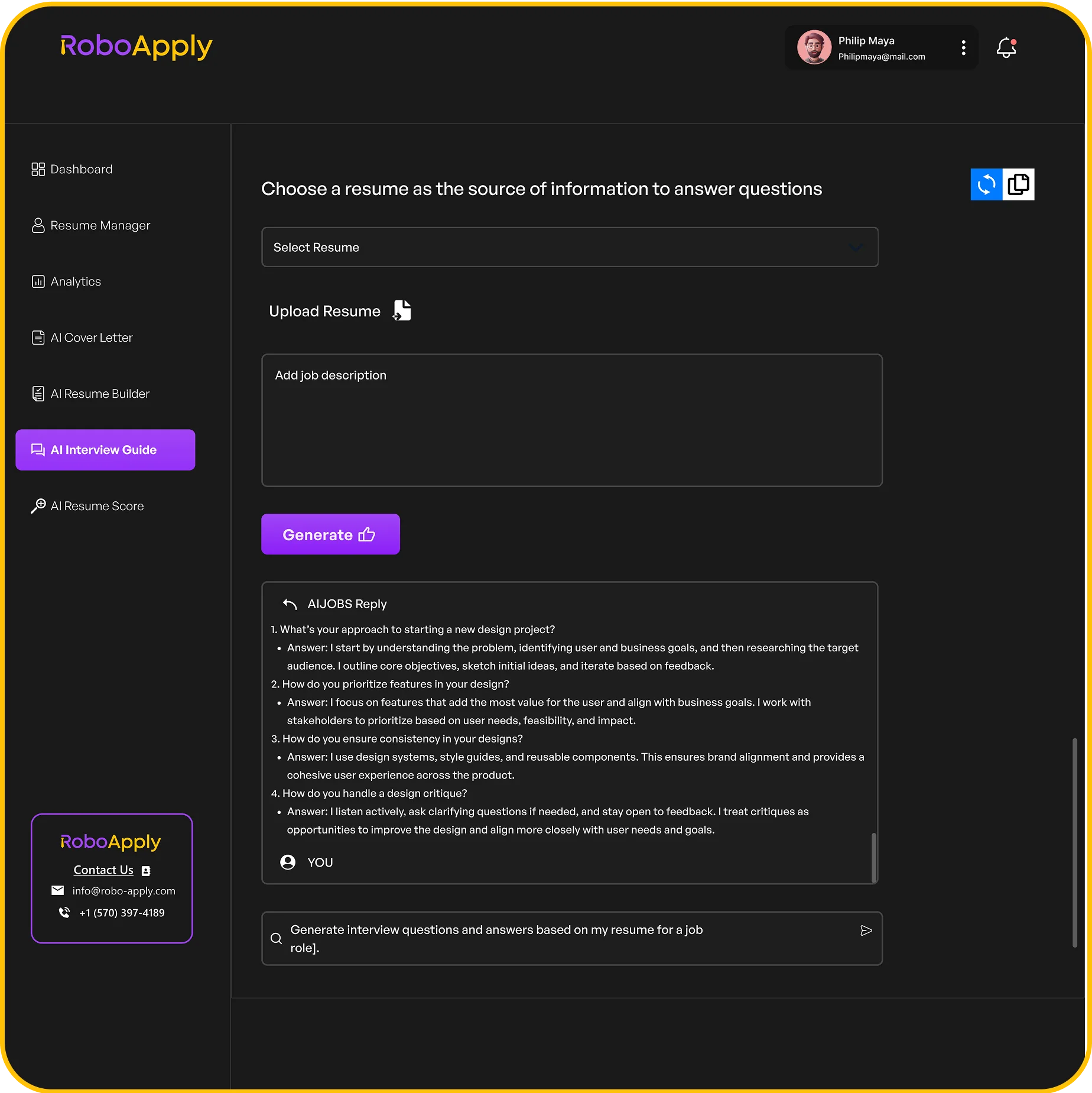
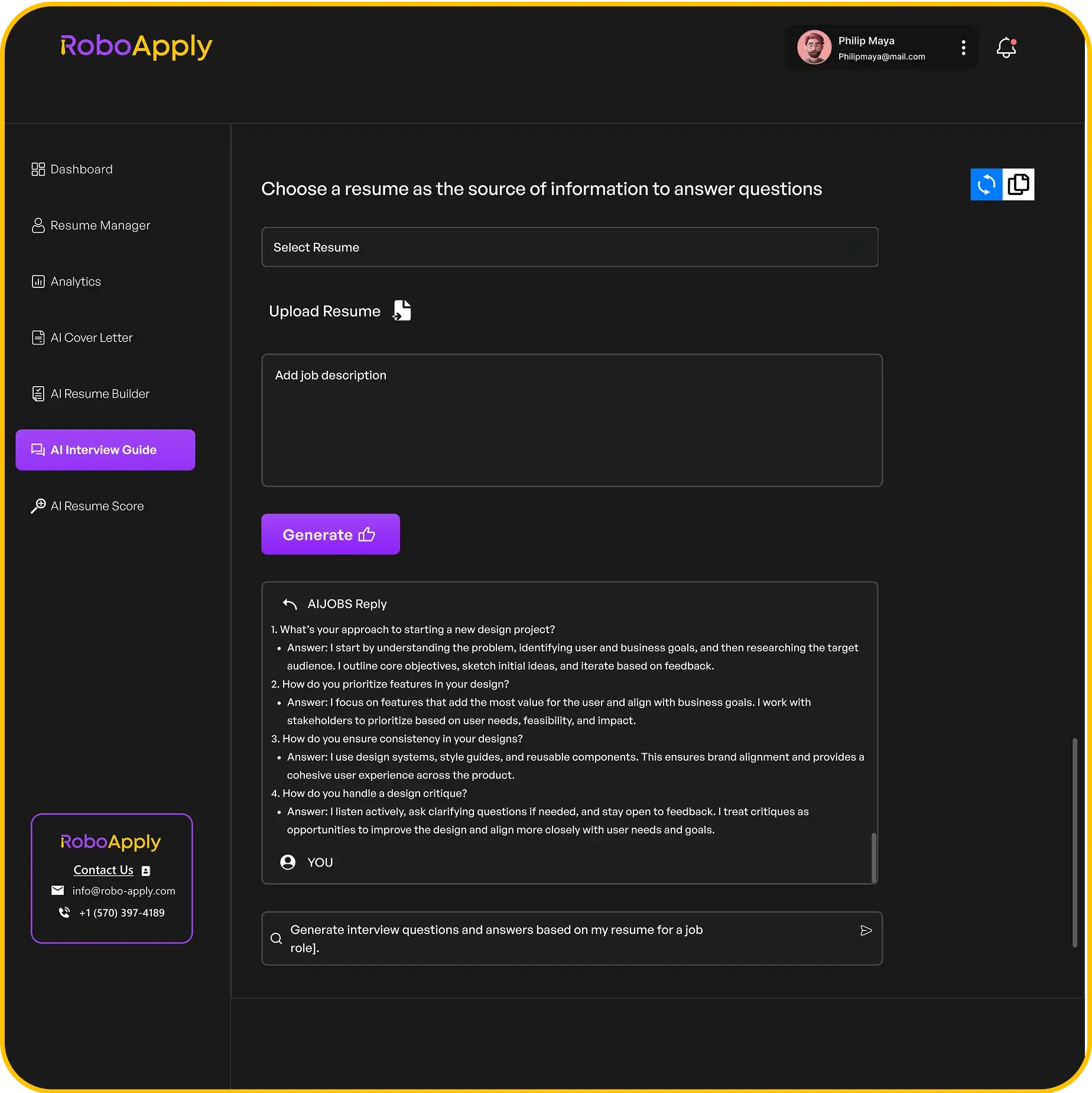
AI-powered interview preparation tools analyze job descriptions predicting likely interview questions. They consider the role, company, and industry generating relevant questions you should prepare to answer. Practice responses using these prompts improving your articulation and confidence.
Company research features pull information about employer values, recent news, and strategic initiatives. Understanding the company deeply helps you tailor responses demonstrating genuine interest. You can discuss how your skills align with their specific challenges and goals.
Skills gap analysis compares your background against job requirements identifying areas needing development. Address these gaps proactively through online courses or practice before interviews. Being able to discuss how you’re actively improving shows growth mindset and dedication.
Optimizing Your AI-Powered Job Search
Maximizing job application AI effectiveness requires understanding both the technology’s capabilities and its limitations. Strategic users combine AI efficiency with human judgment and personal touches.
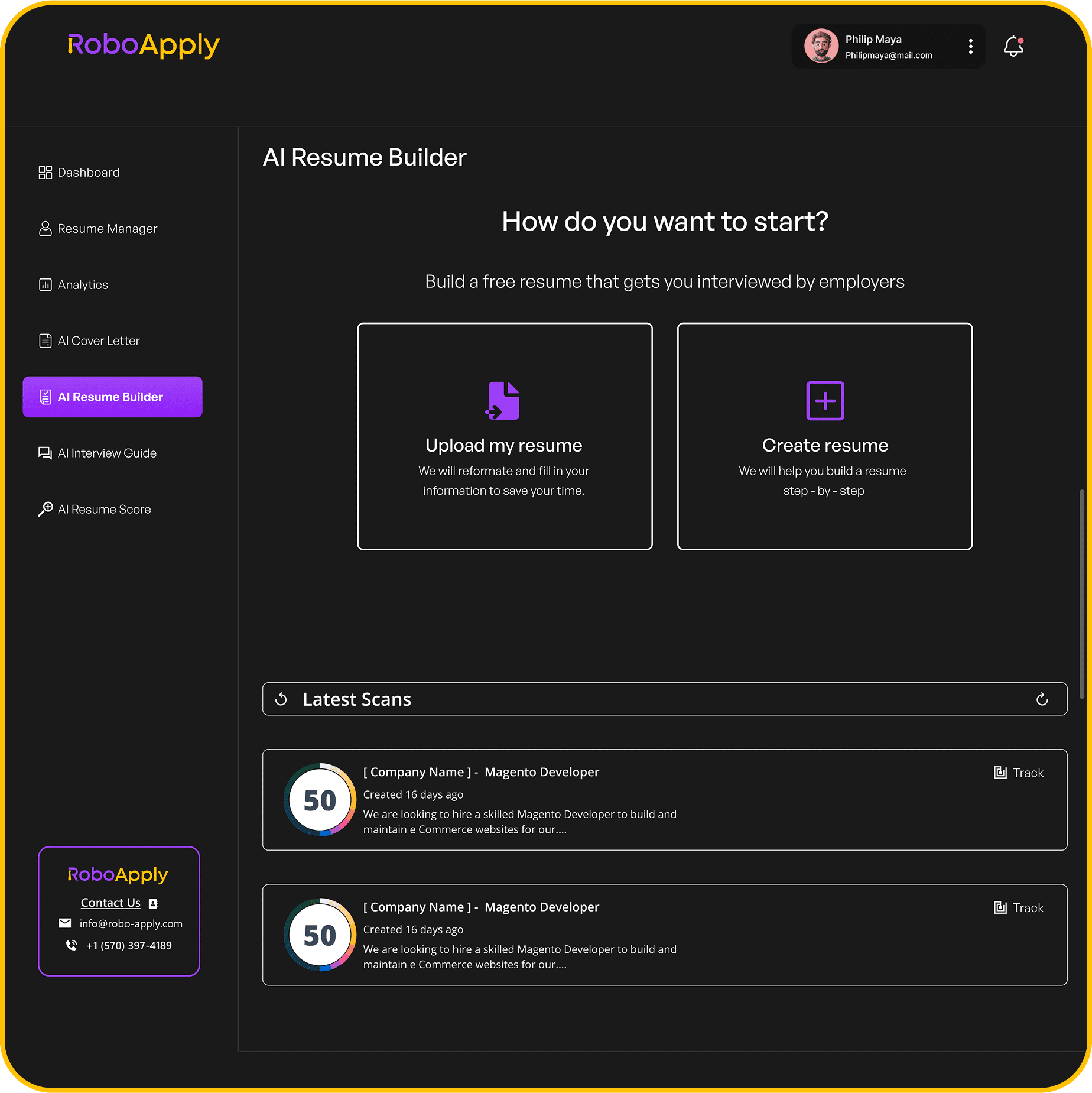
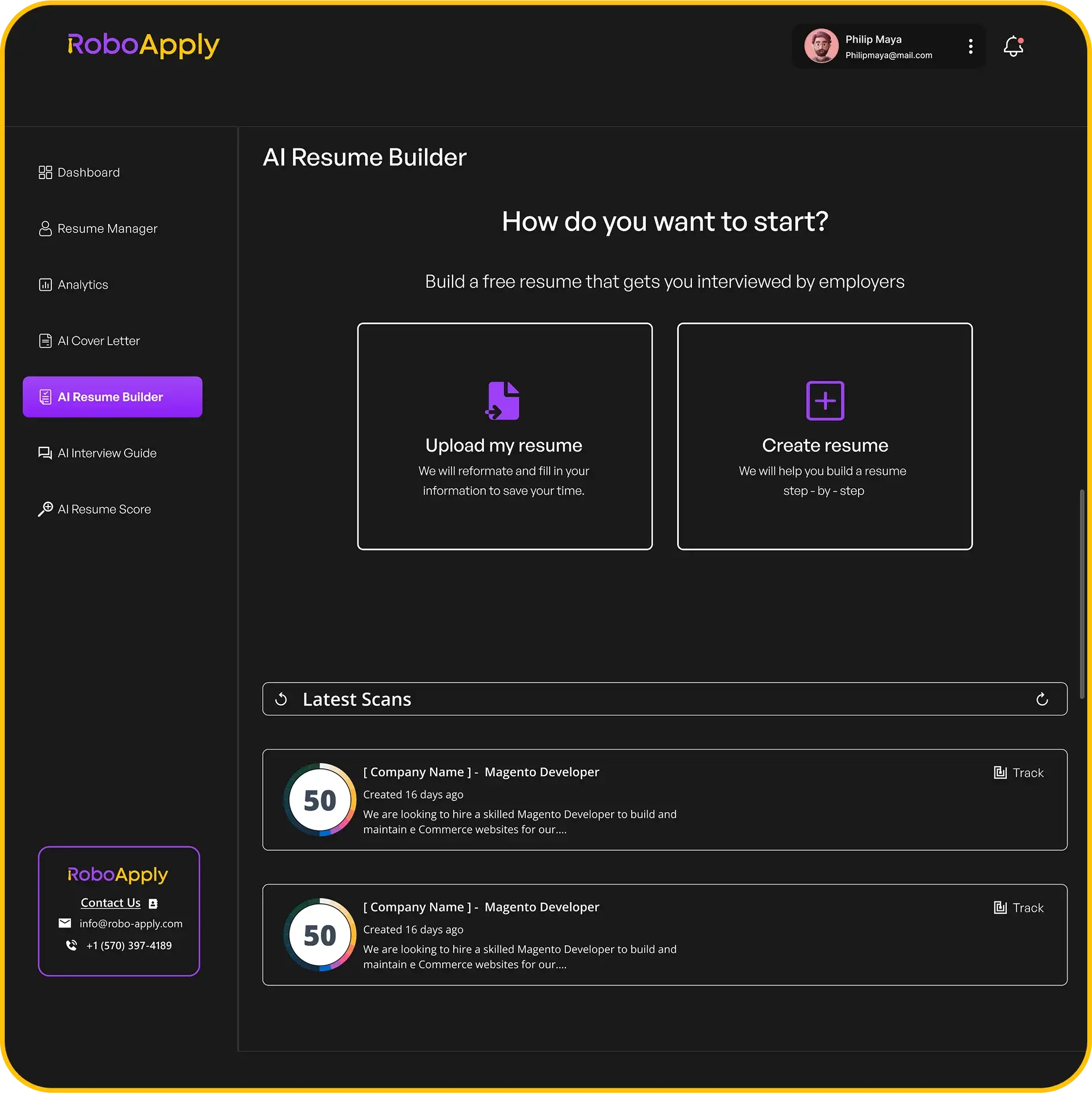
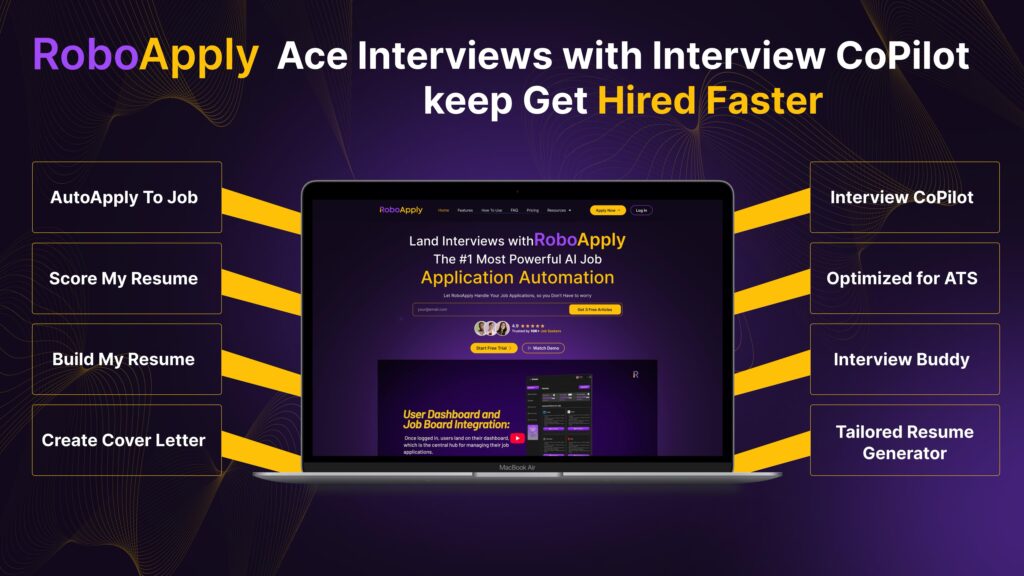
RoboApply’s AI Resume Builder creates optimized resumes tailored to specific job descriptions. The platform analyzes requirements formatting your experience for maximum impact.
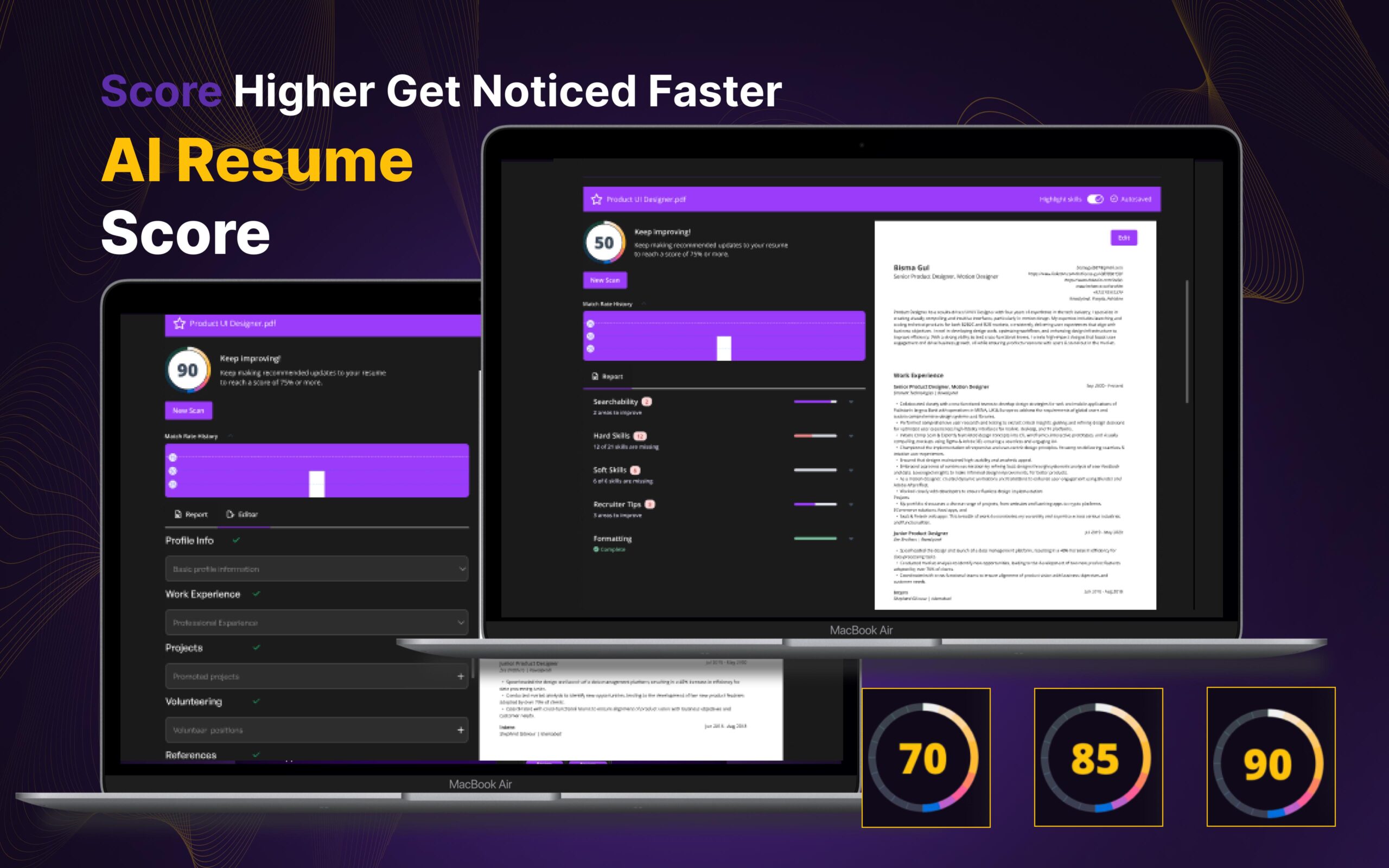
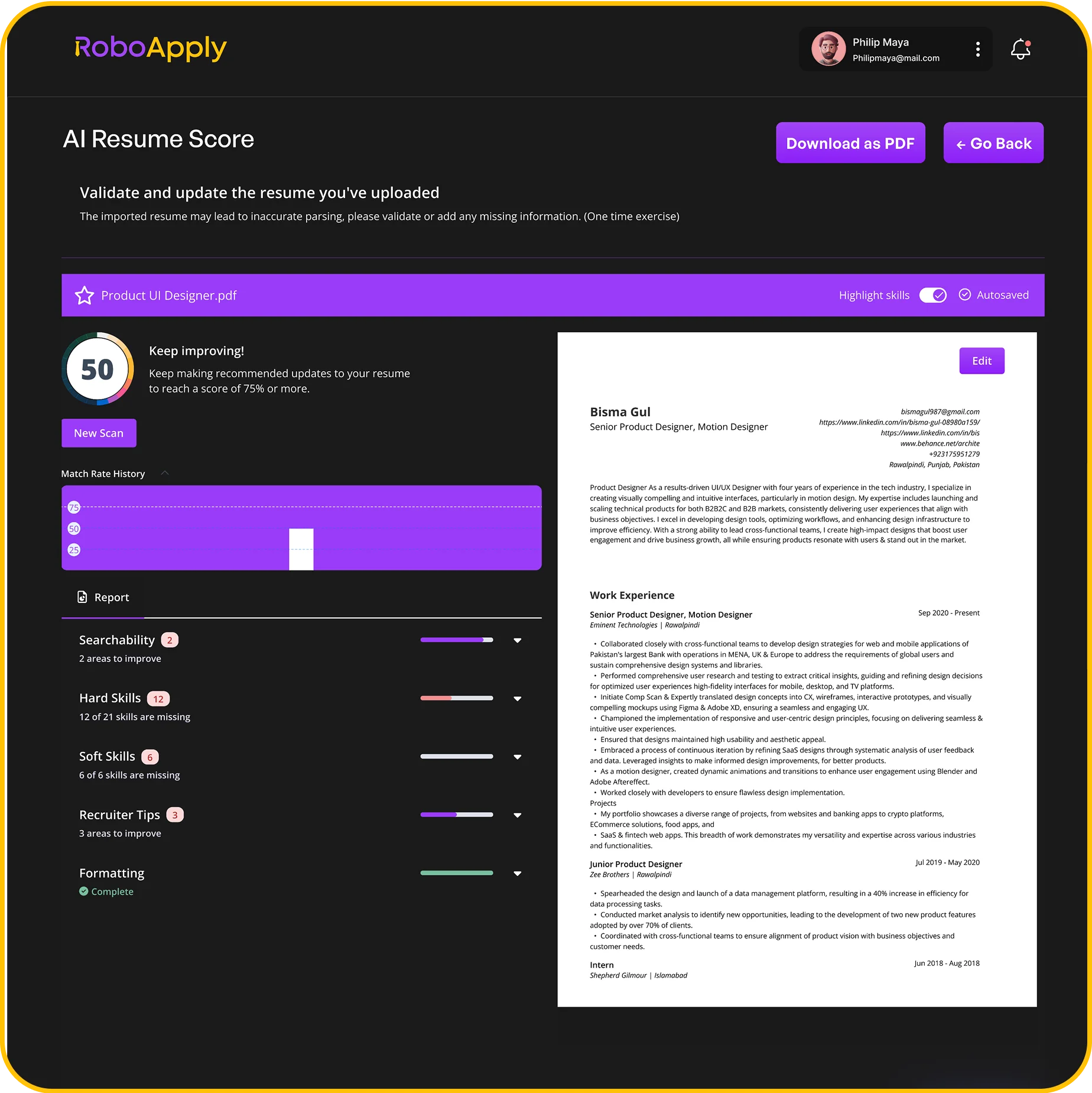
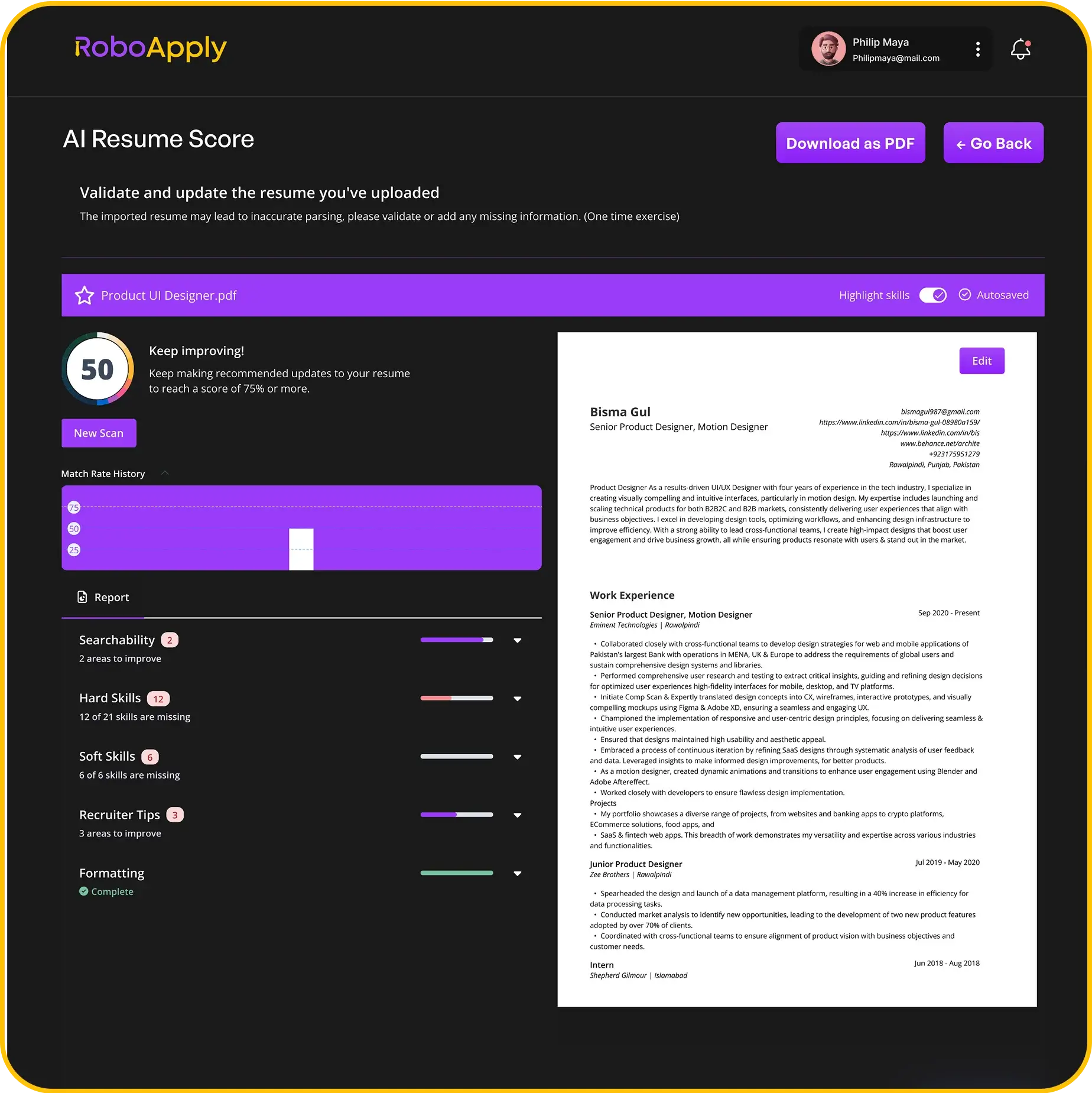
The Resume Score feature evaluates your resume against job requirements. You’ll see which sections need strengthening and which keywords to add for better ATS performance.
AI Auto Apply submits applications across hundreds of positions automatically. You’re not manually filling forms at dozens of different employer websites.
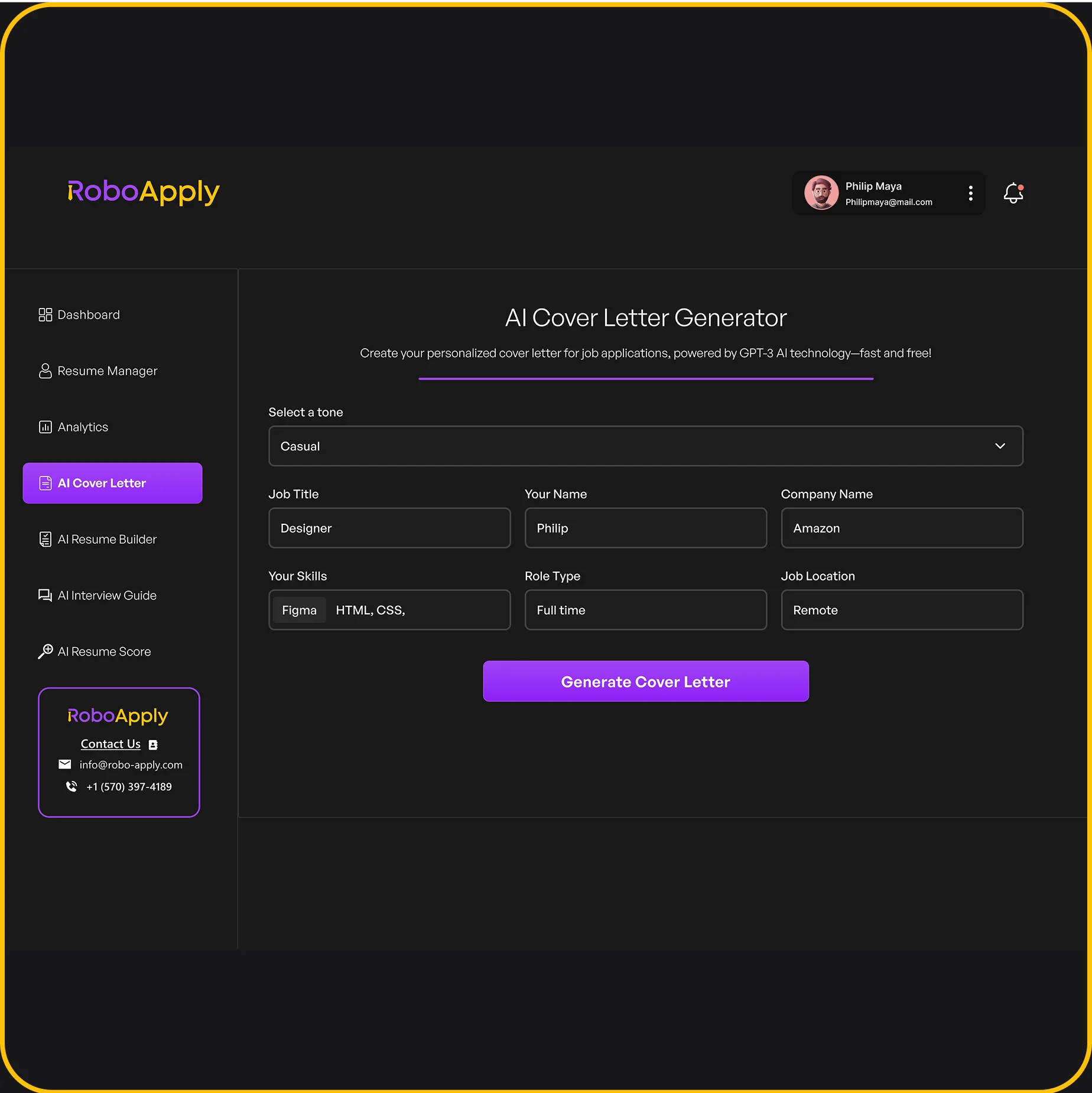
AI Cover Letter Generator produces customized letters for each application. Generated content references specific job requirements and company information creating authentic personalized letters.
Frequently Asked Questions
What is job application AI?
Job application AI uses artificial intelligence to automate resume optimization, application submission, and cover letter generation. It analyzes job descriptions and matches your qualifications automatically.
How does job application AI work?
AI analyzes your work history and skills, compares them against job requirements, generates tailored application materials, and submits applications automatically across multiple platforms.
Can job application AI help me get more interviews?
Yes, AI tools increase application volume 3-5x while improving quality through optimization. More targeted, high-quality applications generate proportionally more interview invitations.
Is job application AI only for tech jobs?
No, job application AI works across all industries including healthcare, finance, marketing, education, and trades. The technology adapts to different fields and requirements.
Do I still need to customize AI-generated applications?
Yes, review and personalize AI-generated content before submission. Add specific examples, adjust tone, and ensure accuracy for best results and authenticity.