How many bullet points per job on resume trips up almost everyone when they’re writing or updating their resume. Put too many and you look like you’re desperately trying to fill space. Too few and it seems like you barely accomplished anything worth mentioning.
Here’s what actually works: 5-7 bullets for your current or most recent job, 3-5 for positions from the last few years, and 2-3 for older roles. Anything over 10 years old might only get 1-2 bullets or just the job title and dates.
These numbers aren’t arbitrary. They’re based on how recruiters actually scan resumes and what gets past Applicant Tracking Systems without getting tossed. Get this right and your resume gets read. Get it wrong and you’re in the rejection pile.
Why This Actually Matters
The number of bullets you use directly impacts whether recruiters keep reading or move on to the next person. It’s partly psychology and partly just practical.
Recruiters look at resumes for about 6-7 seconds initially, according to Ladders research. They’re hunting for quick proof you can handle the job. The right bullet count helps them spot that proof without wading through paragraphs of text.
ATS systems scan differently than people do. They’re looking for keywords and relevant experience. Too many bullets can confuse these systems, especially when you’re stuffing them with filler just to have more. The Society for Human Resource Management found that 75% of resumes never reach actual humans because they fail ATS screening.
How you distribute bullets also signals what you think is important. More bullets on your most relevant job shows you understand priorities. Trimming older positions proves you can focus on what matters now.
The Formula That Actually Works
These guidelines work across most fields and experience levels. They create a structure that puts emphasis on recent stuff while still showing your complete work history.
Current or Most Recent Job: 5-7 Bullets
Your current role deserves the most real estate. Use 5-7 bullets covering your main responsibilities, biggest wins, and measurable results. Give hiring managers a full picture of what you’re capable of right now.
Focus on what you achieved, not just tasks you completed. Each bullet should prove impact. Throw in numbers whenever possible to show scope and actual results.
Jobs From 2-5 Years Ago: 3-5 Bullets
Positions you held recently still matter but don’t need as much explanation. Use 3-5 bullets hitting your biggest accomplishments and most applicable skills. Cut routine stuff that doesn’t set you apart from anyone else.
These bullets need to connect to what you’re chasing now. If something from an earlier role directly relates to your target job, keep it. If it adds zero value, toss it.
Older Positions: 2-3 Bullets
Roles from 5-10 years back need way less detail unless they’re super relevant to what you do now. Use 2-3 bullets on major wins or skills you still actively use.
Hiring managers honestly don’t care much about what you did a decade ago unless it directly applies to what you’d be doing for them.
Really Old Stuff: 1-2 Bullets or Just Title
For jobs over 10 years old, you’ve got choices. Stick in 1-2 bullets if the role connects to your field, or just list the title, company name, and dates without any bullets.
Lots of resume experts say dump jobs older than 15 years completely unless they’re absolutely crucial to your career story. Keeps everything focused on what you can do now.

When Relevance Beats Recency
How many bullet points per job on resume should flex based on what actually matters for the job you want, not just when you did it. Sometimes an older job deserves more attention than your current one.
Say you’re applying for a marketing manager role and you held that exact title three years ago. That position might need 5-6 bullets even though it’s not your most recent job. Don’t let strict timeline rules stop you from showing off your best experience.
Career changers have to throw the normal rules out completely. Your current job might be totally irrelevant. Focus on transferable skills from whichever positions best prove you can handle the new field.
Different industries expect different things too. Tech resumes often need more bullets to list specific technologies and methodologies. Creative fields might use fewer bullets and put more weight on portfolio links.
What Makes Bullets Worth Including
Quality beats quantity every single time. Every bullet needs to justify its existence by showing real value.
Strong bullets share some common traits:
- They start with powerful action verbs like “led,” “increased,” “built,” or “reduced”
- They include specific numbers showing scope or actual results
- They stay tight at one to two lines max
- They highlight achievements instead of just listing obvious duties
- They mirror language from the job description you’re targeting
The Harvard Extension School has great breakdowns of action verbs by industry that actually make your bullets pop.
Numbers grab eyes immediately. “Managed social media accounts” is boring. “Grew Instagram following by 340% in 6 months, driving $50K in sales” proves you got results.
Keep each bullet to one or two lines tops. Anything longer becomes a paragraph that recruiters will skip. Shoot for 10-20 words as your target range.
Don’t waste bullets on stuff that’s obvious from your job title. Nobody cares that you “answered phones” or “filed documents.” Focus on accomplishments, improvements, or times you exceeded what was expected.
Mistakes That Tank Your Resume
Knowing what not to do helps you dodge the most common bullet point problems.
Don’t use the exact same number of bullets for every job. Having precisely 4 bullets under each position looks robotic. It screams that you’re filling space rather than showcasing what actually matters.
Some people pile 10-12 bullets under their current role thinking more equals better. It doesn’t. This buries your strongest stuff and overwhelms anyone reading. More bullets don’t automatically make you look more qualified.
Don’t shortchange important positions just because of where they fall chronologically. If an earlier job directly relates to your target and you crushed it there, give it enough bullets to tell that story properly.
Every bullet should connect to your target role somehow. Bullets about stuff that has nothing to do with what you’re applying for just waste space and dilute your message.
Too many bullets create intimidating walls of text. Resumes need white space to breathe. If your job descriptions look like solid blocks, you’ve definitely got too many bullets.
Real Examples in Action
Seeing how this plays out in actual resumes helps it click. Here’s proper bullet distribution for different situations.
Entry-Level Marketing Person:
- Current Marketing Coordinator: 6 bullets on campaigns, analytics, team work
- Previous Retail job: 3 bullets on customer service and sales numbers
- College Internship: 3 bullets on relevant marketing projects
- Part-time Campus gig: Just title and dates, no bullets
Mid-Career Software Engineer:
- Current Senior Engineer: 7 bullets on technical leadership, major projects, mentoring
- Previous Engineer spot: 4 bullets on key projects and tech stack
- Junior Developer from 6 years back: 2 bullets on significant contributions
- First tech job from 10 years ago: 1 bullet on foundational stuff
According to Indeed’s research, the best resumes use varied bullet counts that actually reflect career progression and relevance.
Formatting Matters Too
How you format bullets is almost as important as how many you use. Good formatting makes your resume scannable and professional.
Stay consistent throughout your entire resume. If you use periods at the end of bullets in one section, use them everywhere. If you skip periods, stick with that choice.
Use standard bullet symbols, not fancy icons. ATS systems choke on special characters sometimes. Stick with simple round or square bullets that every system can read.
Keep your indentation consistent. Uneven spacing looks messy and makes everything harder to read. Most templates handle this automatically, but check before you send anything.
The Bureau of Labor Statistics points out that formatting consistency significantly affects how recruiters see your professionalism and attention to detail.
Tools That Make This Easier
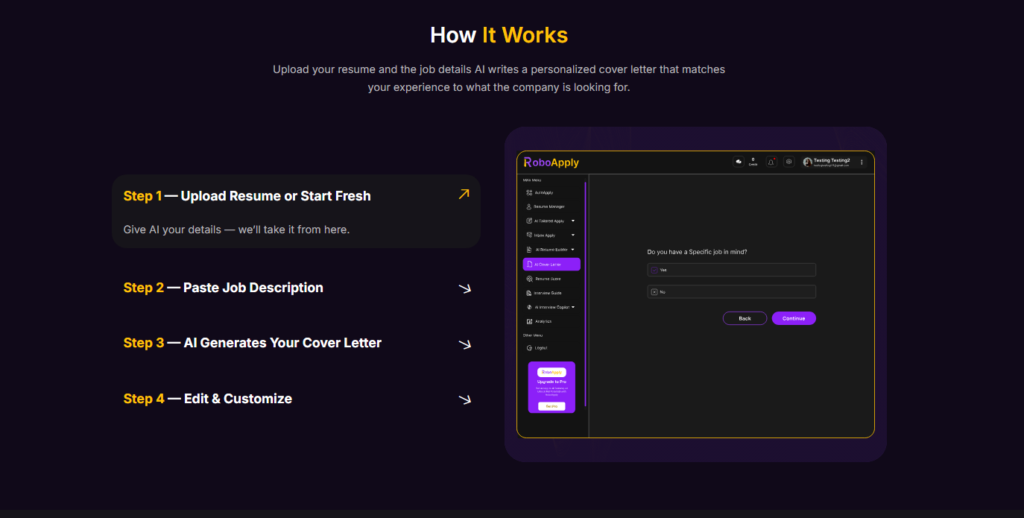
Building a resume with the right bullet balance takes time and strategic thinking. RoboApply’s AI Resume Builder analyzes your background and automatically formats everything with optimal bullet counts for each position.
AI Tailored Apply customizes your resume for each specific job. It adjusts bullets to emphasize your most relevant stuff for each role, making sure you’re always highlighting what that particular employer cares about.
For people applying to tons of positions, AI Auto Apply handles everything while keeping quality high. It tailors each resume properly, submits applications to hundreds of jobs, and tracks it all in one dashboard.
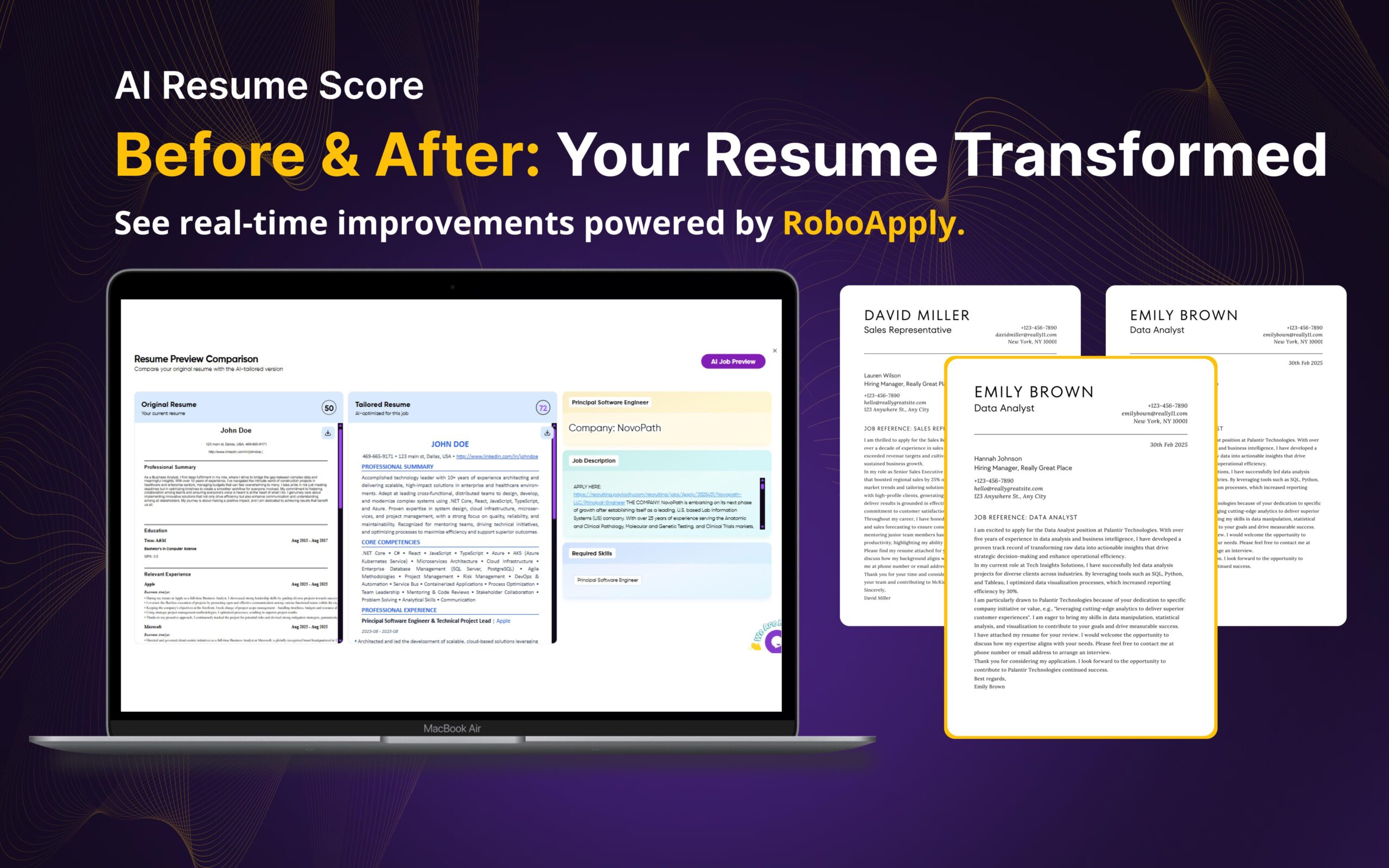
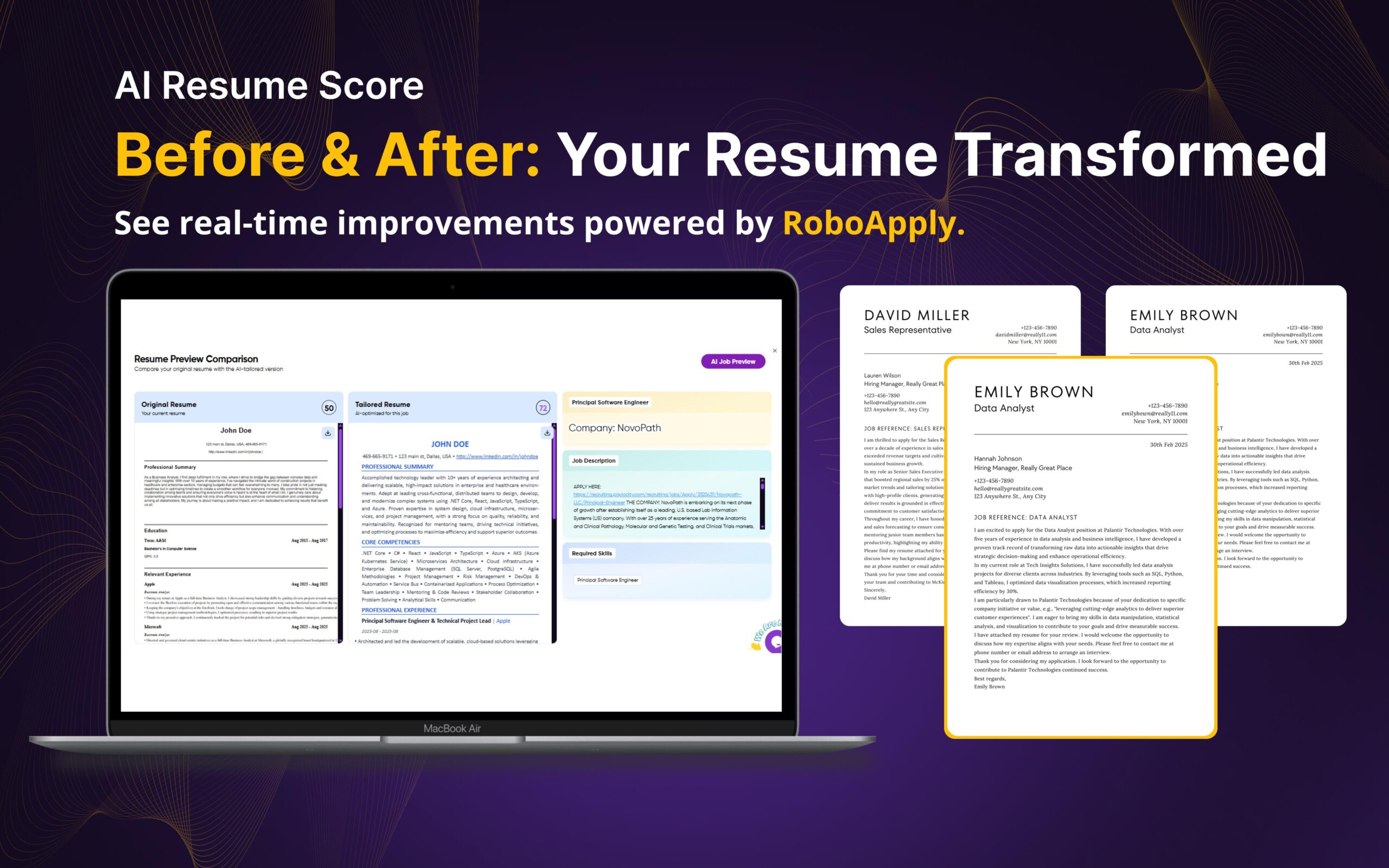
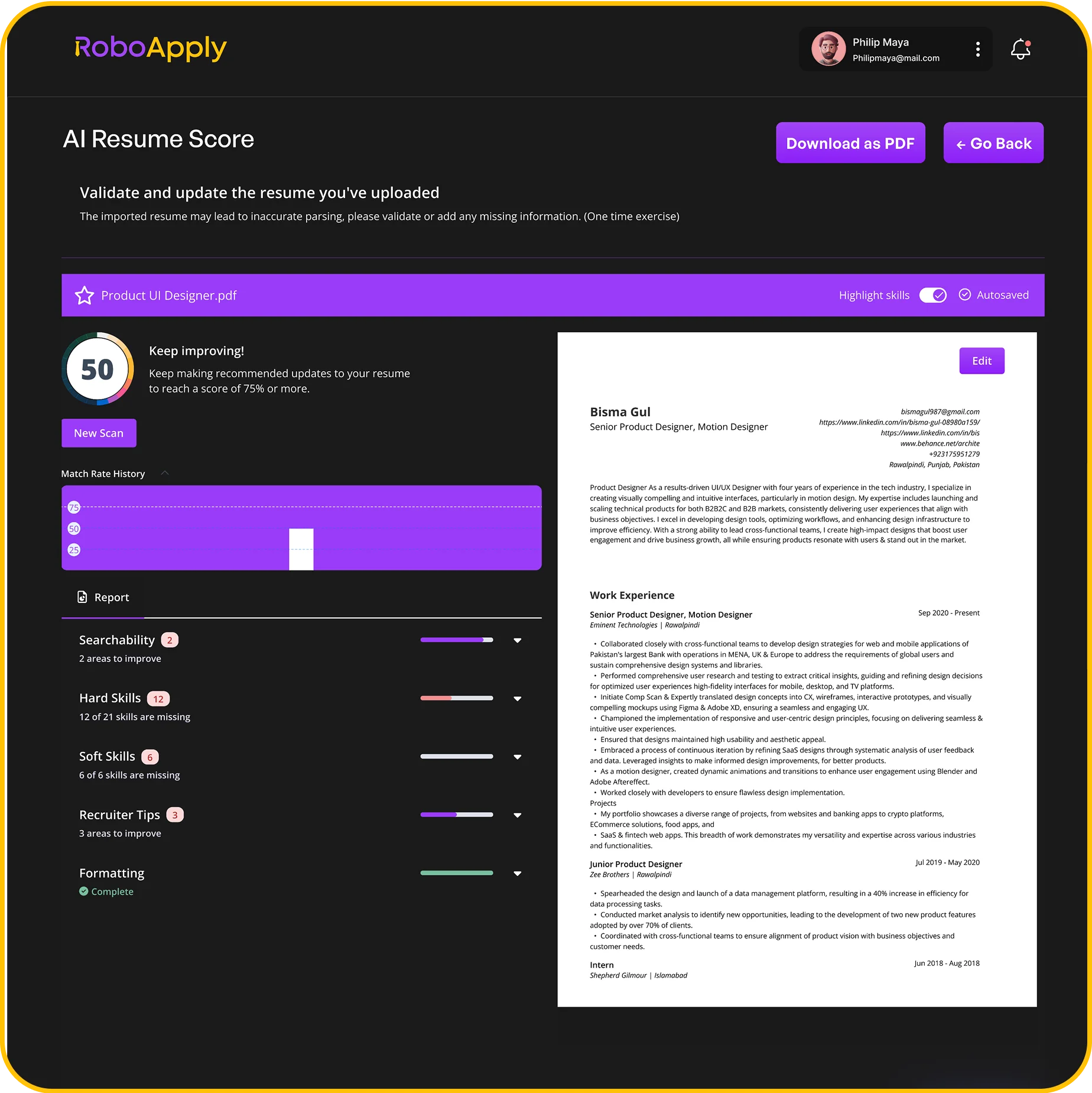
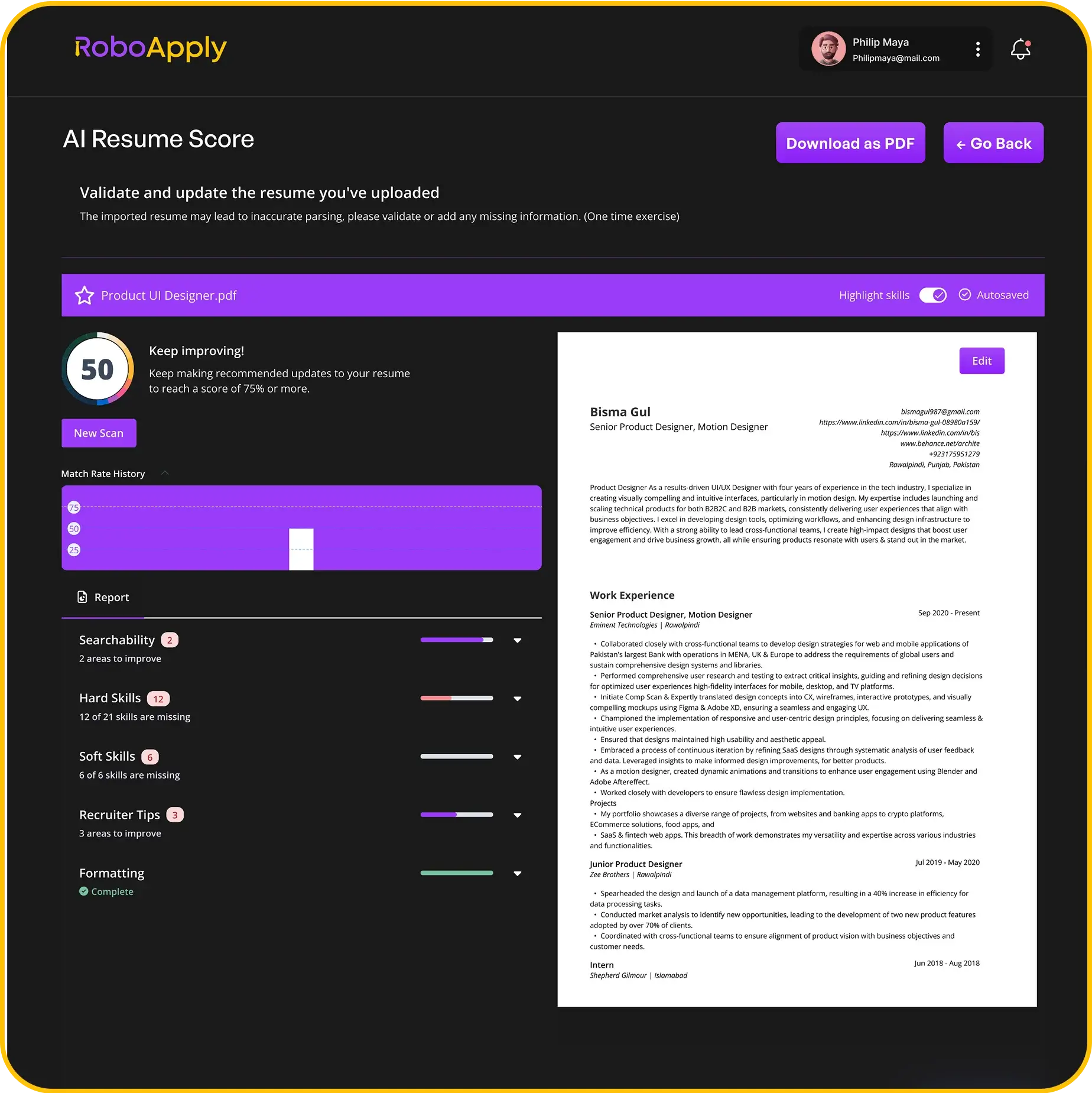
The AI Resume Score analyzes your resume and gives specific feedback on bullet optimization, keywords, and overall effectiveness before you send anything out.
Frequently Asked Questions
How many bullet points per job on resume should I include?
Use 5-7 for current roles, 3-5 for recent positions, 2-3 for older jobs, and 1-2 for anything over 10 years old.
Should every job have the same number of bullets?
No, vary it based on relevance and recency. Your most relevant roles deserve more detail than older positions.
Can I have more than 7 bullets for my current job?
Skip going over 7 bullets even for your current role. Too many dilutes impact and overwhelms readers.
What if I didn’t do much in a role?
Use 2-3 strong bullets focusing on key achievements. Quality matters way more than quantity for shorter job stints.
Should I use bullet points for internships?
Yes, use 2-4 bullets for internships, focusing on skills you built and projects you completed that relate to your target.