A cover letter for internship position applications separates students who get interviews from those who don’t. You’re up against hundreds of other applicants with similar GPAs and coursework. Your letter makes the difference.
Most students write boring letters that sound exactly like everyone else’s. They list skills without showing personality. They never explain why they picked that specific company. Recruiters can spot these copy-paste letters instantly.
Your cover letter tells your story. It connects class projects, volunteer gigs, or campus activities to the actual internship role. It shows you did your homework on the company. It proves you’ll bring value even without years of work experience.
Why This Letter Actually Matters
Landing an internship isn’t just about qualifications. Hundreds of students have similar backgrounds as you. Your cover letter sets you apart.
Hiring managers scan applications for about six seconds. A strong opening makes them stop scrolling and actually read. You need to hook them fast.
Students worry about having no experience. But recruiters already know you’re learning. They want to see potential, enthusiasm, and relevant skills from school or activities.
Your letter shows how you communicate professionally. The way you write tells them how you’ll talk to coworkers and clients. Clear writing means you’re ready for workplace communication.
What Recruiters Really Want
Recruiters looking at internship applications care about different stuff than regular job postings. They know you’re still building skills.
They want real interest in their field. They want you to know basic facts about their company. They want coursework or projects that connect. They also care about soft skills like talking to people, working in teams, and solving problems.
Here’s what your cover letter needs:
- Proof you researched their company and get their mission
- Your academic stuff connected to what they need
- Any relevant projects, even if they were just assignments
- Excitement about learning and growing
- Clear, professional writing that’s easy to read
Companies like students who take initiative. Clubs, volunteer work, or side projects show you’re self-motivated. These things beat perfect grades sometimes.
Cultural fit counts too. Recruiters want interns who click with their team. Show some personality while staying professional. Just be yourself.
Opening Lines That Actually Work
Your first paragraph decides if recruiters keep reading. Most hiring managers spend six seconds on applications. Those opening sentences need punch.
Skip “I am writing to apply for the internship position.” They know that already. Jump right into why you’re worth their time.
Start with your best accomplishment or connection. Name a specific project, class, or experience that fits the internship. Include real results. Connect it to what you know about the company.
Good example: “My social media campaign for a local nonprofit boosted their Instagram engagement by 45% in six weeks. This work with content creation made me want to apply for your marketing internship at BrandCo, where your purpose-driven marketing matches my approach.”
If someone referred you or you met their team at a career fair, say so upfront. Personal connections grab attention. Just back it up quickly with why you’re qualified.
Company research should feel natural here. Mention a specific project they did, an award they won, or something new they started. This proves you care about them specifically.
Using Your Academic Work
The middle part turns your school background into job qualifications. Show how classes prepared you for this specific role.
Read the internship posting carefully. Find three or four main things they need. Match each one to a class, project, or assignment you finished.
Say the internship needs data analysis skills. Describe a statistics project where you collected surveys, found trends, and shared findings. If they want strong writing, talk about papers where you researched complex topics.
Use action words showing what you did. Words like analyzed, created, designed, managed, and presented sound better than studied or learned. Focus on what you made rather than what you covered.
Add numbers when you can. Maybe you analyzed surveys from 200 people, handled a $500 budget for a club event, or grew social media engagement by 30% for class. Numbers make things concrete.
School projects often beat unrelated part-time jobs. A marketing campaign you built shows planning, creativity, and follow-through. A coding assignment proves problem-solving and technical chops.
Talk about your best project in detail. Explain the problem, how you tackled it, and what happened. This storytelling keeps people reading while showing what you can do.
Group projects prove teamwork. Say what you specifically did. Did you organize schedules? Present results? Handle tech stuff? These details show you work well with others.

Proving You Know the Company
Generic letters get tossed immediately. You need to show you actually researched this place.
Check their website beyond the homepage. Read their About page, mission statement, and recent news. Look at social media to see what they’re posting now.
Search for recent articles about them. Did they launch products? Win awards? Open new offices? Use specific, current details.
LinkedIn shows company culture stuff. Read employee profiles to understand career paths. See if anyone from your school works there.
Look at their work if you can. Marketing firms have campaigns. Tech companies have products. Nonprofits have programs. Knowing their actual work shows real interest.
Don’t make a paragraph just listing company facts. Work what you learned into your whole letter. When you talk about your skills, tie them to their specific needs.
Use their language. If their site talks about innovation, mention creative problem-solving. If they focus on teamwork, highlight group experiences. Matching their words shows you fit their culture.
Name specific teams, departments, or projects you’d work on. This detail proves you understand their setup and thought about where you belong.
Handling No Experience
Not having professional work history doesn’t mean you have nothing. You just need to reframe your background better.
Volunteer work shows commitment and reliability. Food bank volunteering gave you customer service skills and time management. Animal shelter work shows responsibility. Tutoring proves patience and explaining things clearly.
Student groups give you leadership and project management. Committee work, event planning, or handling club money all build professional skills. Even just participating shows teamwork and drive.
Part-time jobs teach workplace basics no matter what field. Retail teaches customer service and handling conflicts. Food service needs multitasking under pressure. Babysitting shows responsibility and quick thinking.
Hobbies can show relevant skills. Photography proves creativity and technical ability. Sports show discipline and working toward goals. Reading a lot shows curiosity and wanting to learn.
The trick is linking any experience to what they need. Check the job posting and think where you built those abilities. Talk about experiences in ways that highlight professional growth.
Structure That Gets Results
Following a proven layout keeps your letter organized and readable.
Put your contact info at the top. Full name, address, phone, and email. Add LinkedIn if your profile looks good. Date goes below that, then the hiring manager’s name and company address.
Opening paragraph should be three to four sentences. Name the specific position, say how you found it, and give your strongest qualification.
Body section is one or two paragraphs. First one connects your school background to what they need with real examples. Second one shows you know the company and explains why you want this opportunity.
Closing paragraph is three sentences. Get excited about contributing. Thank them for looking at your stuff. Say you’re available for interviews.
Keep everything to one page. Single-space within paragraphs, double-space between them. Use Arial, Calibri, or Times New Roman at 11 or 12 point. One-inch margins all around.
Mistakes That Wreck Applications
Students mess up their applications without knowing it. These errors are easy to dodge.
Writing too much buries your message. Recruiters don’t read two-page intern letters. If yours goes past one page, cut the extra stuff. Stick to your best qualifications.
Only talking about what you’ll learn sounds selfish. Sure, internships teach you things, but companies need interns who help. Balance learning goals with what you bring.
Sending the same letter everywhere shows you don’t care. Even for similar roles, change each letter with company-specific stuff. Swap out at least 30% of content each time.
Saying sorry for no experience kills your chances. Lines like “Although I don’t have much experience” make you sound unqualified. Talk about what you do have.
Wrong tone creates bad impressions. Too formal sounds like a robot. Too casual shows you don’t get professional norms. Go for conversational but polished.
Typos and bad grammar look careless. Spell-check misses some stuff. Read your letter out loud. Get someone else to check it.
Real Examples That Worked
Actual examples help you see these ideas in action.
- Marketing Internship: “My social media campaign for a local nonprofit boosted their Instagram engagement by 45% in six weeks. This work with content creation made me want to apply for your marketing internship at BrandCo. Your recent campaign for sustainable fashion brands matches my interest in purpose-driven marketing.”
- Software Development: “Building a mobile app helping students find study partners taught me more about user experience than textbooks ever could. The app got 300 users in its first month and showed me what agile development really means. Your educational technology focus at TechCorp makes your software engineering internship my next move.”
- Finance Internship: “Analyzing quarterly financial statements in my Corporate Finance course showed me patterns in company performance I found fascinating. When Professor Martinez mentioned your summer analyst program at FinanceGroup, I knew your emerging markets focus matched my economics research.”
- Journalism Example: “My investigative article on campus food insecurity published in The University Chronicle meant interviewing 35 students and digging into meal plan data. The piece started real conversations with administration and proved I want reporting that creates impact. Your journalism internship at NewsMedia offers the mentorship I need.”
- Engineering Example: “Designing a prototype water filtration system for my senior capstone showed me engineering needs equal parts technical knowledge and creative thinking. Your sustainable infrastructure commitment at EngiTech makes your civil engineering internship perfect for applying my CAD skills.”
Each example jumps right into relevant experience while showing real interest. They use specific details and actual results instead of vague claims.
Making Yours Stand Out
Going past basic stuff helps you beat similar candidates.
Find the hiring manager’s name and use it. LinkedIn and company sites usually list team members. Using someone’s real name shows effort.
List relevant coursework that matches requirements. If they mention Excel skills, say you used advanced Excel in statistics class. If they want presentation skills, mention public speaking classes or awards.
Match the company’s communication style. Startups and tech places like casual, enthusiastic tones. Traditional corporations want formal language. Creative agencies want personality. Notice how they write on their site and copy that energy.
Mention specific people, projects, or initiatives. If you went to their info session, name the recruiter and what they said that stuck with you. If you like a project they did, explain why and how you’d help with similar work.
Show instead of tell. Instead of saying “I’m detail-oriented,” describe a project where careful attention led to success. Rather than claiming “I work well under pressure,” explain when you hit a tight deadline. Real stories prove abilities better than describing yourself.
Harvard’s Office of Career Services has more tips on writing strong career documents.
Getting Past Computer Screening
Lots of companies use automated software screening applications before people see them. Your letter needs to pass these digital filters while still sounding human.
Use keywords from the job posting naturally throughout. If they say “project management,” use those exact words instead of “managing projects.” The software looks for specific terms.
Skip complex formatting that confuses computers. Stick to standard fonts and simple layouts. No tables, text boxes, columns, or graphics. These get scrambled by screening software.
Save your file with a professional name including your name and what it is. Something like “JaneDoe-CoverLetter-MarketingIntern.pdf” helps both systems and managers find your stuff.
Send whatever format they asked for. PDF request means send PDF. Word document request means send .docx. Following directions shows attention to detail.
The Balance Careers explains how these screening systems actually work.

Simplifying Multiple Applications
Making custom letters for every internship eats up tons of time. Smart tools help you keep quality up while handling more applications.
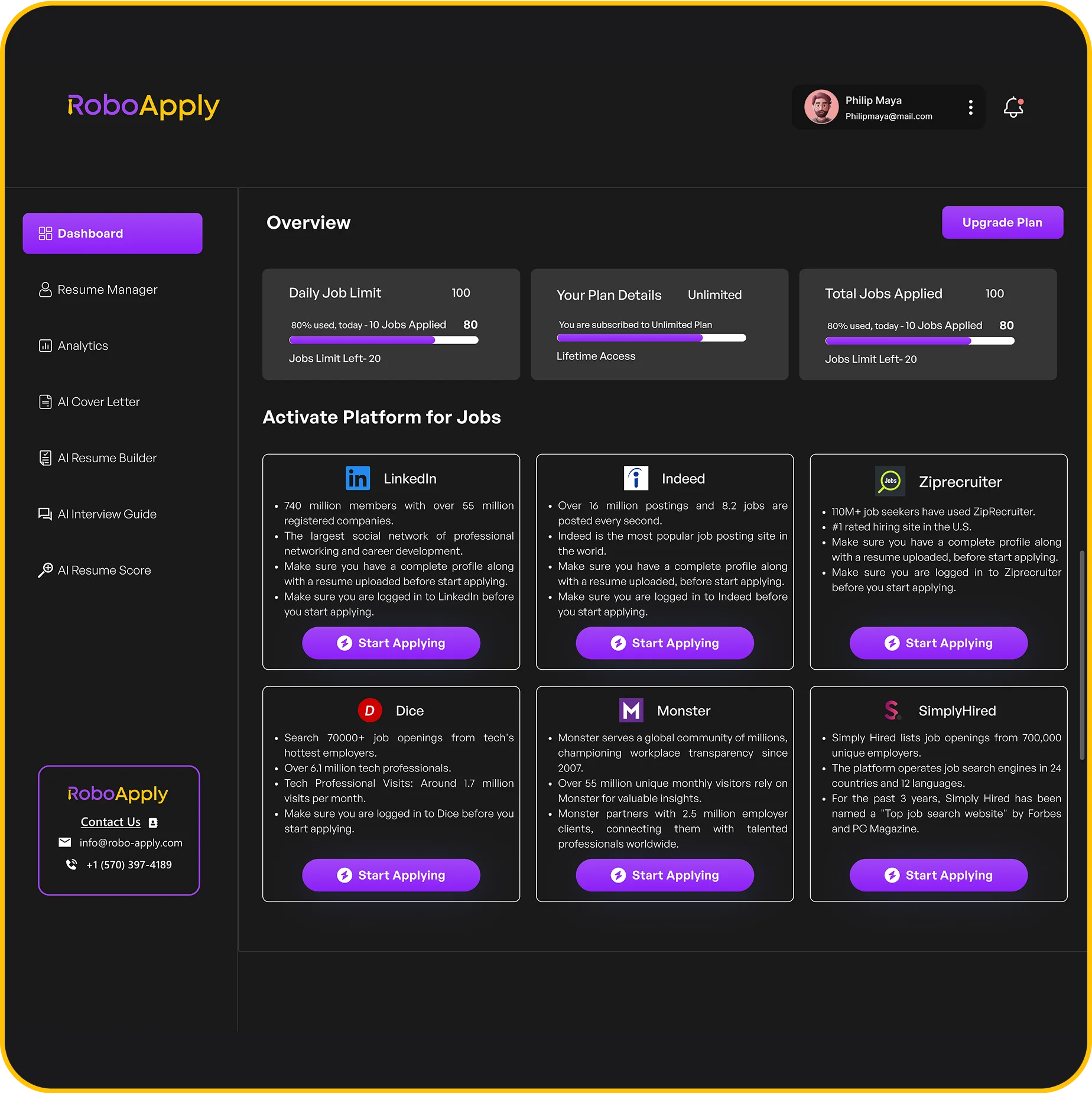
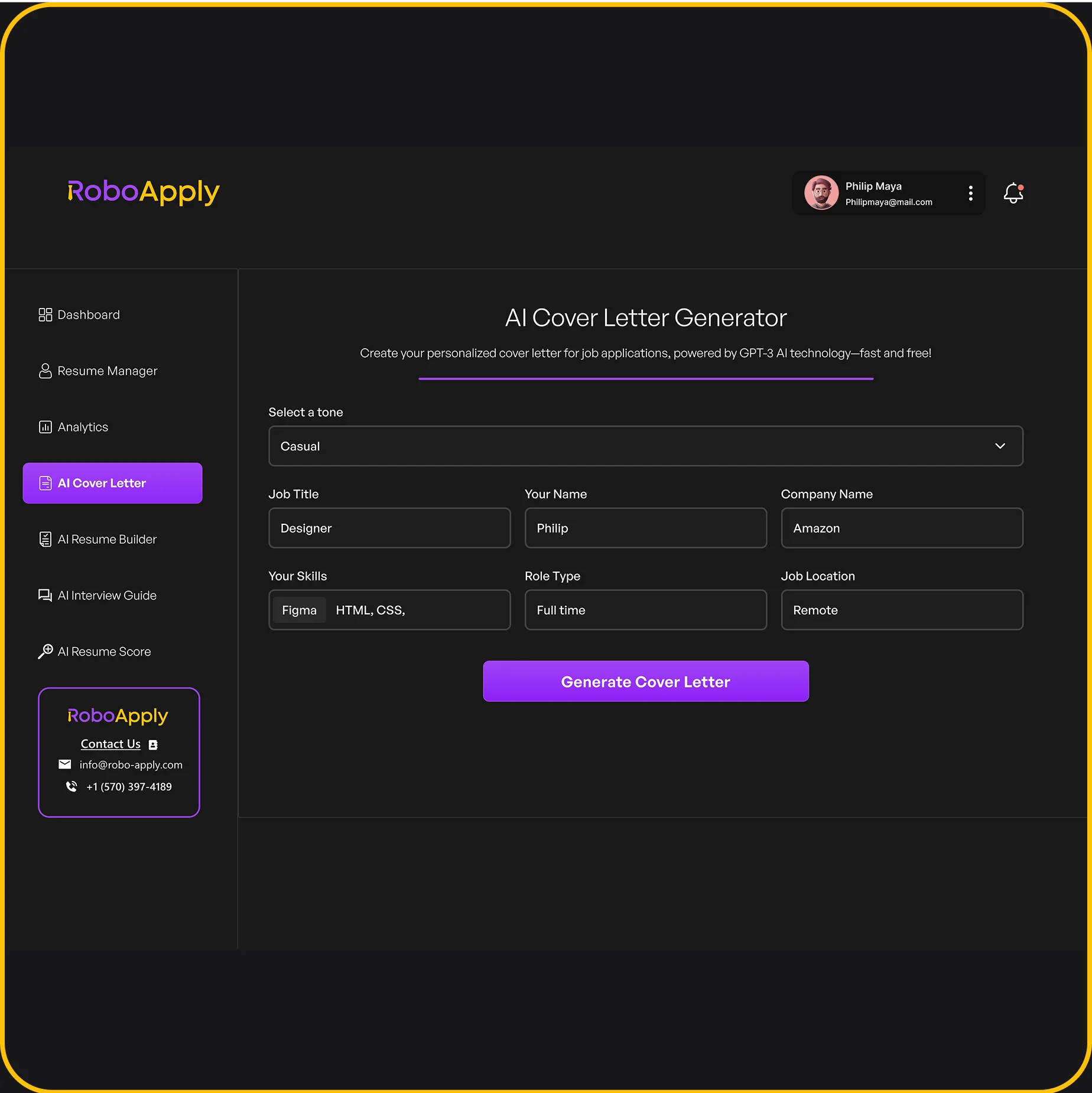
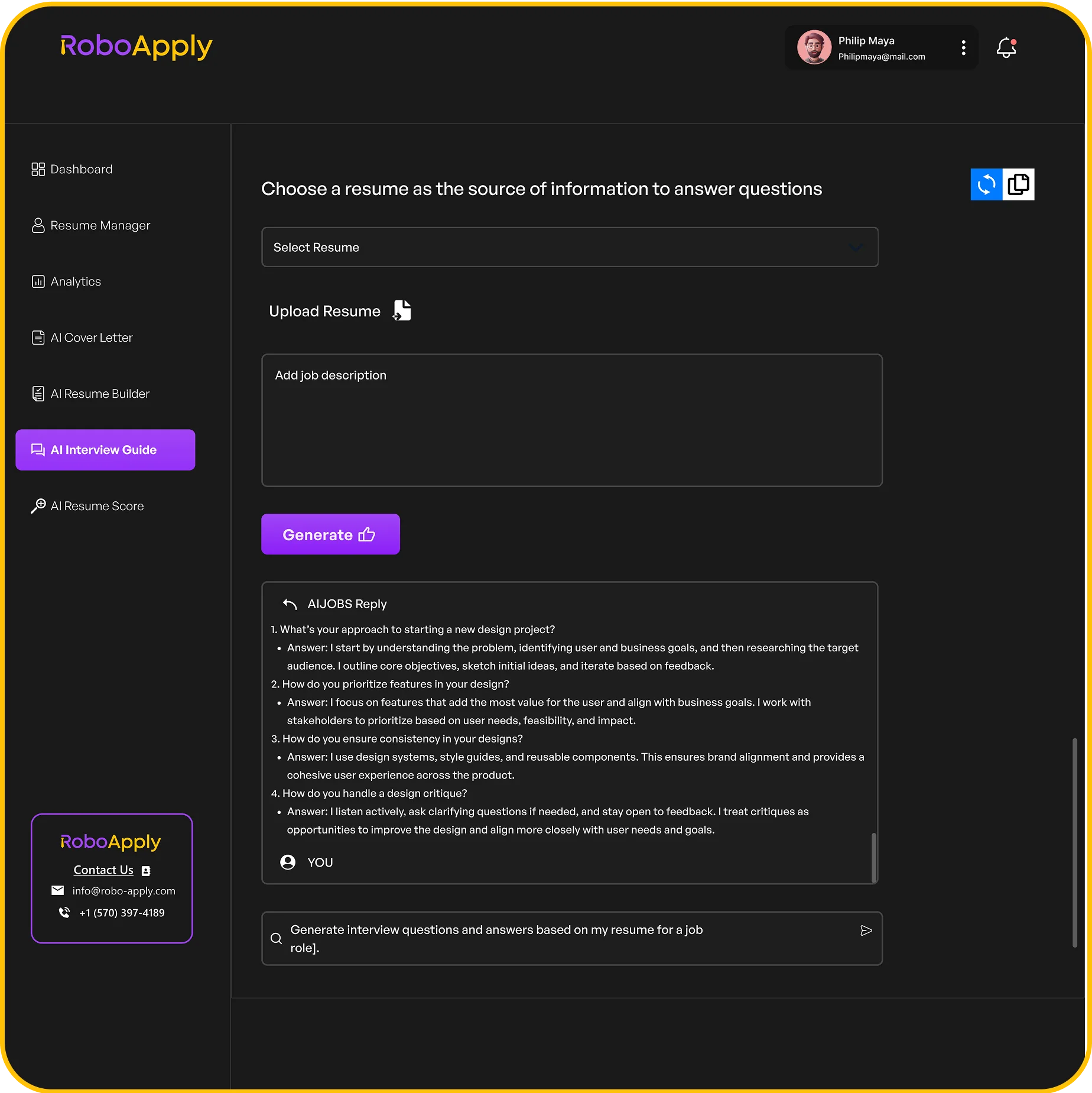
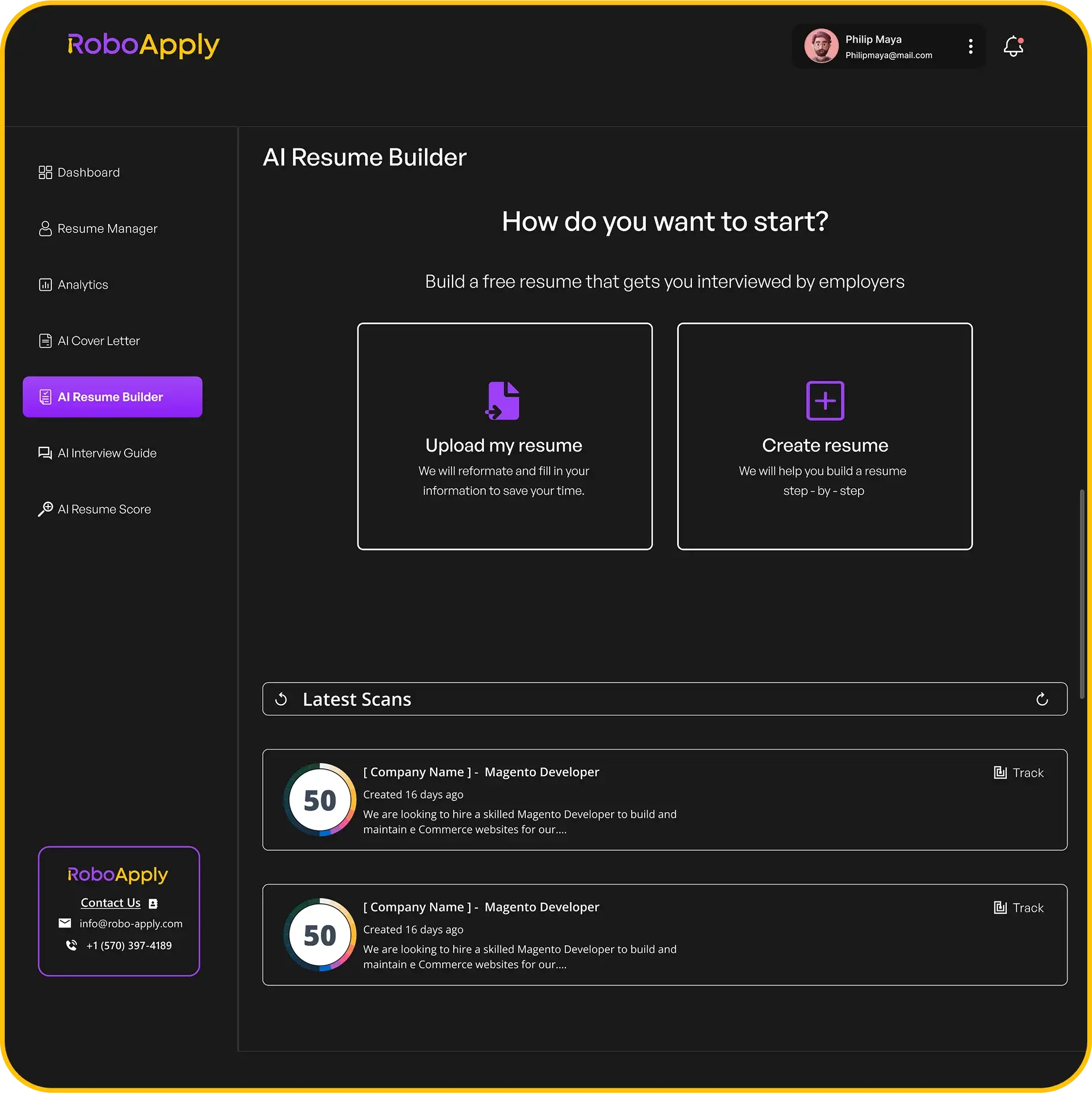
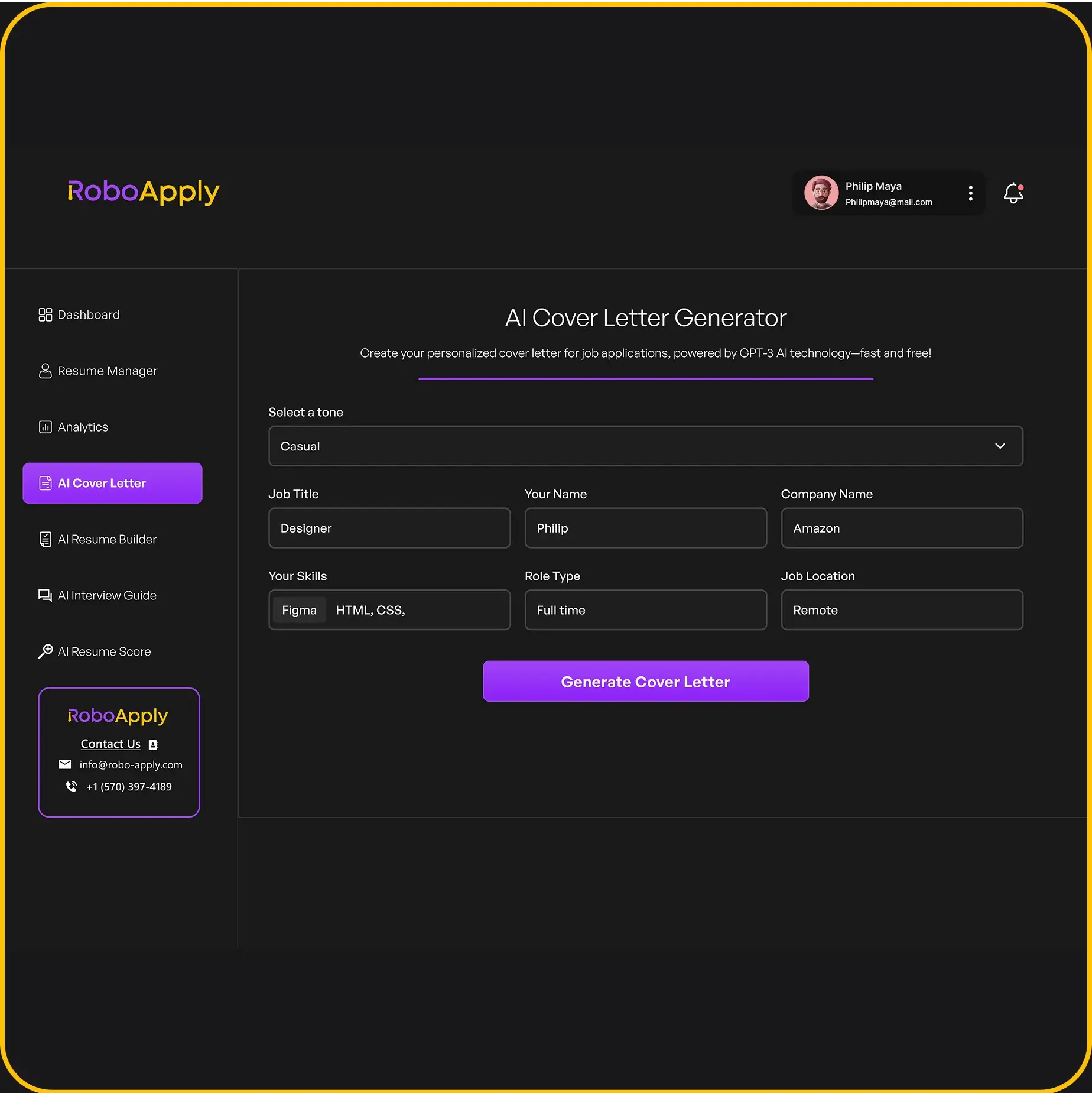
RoboApply’s AI Cover Letter tool makes personalized letters in seconds. Upload your resume and paste the job posting. The AI writes customized content highlighting your relevant stuff while matching what the company needs.
The platform has multiple writing styles for different situations. Pick professional tones for traditional companies, friendly approaches for startups, or confident styles for competitive spots. You can switch tones instantly if the first draft feels off.
Smart drafting grabs info from your resume and matches it to job requirements. The system figures out which experiences and skills to push based on what each posting wants.
One-click improvements help you fix content fast. Options to shorten, elaborate, simplify, or strengthen impact let you tweak without starting over. AI optimization adds relevant keywords automatically so screening software likes it.
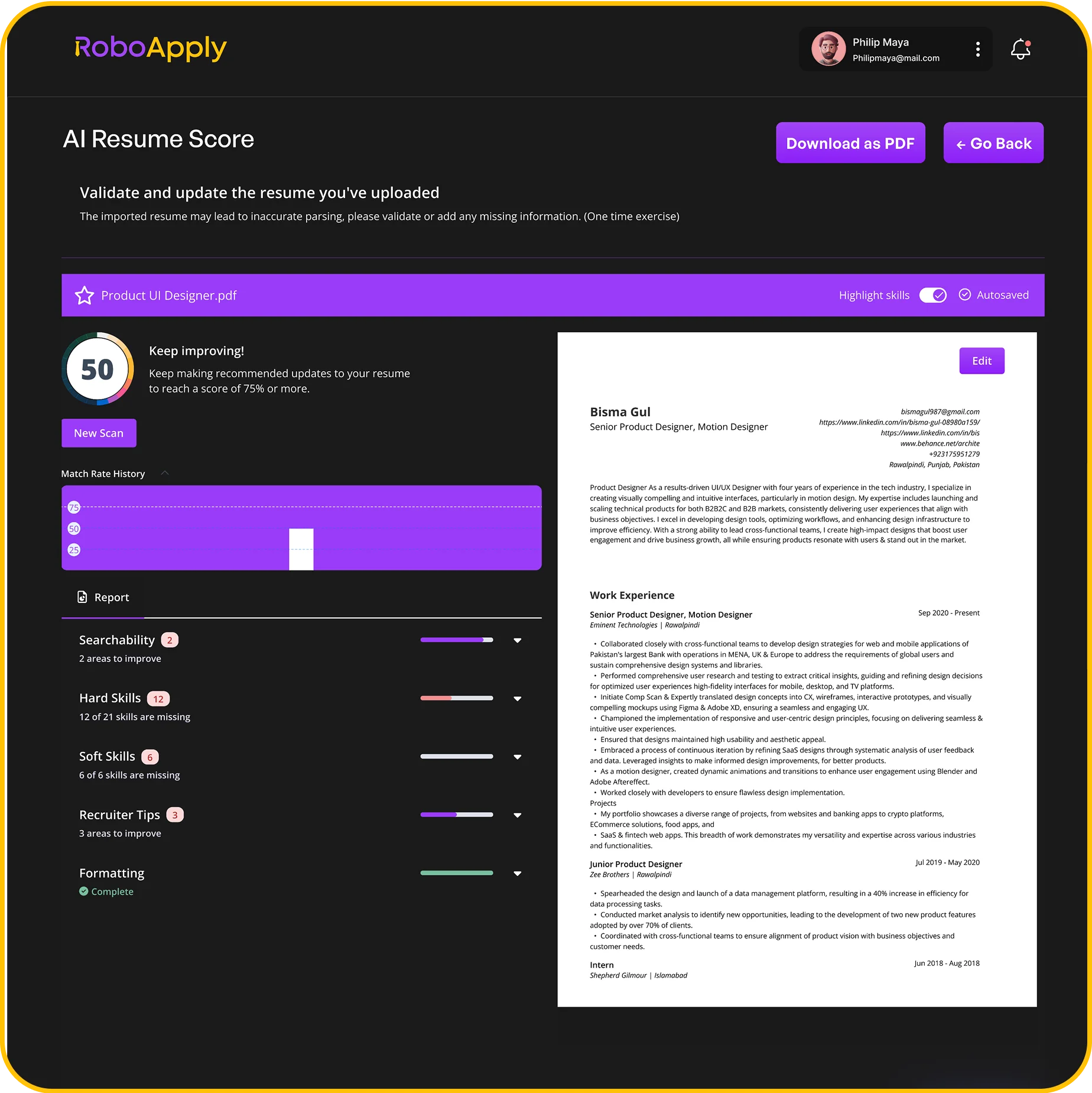
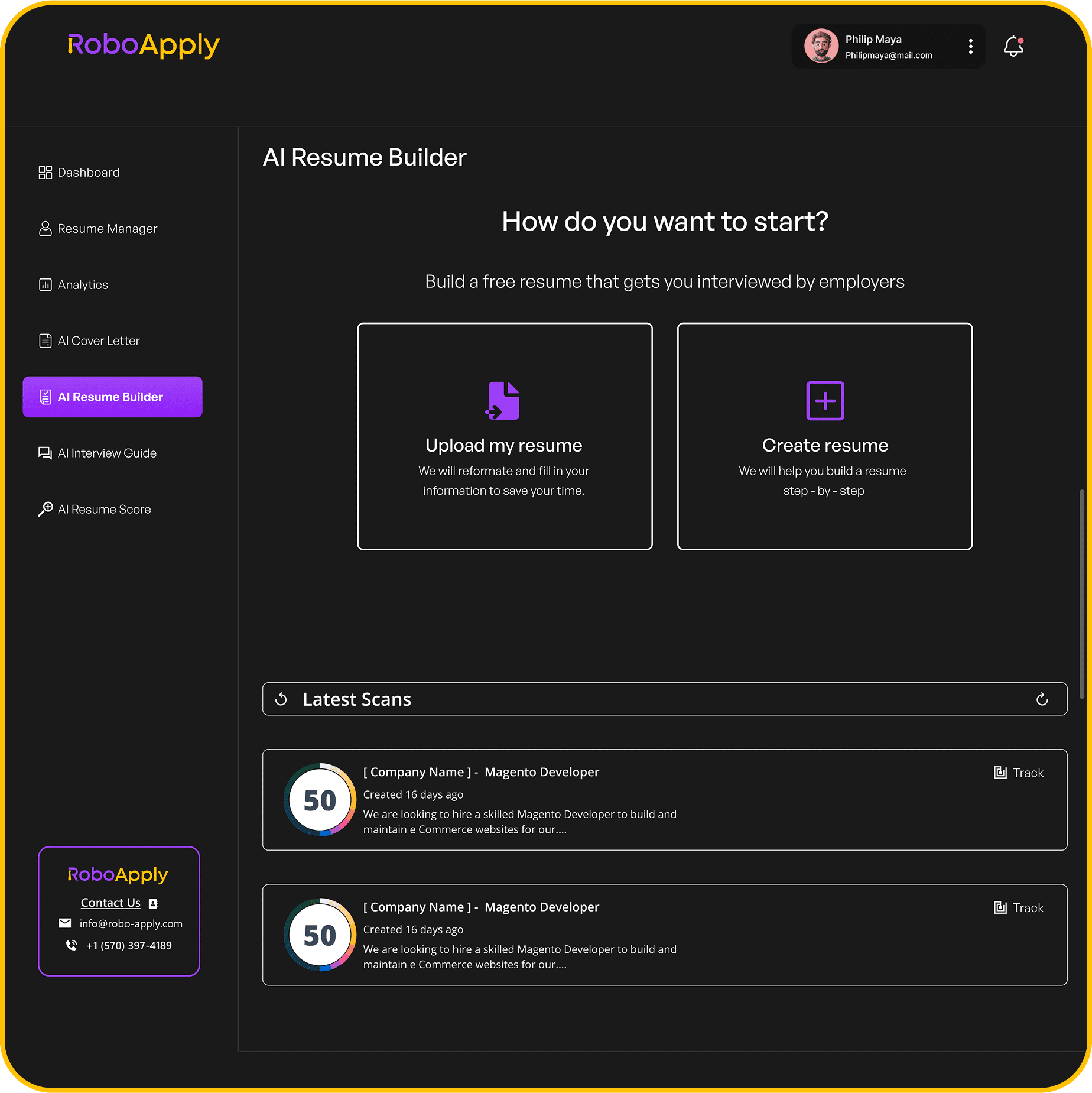
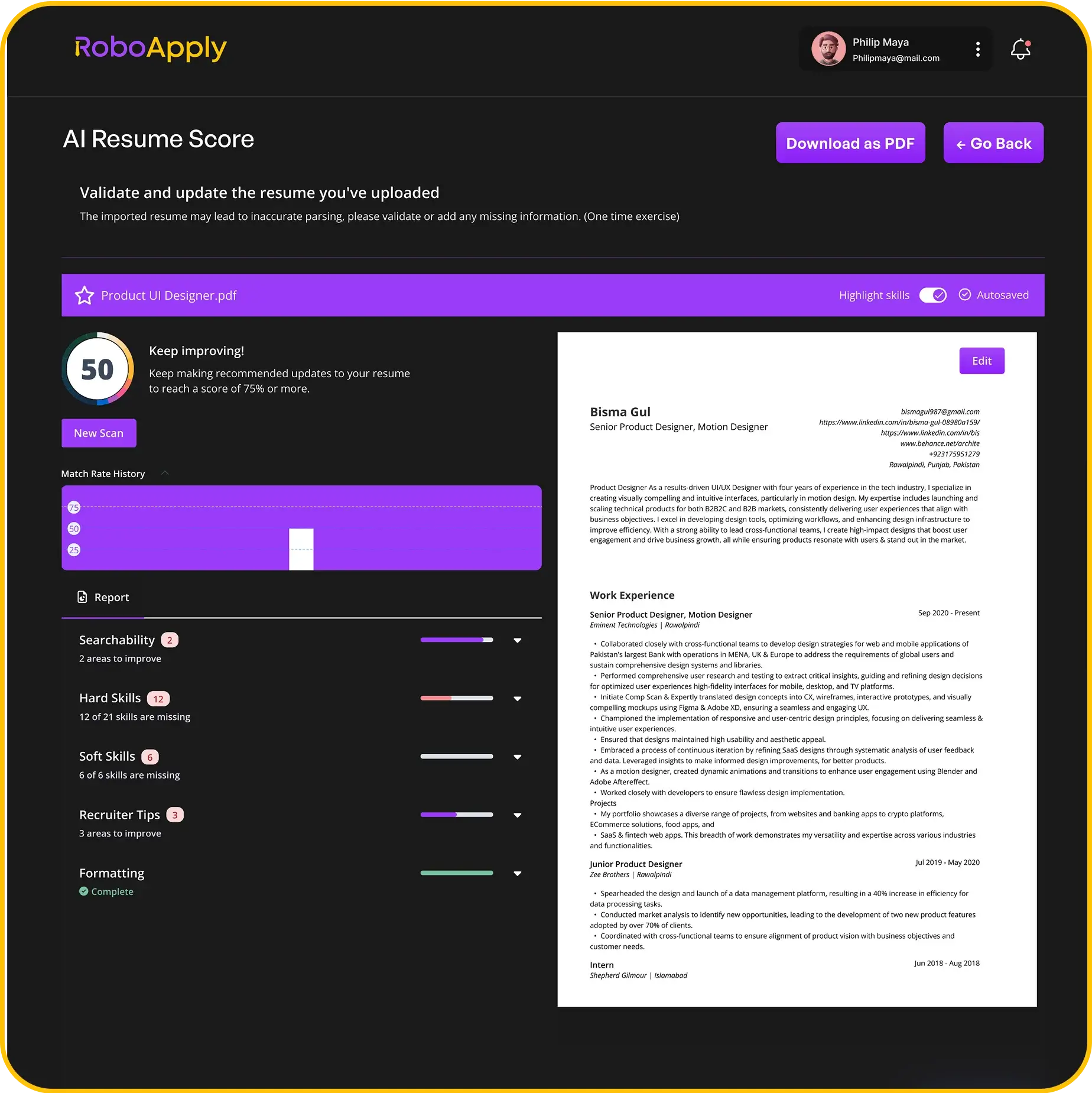
RoboApply’s Resume Builder works right with the cover letter tool. Make matching documents that present one consistent professional brand.
The AI Auto Apply feature goes further by submitting applications automatically. Set what you want for industry, location, and role type. The platform handles applications while you prep for interviews.
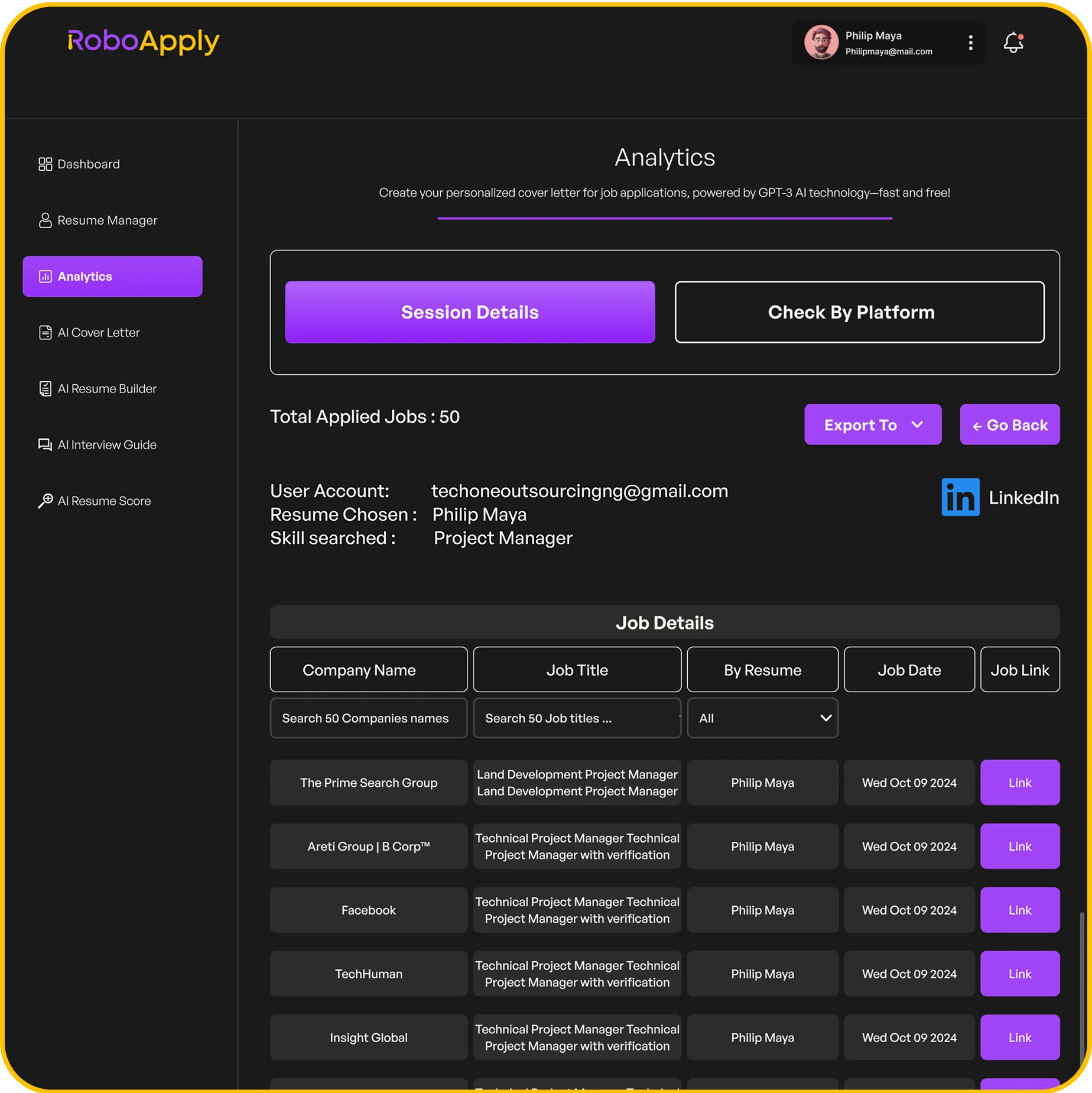
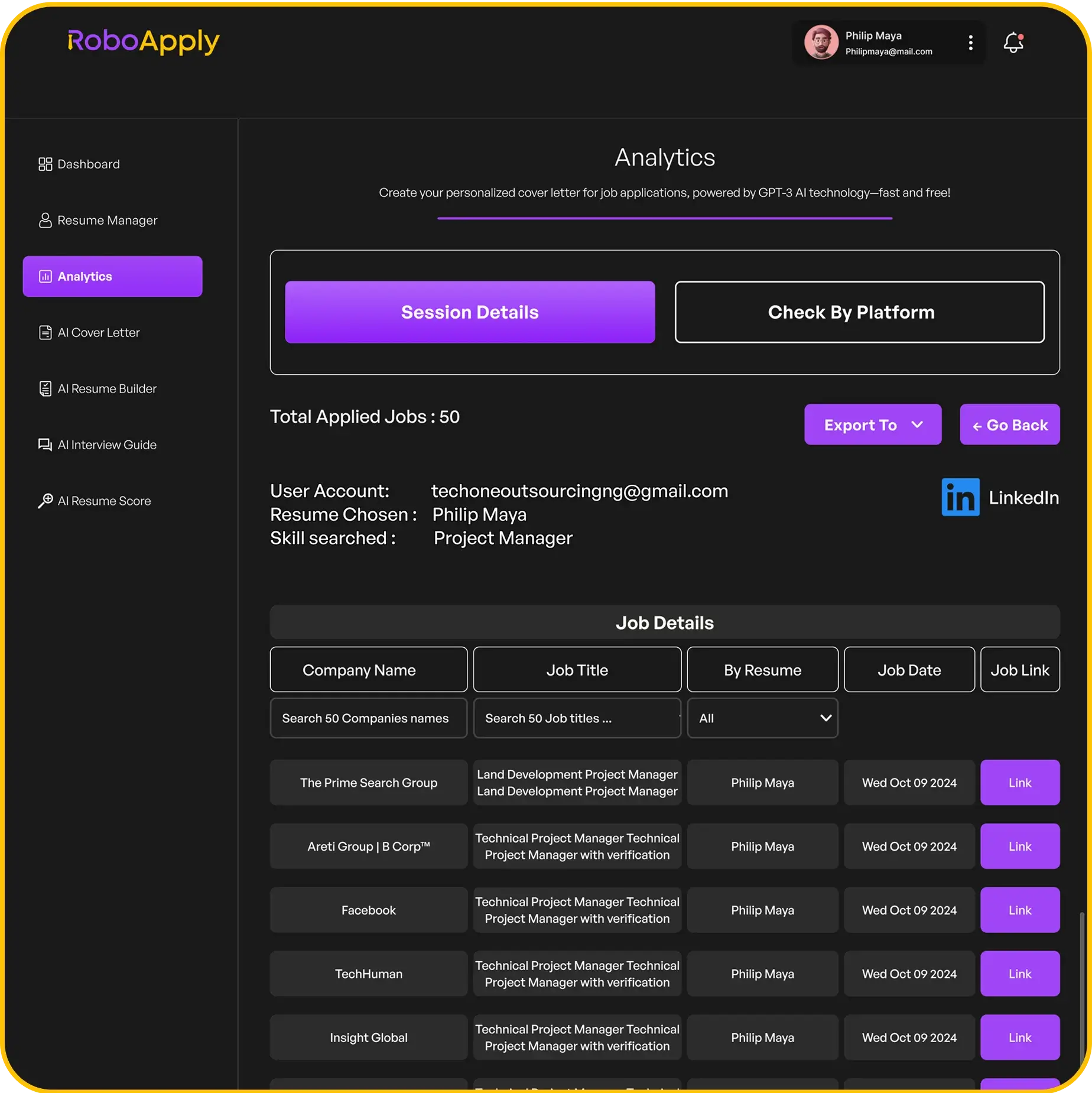
Track everything through one dashboard. See which companies you contacted, application status, and when you applied. This keeps you organized and prevents sending duplicate applications.
Start with RoboApply’s free trial to make your first internship cover letter in minutes. The platform cuts application time way down while keeping the personalization that gets you noticed.
Download Cover Letter Templates
Frequently Asked Questions
How long should a cover letter for internship position be?
Keep it to one page with three to four paragraphs totaling 250 to 400 words max.
Should I include my GPA in my cover letter?
Only if it’s above 3.5 or they specifically ask for it, otherwise put it on your resume.
Can I use the same letter for different internships?
Customize each one with company details and role requirements instead of sending identical copies everywhere.
What if I cannot find the hiring manager’s name?
Check LinkedIn and their website hard before settling for “Dear Hiring Manager” as your greeting.
When should I follow up after applying?
Wait one to two weeks then send a quick professional email asking about status and timeline.