The AI job application process is not just about sending more applications faster. It’s a structured system where artificial intelligence handles job matching, resume optimization, and submission all at once. Most job seekers either skip steps or misunderstand how the pieces connect, and that’s where results fall short.
According to LinkedIn’s Global Talent Trends report, the average job seeker spends over 11 hours per week on applications. Most of that time goes toward tasks AI handles in seconds. Knowing where the AI job application process adds value helps you stop doing the work AI should be doing for you.
How the AI Job Application Process Works
The AI job application process runs across several stages. Each one builds on the last. When all stages work together, you get more applications out, with better quality, in far less time.
Stage 1: Job Matching
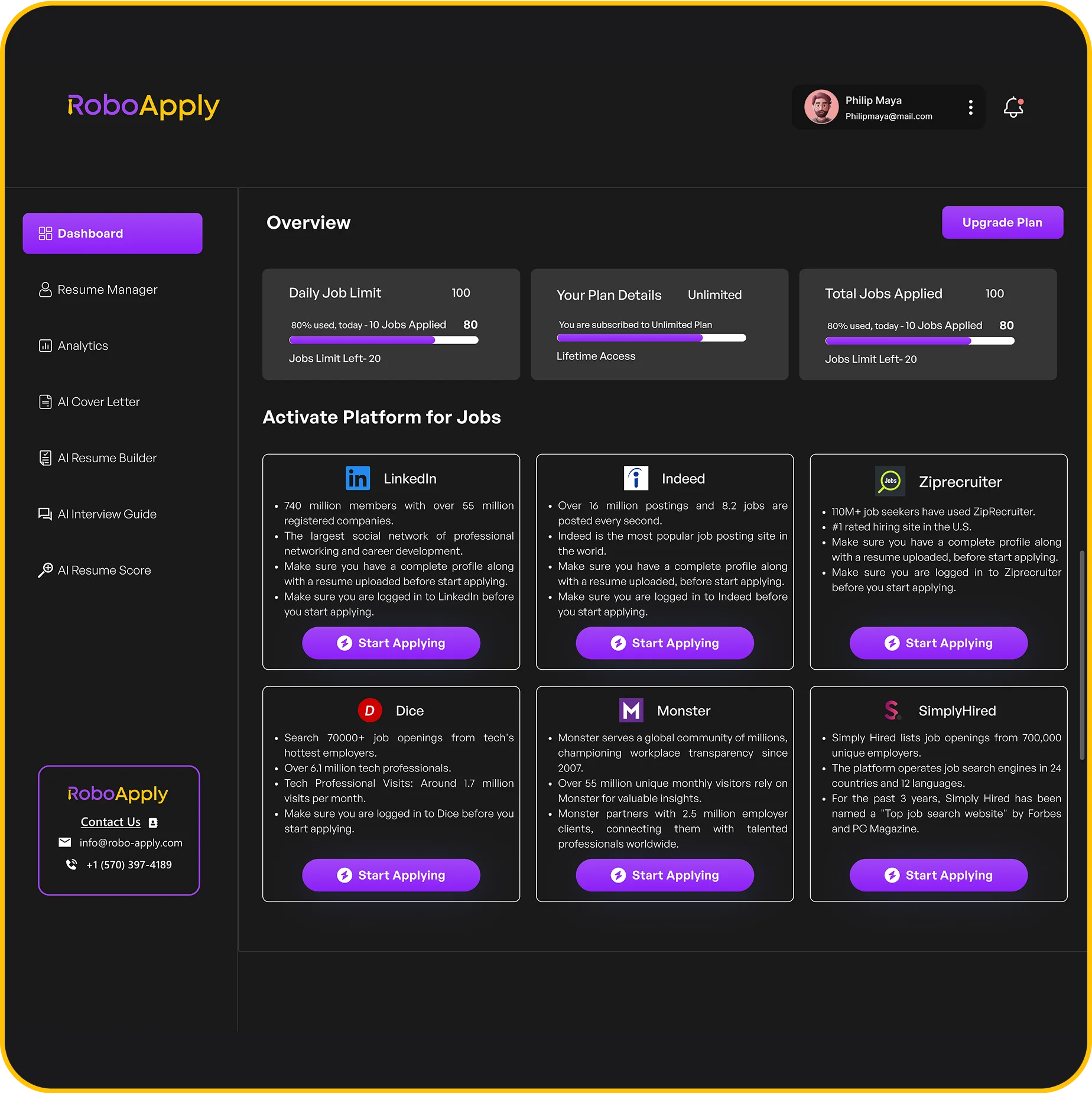
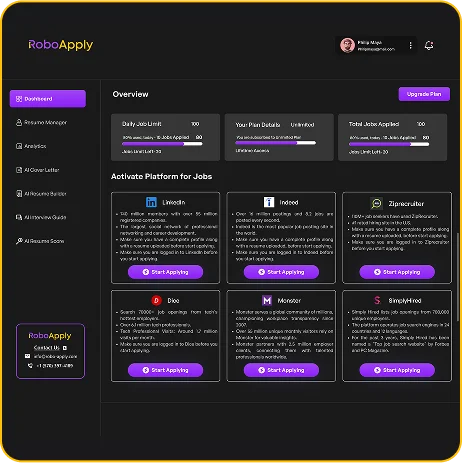
AI job matching starts with your preferences. You set your job title, location, salary range, and experience level once. The AI then scans job boards continuously for roles that match your profile. Here’s what that covers on platforms like RoboApply:
- RoboApply Job Board
- Indeed
- ZipRecruiter
- Monster
- Dice
- Simply Hired
This is different from running keyword searches yourself. AI matching tools compare your full resume against job descriptions in real time and surface roles you’d qualify for but might not find through a basic search.
Stage 2: Resume Optimization Per Role
Generic resumes consistently underperform. 8% of Fortune 500 companies filter applications through an ATS before a human sees them. A resume that doesn’t match the job posting’s keywords gets rejected automatically.
AI resume optimization rewrites your resume to match each job description specifically. It aligns your experience, skills, and achievements with what the posting asks for. Your ATS score improves without you manually editing anything for each role.
Stage 3: Cover Letter Generation
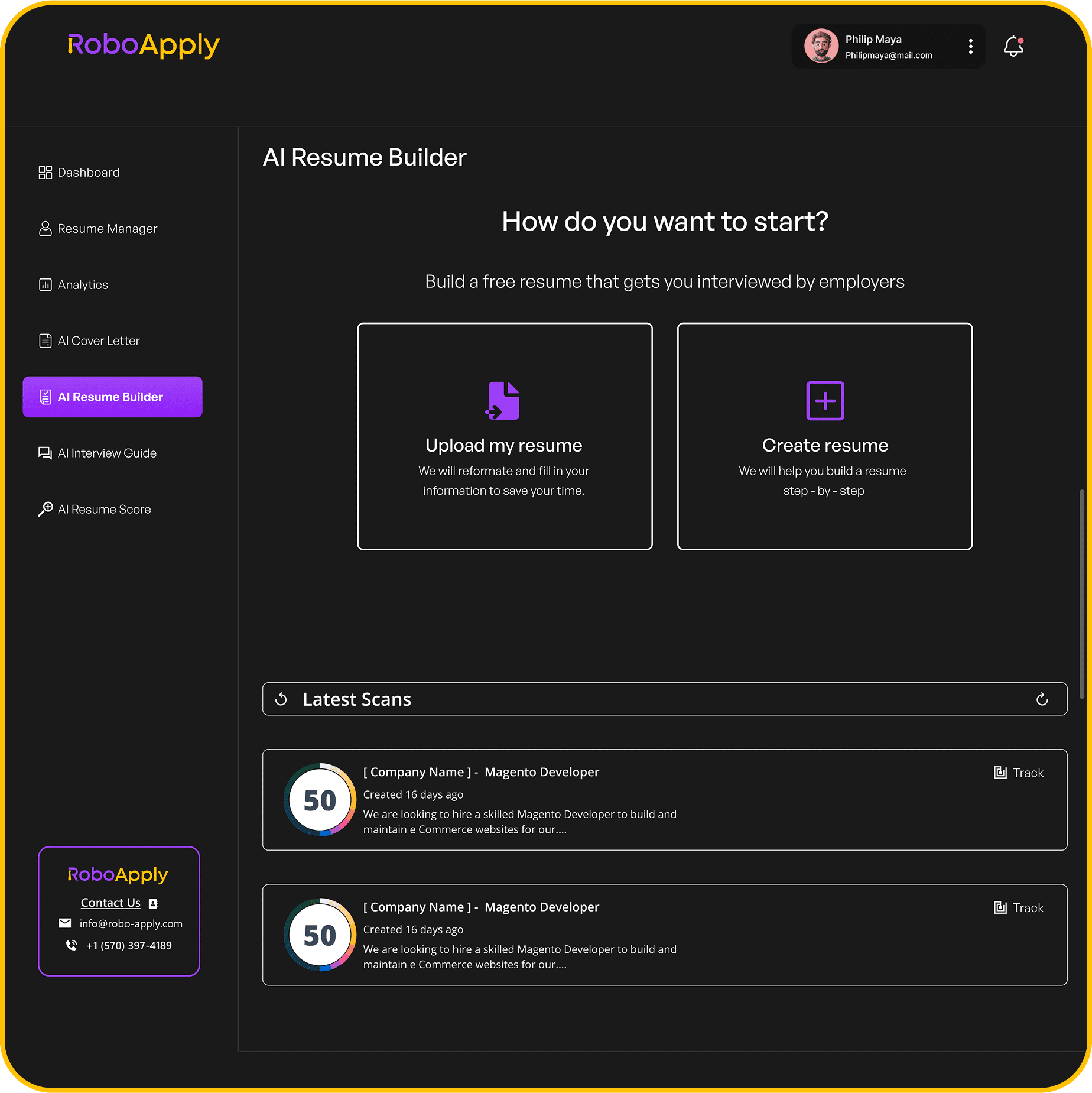
The AI generates a cover letter specific to each role alongside your resume. It pulls in your experience, matches the job posting’s keywords, and adjusts tone based on your preference. This happens automatically for every application in the queue.
Stage 4: Automated Submission
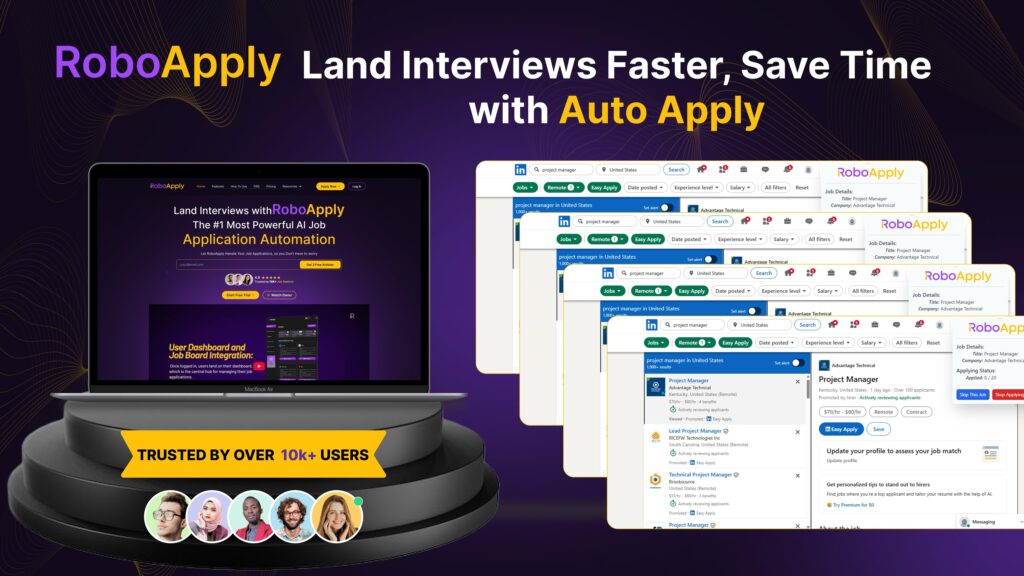
Once the AI has a matched job, an optimized resume, and a cover letter ready, it submits the application. The entire sequence runs without you being present. The volume difference is significant:
- Manual applying: 5 to 10 applications per day
- AI job application process: 20 to 500 applications per day depending on your plan
What Makes AI Applications Different from Manual Ones
Manual job applications have one major bottleneck. You. Every application requires your time, attention, and energy. Quality drops when you’re tired. Volume drops when you’re busy. Consistency is nearly impossible to maintain across weeks of searching.
The AI job application process removes that bottleneck. Applications go out daily regardless of what else is happening in your life. Consistently shows that ATS-optimized, job-specific resumes outperform generic ones at every stage of screening.
There’s also a data advantage. AI platforms track every submission. You can see which job boards generate responses, which roles get callbacks, and where applications stall. Manual applicants usually track nothing, which makes it impossible to improve over time.
Common Mistakes That Undercut the AI Job Application Process
Using AI tools doesn’t automatically mean better results. A few specific mistakes cancel out the advantages these tools offer. Here are the most common ones to avoid:
- Using a single resume for all applications. AI submission without per-job optimization is just mass applying. Recruiters and ATS filters both catch this quickly.
- Setting filters too narrow. Very specific job titles in a single city reduce your daily application volume significantly. Broader filters let the AI surface more opportunities.
- Skipping resume scoring before applying. Starting the AI job application process without checking your base resume first means all your customized versions start from a weak foundation.
- Ignoring your analytics. AI platforms track everything. Job seekers who don’t check their data miss patterns that could improve results quickly.
- Not preparing for interviews. More applications mean more interview invites. Going in unprepared wastes the advantage automation creates.
What a Full AI Job Application Process Looks Like in Practice
RoboApply runs the complete AI job application process in one platform. Each feature connects to the next so nothing falls through the gaps. Here’s how the full workflow runs step by step.
Step 1: Set Up Your Profile
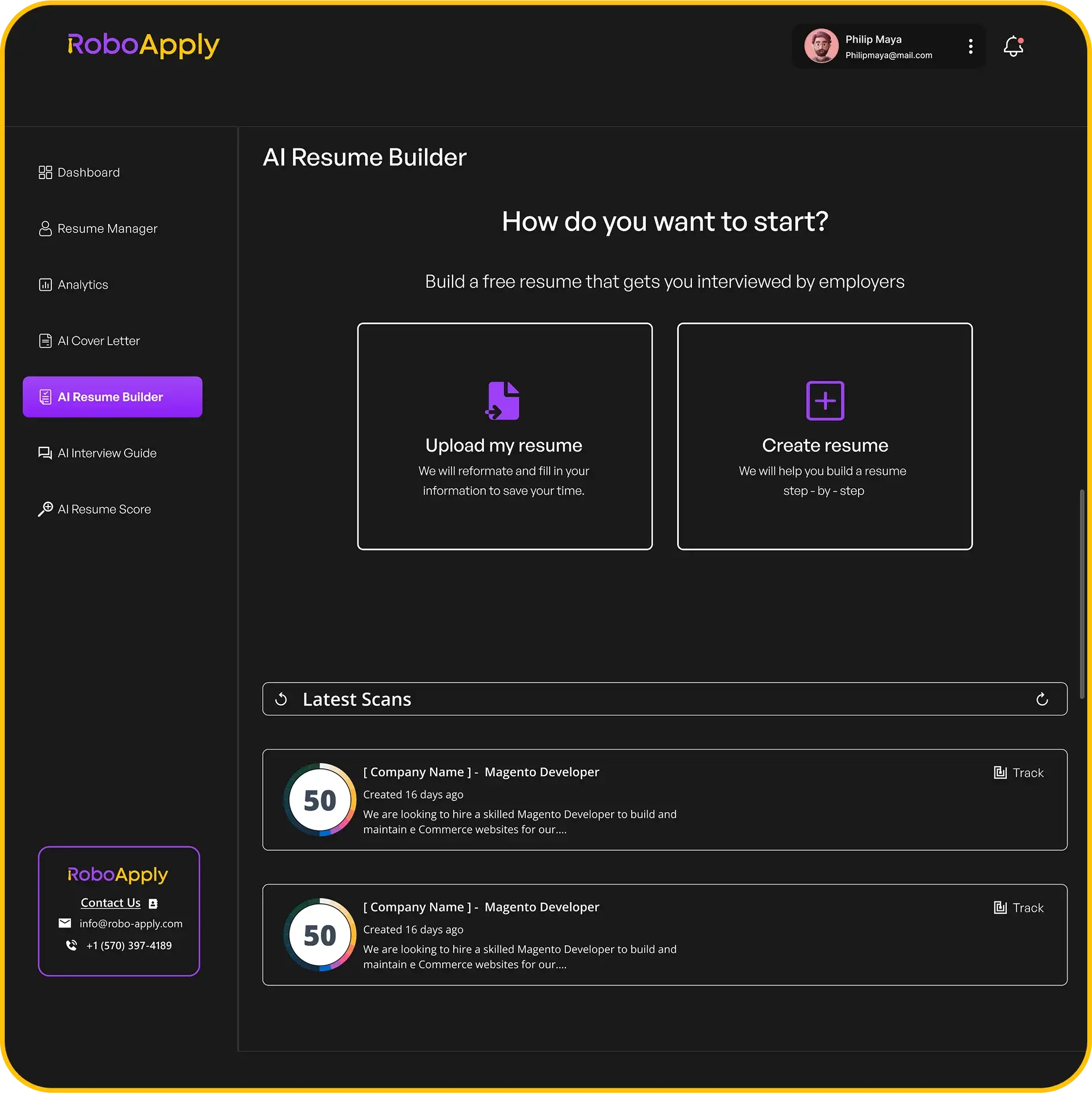
You upload your resume, set your job preferences, and install the Chrome extension. This takes a few minutes. From here, the AI takes over.
Step 2: Score Your Base Resume
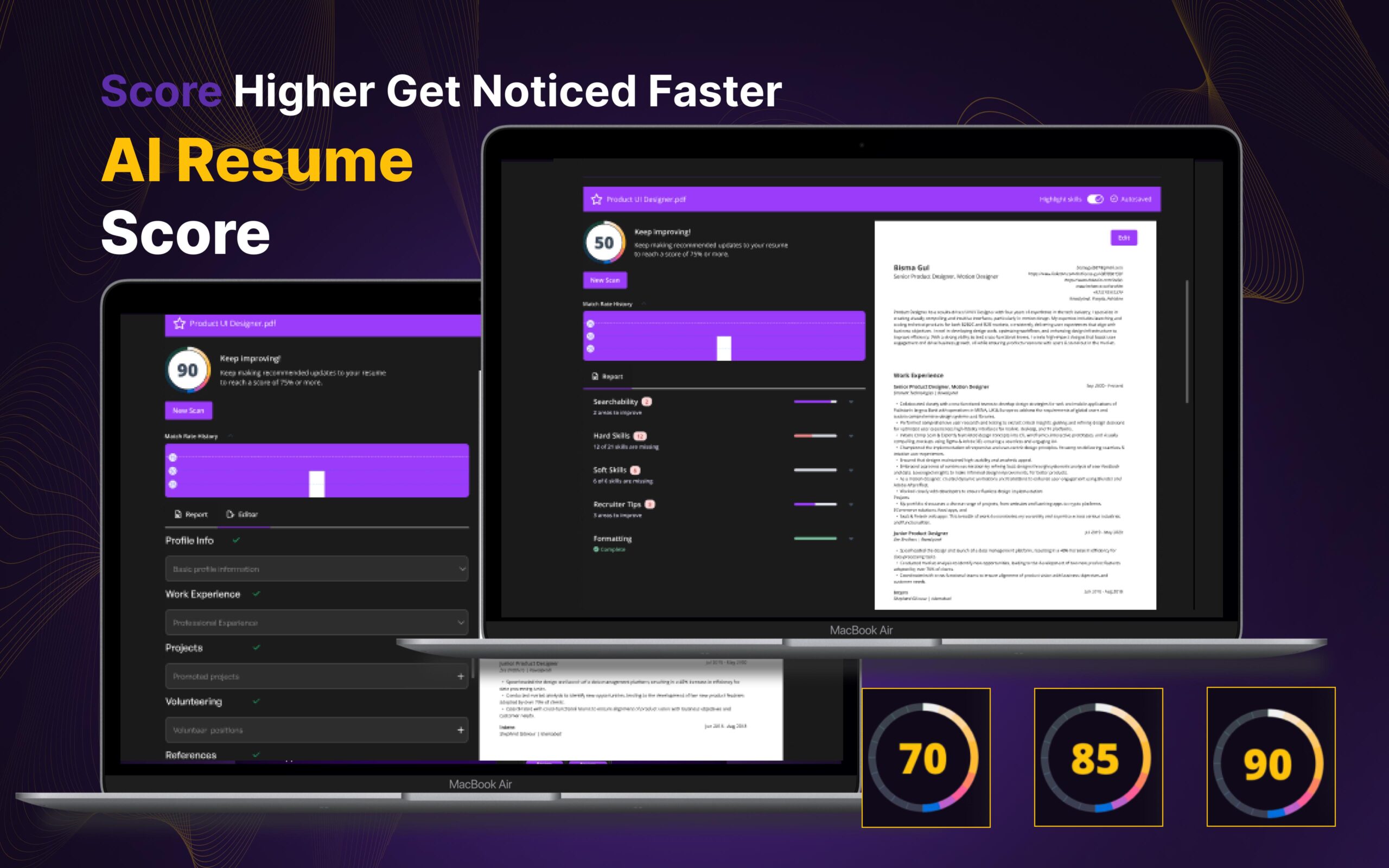
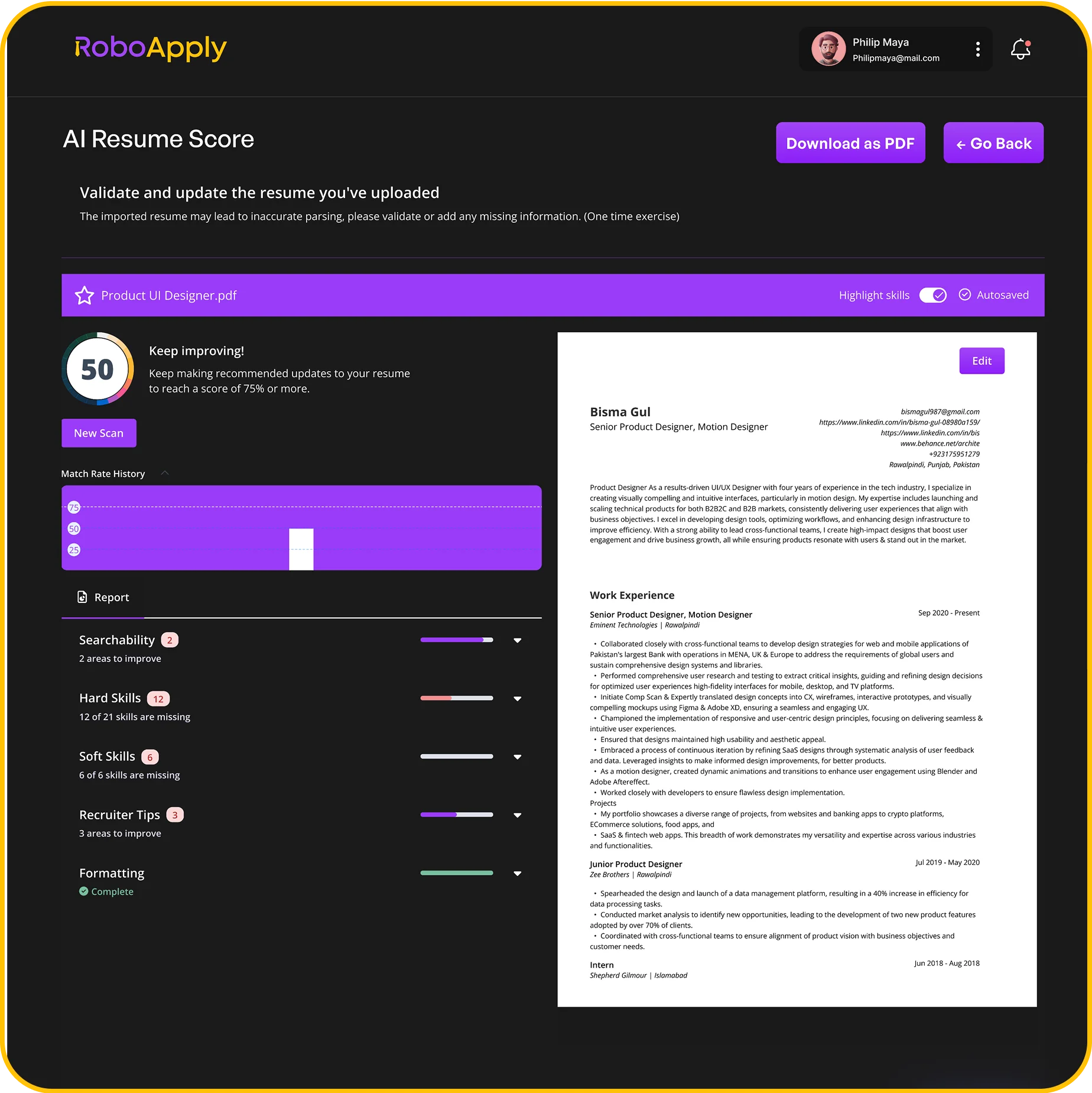
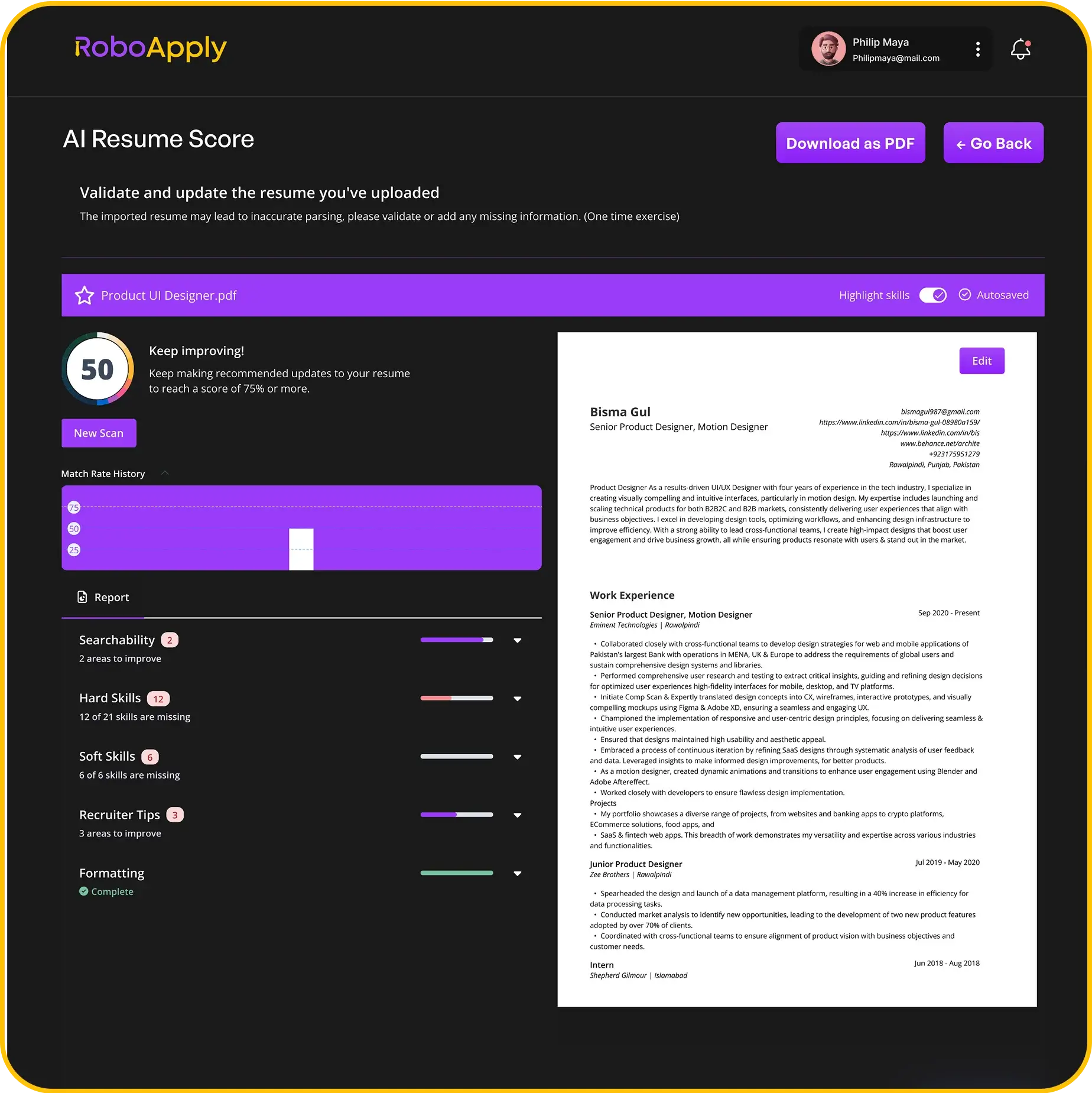
The AI Resume Score tool checks your resume before any applications go out. It reviews:
- ATS readability
- Keyword gaps
- Job alignment percentage
- Skill gap detection
- Bullet point strength and clarity
A stronger base resume means every customized version performs better across the board.
Step 3: Run AI Auto Apply
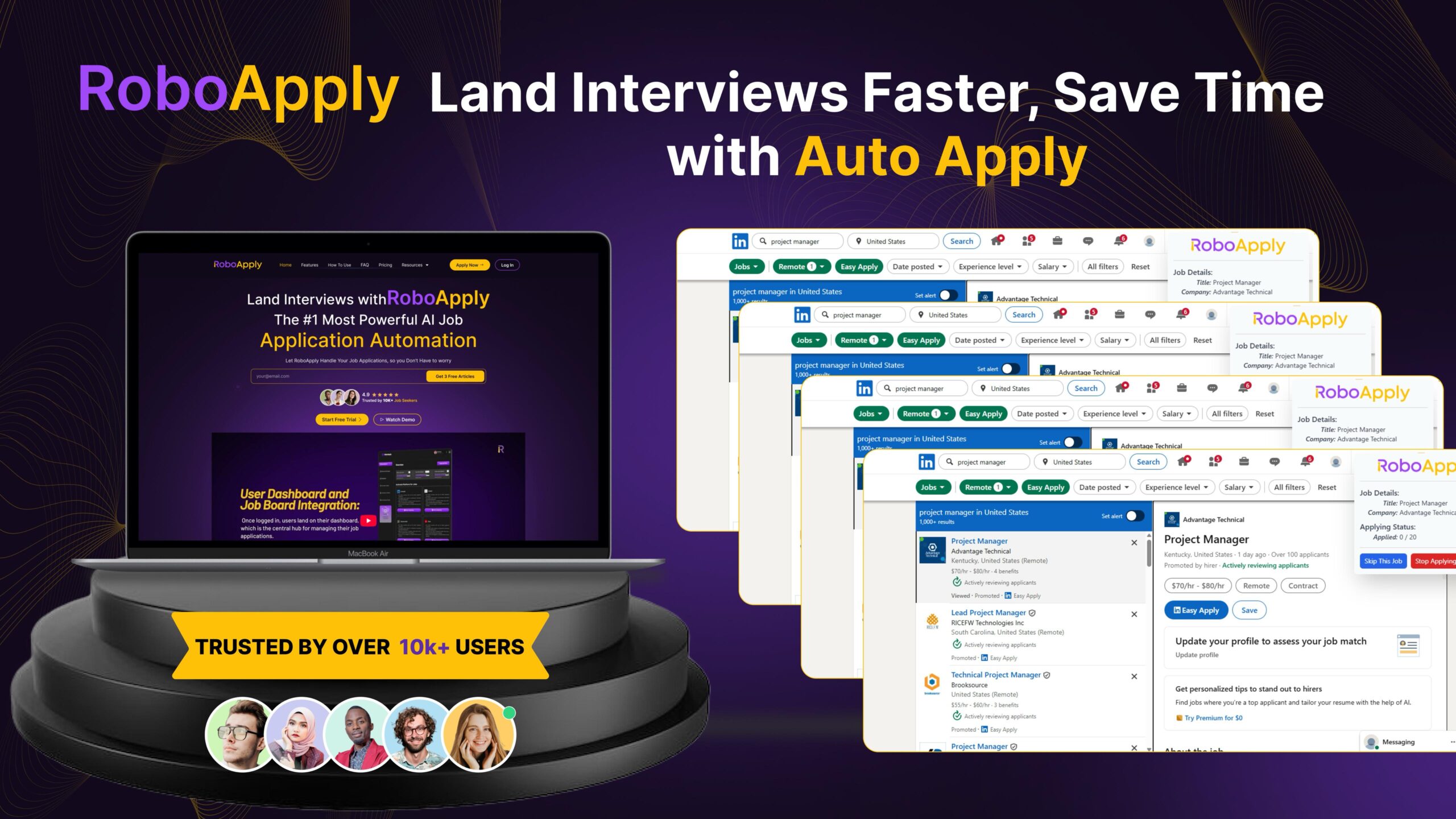
AI Auto Apply searches all supported job boards, finds matching roles, and submits customized applications automatically. Applications track in your dashboard in real time. You wake up to dozens of completed submissions already logged.
Step 4: Use AI Tailored Apply for Targeted Roles
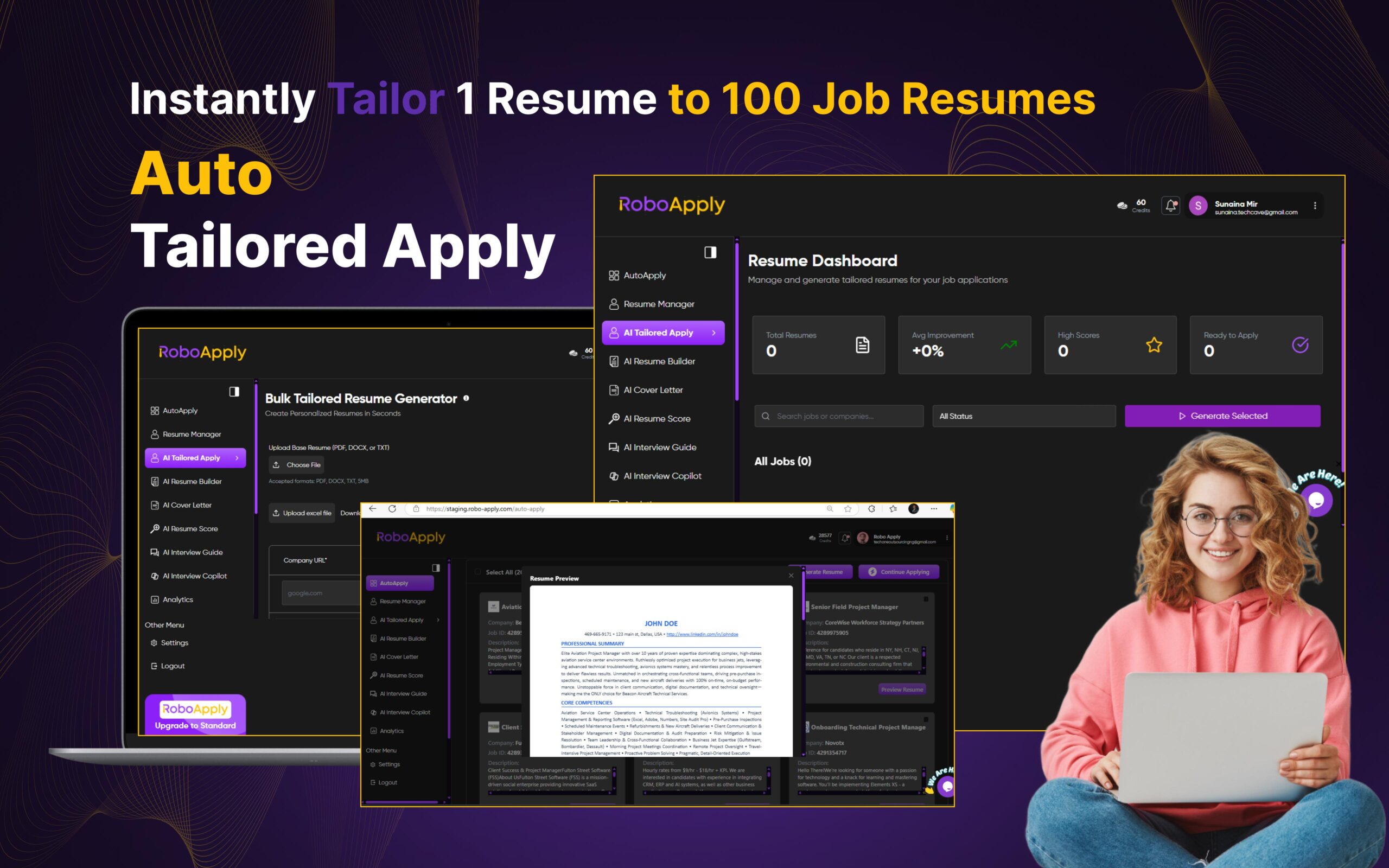
AI Tailored Apply rewrites your resume to match a specific job description. You can use single mode for targeted roles or bulk mode for up to 100 customized versions at once. This drives a 4x increase in interview callbacks compared to sending a generic resume.
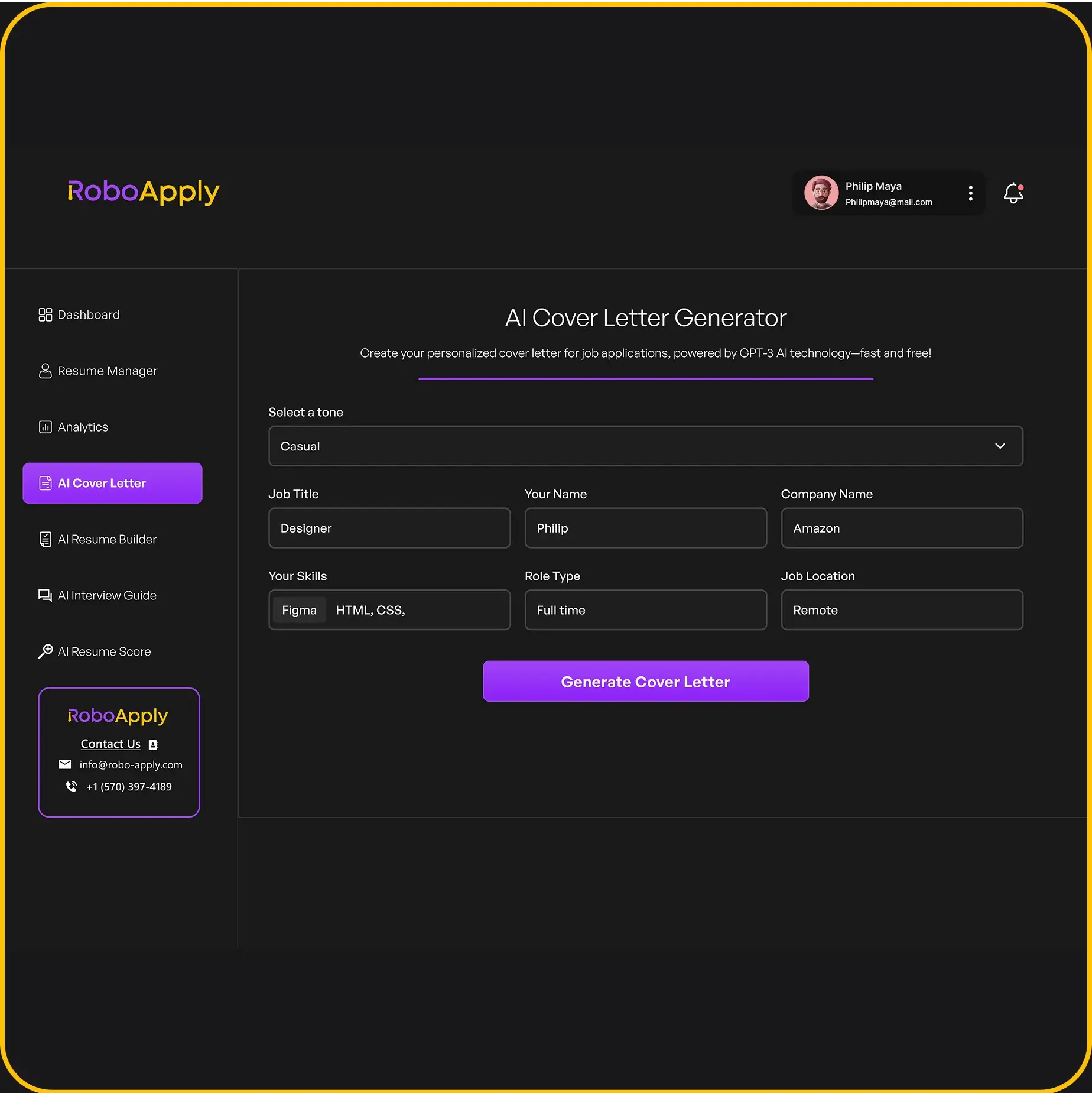
Step 5: Generate Cover Letters Automatically
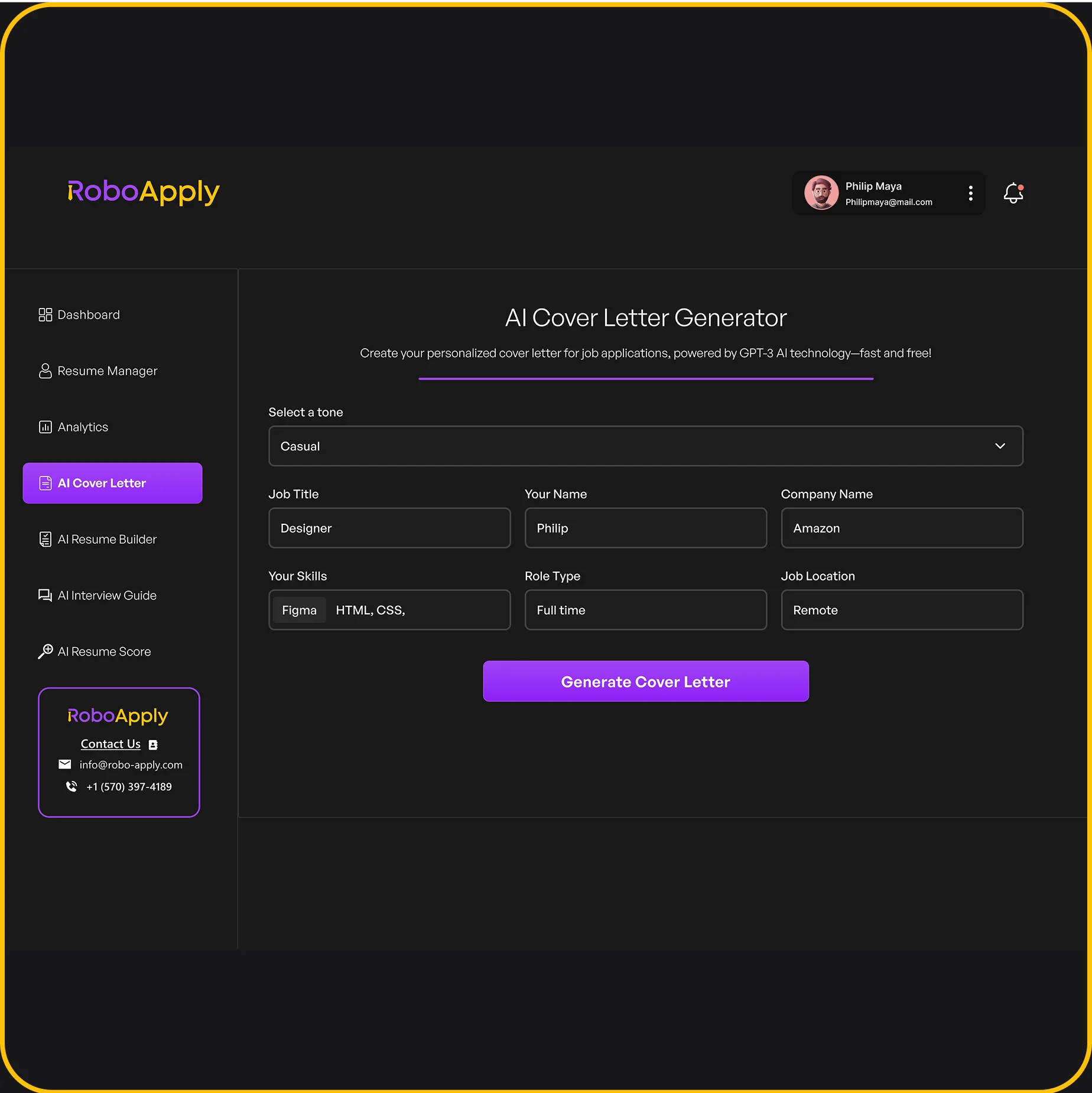
The AI Cover Letter generator creates a personalized letter for each application. It aligns with the job posting’s keywords, pulls in your achievements, and lets you choose your tone. You export to PDF or Word instantly.
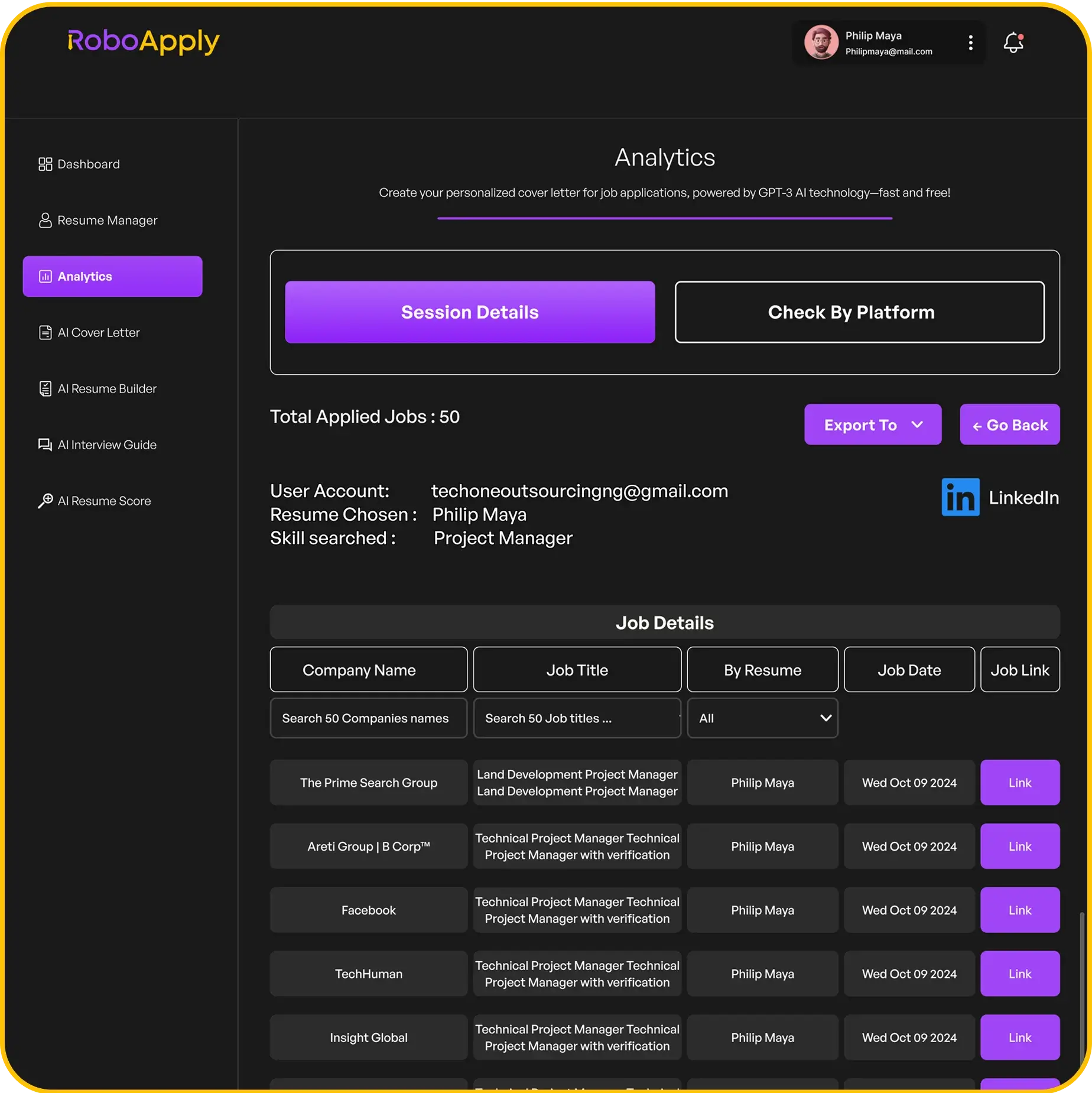
Step 6: Track Everything in Analytics
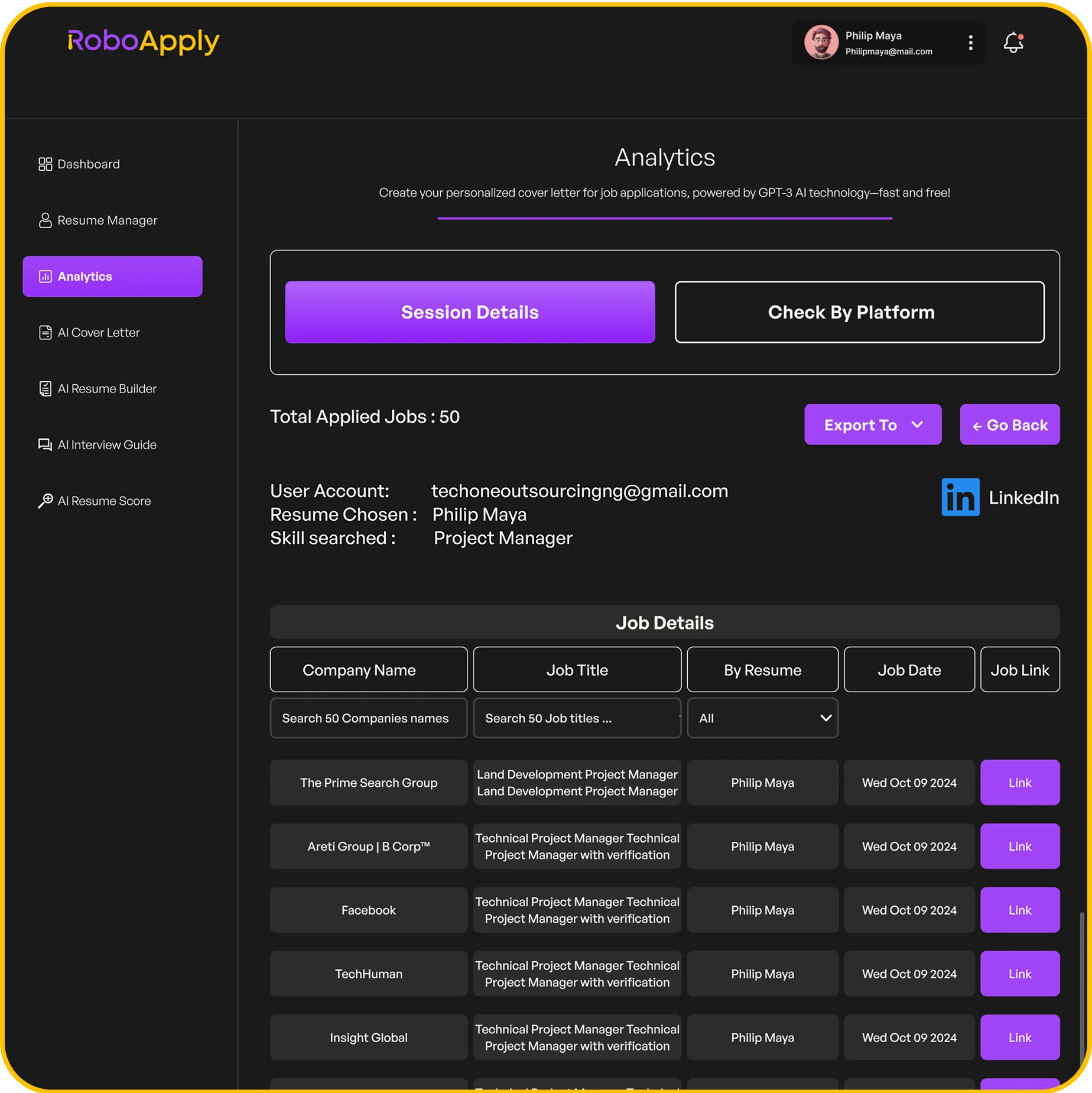
The Analytics dashboard shows response rates by platform, which roles generate the most interest, and your full application history. You can export it all to CSV anytime and use that data to sharpen your strategy.

How to Get Better Results from the AI Job Application Process
Running the AI job application process well requires more than just turning automation on. A few practices consistently produce better outcomes.
Start with a Strong Base Resume
Bureau of Labor Statistics data shows job openings routinely outnumber hires across most sectors. Competition is real. A well-optimized starting resume gives every AI-customized version a better foundation to work from.
Set Broader Job Title Filters
Aim for job title variations that cover how different employers post similar roles. A marketing manager might also appear as a marketing lead, brand manager, or digital marketing manager. Covering those variations increases your daily match volume without lowering relevance.
Check Your Analytics Weekly
SHRM data shows most positions fill within 42 days. If you’re seeing low response rates after two weeks, your filters or base resume likely need adjusting. The data shows exactly which platform performs and which doesn’t.
Prepare for Interviews in Parallel
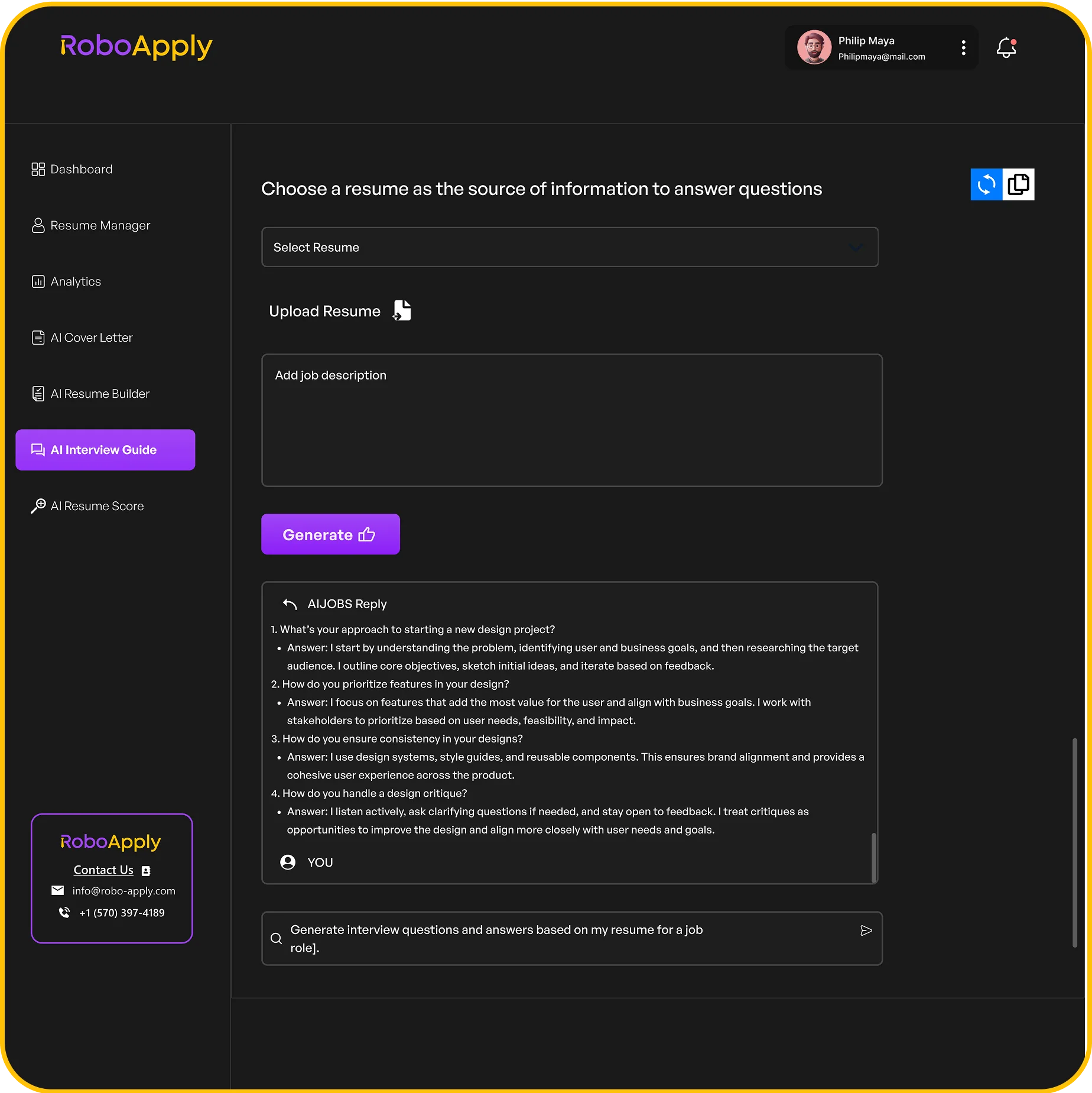
AI automation increases your interview rate quickly. Running mock interviews and reviewing role-specific questions before callbacks arrive puts you in a stronger position. RoboApply’s Interview Copilot, available on Standard and Premium plans, gives you real-time AI feedback during practice sessions.
Add Inbox Apply to Your Strategy
Reaching a hiring manager directly before a role fills publicly gives you an advantage most applicants never have. RoboApply finds verified hiring manager contacts, writes outreach emails, and tracks every reply automatically. Harvard Business Review has documented how direct outreach shapes hiring decisions differently than job board applications.
Frequently Asked Questions
What is the AI job application process?
The AI job application process uses artificial intelligence to match jobs, optimize resumes, generate cover letters, and submit applications automatically on your behalf.
How long does it take to set up AI job applications?
Setup takes a few minutes. You upload your resume, set your preferences, and install the Chrome extension. The AI handles everything after that.
Does AI customization actually improve interview rates?
Yes. AI-optimized resumes matched to specific job descriptions produce a 4x higher interview callback rate compared to sending a generic resume.
Which job boards work with AI job application platforms?
RoboApply supports LinkedIn, Indeed, ZipRecruiter, Monster, Dice, Simply Hired, and the RoboApply Job Board. Coverage across all seven runs from one dashboard.
Is the AI job application process suitable for all industries?
Yes. The AI adjusts your resume to fit whatever job description you’re targeting, across every industry including marketing, finance, healthcare, engineering, and education.