A cover letter for civil engineer positions should be one page, include 3-4 paragraphs highlighting your technical skills and project experience, and demonstrate how you solve engineering challenges. Your letter must showcase specific achievements like “designed stormwater system reducing flooding by 40%” rather than listing generic duties. Format it professionally with your contact information, employer details, and concrete examples of work matching their requirements.
Civil engineering employers scan hundreds of applications. Your cover letter needs to prove you can handle their specific projects immediately. Generic statements about being a “team player” get ignored. Quantifiable results showing you delivered infrastructure projects on time and under budget win interviews.
Most civil engineers skip cover letters or write weak ones. This gives you an advantage when you submit a strong letter demonstrating your value. Hiring managers want proof you understand their challenges and can solve them.
What Makes a Strong Cover Letter for Civil Engineer Applications
Your cover letter serves as your first impression before interviews happen. Civil engineering firms need to see technical competence combined with communication skills. The letter proves you can explain complex engineering concepts clearly.
Start with a compelling opening that mentions the specific position and how you found it. Reference the company’s recent projects or engineering challenges they face. This shows genuine interest beyond just needing any job.
Your middle paragraphs must highlight relevant project experience. Describe infrastructure you designed, managed, or analyzed. Include measurable outcomes like cost savings, efficiency improvements, or safety enhancements. Connect your background directly to their job requirements.
Close with confidence about your fit for the role. Request an interview and thank them for consideration. Keep the tone professional yet personable throughout.
Essential Elements Every Civil Engineering Cover Letter Needs
Every effective cover letter includes these components arranged strategically:
Header with Contact Information
- Your full name and credentials (PE, EIT)
- Phone number and professional email
- City and state location
- Date of application
- Hiring manager’s name and title
- Company name and address
Opening Paragraph
- Specific position title you’re applying for
- Where you found the job posting
- Brief statement of your qualifications
- Hook that captures attention immediately
Body Paragraphs (1-2)
- Relevant project experience with results
- Technical skills matching job requirements
- Problem-solving examples from your work
- Achievements with quantifiable metrics
- How your background solves their needs
Closing Paragraph
- Summary of your value proposition
- Enthusiasm about the opportunity
- Call to action requesting interview
- Professional closing and signature
Format the letter with standard business letter spacing and margins. Use a professional font like Arial, Calibri, or Times New Roman at 11-12 points.
How Do You Structure a Civil Engineer Cover Letter
Structure determines whether hiring managers read your entire letter. Poor organization causes them to stop reading after the first paragraph. Strong structure guides them through your qualifications logically.
Your opening must grab attention within three sentences. State the position, mention something specific about their company, and preview your strongest qualification. This creates immediate interest in reading more.
The body section proves you can do the job. Select 2-3 relevant projects or achievements that match their requirements. For each, explain the challenge, your approach, and measurable results. Use the CAR method: Challenge, Action, Result.
Your closing reinforces why you’re the right fit. Summarize your key strengths briefly, express genuine interest, and request next steps. Make it easy for them to contact you by restating your phone and email.
Writing an Opening That Gets Read
Strong openings reference specific projects, company achievements, or industry challenges. This demonstrates you researched the employer rather than sending generic applications everywhere.
Weak Opening: “I am writing to apply for the Civil Engineer position at your company. I have a degree in civil engineering and am looking for new opportunities.”
Strong Opening: “Your firm’s award-winning Gateway Bridge project demonstrates the innovative structural design approach I want to contribute to. As a licensed PE with 6 years designing transportation infrastructure, I’ve delivered 12 bridge projects totaling $45M in construction value, all completed on schedule.”
The strong version immediately shows value, references their work, and provides specific credentials. It gives the hiring manager a reason to keep reading.
Research from the National Society of Professional Engineers shows employers value candidates who understand their specific engineering challenges and company culture.
Highlighting Technical Skills and Project Experience
Civil engineering is hands-on and results-focused. Your cover letter must reflect this with concrete project examples rather than abstract descriptions of responsibilities.
Organize your experience around these categories:
Design and Analysis
- Software proficiency (AutoCAD Civil 3D, Revit, HEC-RAS)
- Structural calculations and load analysis
- Hydraulic and hydrologic modeling
- Site development and grading plans
- Cost estimation and value engineering
Project Management
- Budget oversight with dollar amounts
- Schedule management and timeline adherence
- Contractor coordination and oversight
- Quality control and compliance
- Stakeholder communication
Regulatory and Compliance
- Building codes and standards knowledge
- Permitting and approval processes
- Environmental regulations familiarity
- Safety protocols and OSHA compliance
- Quality assurance documentation
For each skill area you mention, provide a brief example showing how you applied it successfully. Don’t just list capabilities without demonstrating them through real work.

What Technical Details Should You Include
Civil engineering requires specific technical knowledge. Your cover letter should reference relevant tools, standards, and methodologies without overwhelming non-technical HR reviewers who screen applications first.
Mention software platforms you use professionally. Civil 3D, Revit, STAAD.Pro, SAP2000, and similar programs matter for most positions. Include your proficiency level if you’re expert in certain platforms.
Reference applicable codes and standards. AASHTO for transportation, IBC for buildings, ACI for concrete, or ASCE standards depending on your specialty. This shows you understand regulatory requirements.
Describe analysis methods or design approaches you’ve used. Finite element analysis, hydrologic modeling, geotechnical investigations, or traffic studies demonstrate technical depth. Keep explanations brief and results-focused.
Quantifying Your Engineering Achievements
Numbers prove competence better than vague claims. Civil engineering produces measurable outcomes in every project. Use specific metrics throughout your cover letter.
Transform generic statements into quantified achievements:
Generic: “Managed construction projects” Quantified: “Managed 8 municipal infrastructure projects worth $12M, delivering all on budget and averaging 5% under schedule”
Generic: “Designed stormwater systems”
Quantified: “Designed detention basins and conveyance systems for 200-acre development, reducing peak discharge by 40% and achieving permit approval in 6 weeks”
Generic: “Performed site inspections” Quantified: “Conducted 150+ site inspections across 6 active projects, identifying 23 non-conformances and ensuring 100% regulatory compliance”
Include these types of metrics:
- Project values and budget performance
- Schedule adherence percentages
- Cost savings or value engineering results
- Team sizes you’ve managed or coordinated
- Number of projects or analyses completed
- Efficiency improvements or time reductions
- Safety records or incident rates
Data from the Bureau of Labor Statistics shows civil engineering employment growing 8% through 2030, making strong applications increasingly important for competitive positions.
How Should Different Engineering Specialties Adapt Their Letters
Civil engineering encompasses diverse specialties. Your cover letter should reflect your specific area of expertise while showing versatility when appropriate.
Structural Engineers emphasize building design, load calculations, seismic analysis, and connection details. Mention software like ETABS, SAFE, or Tekla. Reference applicable building codes and your PE license.
Transportation Engineers focus on roadway design, traffic analysis, and infrastructure planning. Highlight experience with agencies like DOT or municipalities. Mention familiarity with design manuals and traffic modeling software.
Water Resources Engineers discuss hydraulic analysis, stormwater management, and environmental compliance. Reference EPA regulations, watershed studies, or flood control projects you’ve completed.
Geotechnical Engineers emphasize soil investigations, foundation design, and slope stability. Mention lab testing, field investigations, and analysis software specific to geotechnical work.
Construction Engineers highlight project management, contractor coordination, and field oversight. Emphasize on-time delivery, budget control, and safety management in active construction environments.
Match your letter’s technical language to the position description. Review the job posting carefully and mirror terminology they use while staying authentic to your actual experience.
Entry-Level vs. Experienced Engineer Approaches
Entry-level engineers need different emphasis than experienced professionals. Tailor your approach based on career stage.
Entry-Level Focus:
- Education and relevant coursework
- Internship or co-op experience
- Academic projects with real-world applications
- EIT certification and PE pursuit timeline
- Technical skills and software proficiency
- Eagerness to learn and contribute
Experienced Engineer Focus:
- Licensed PE status prominently displayed
- Project leadership and management experience
- Specialized expertise and certifications
- Industry relationships and reputation
- Proven track record of successful projects
- Mentorship and training capabilities
Entry-level candidates should demonstrate potential and technical foundation. Experienced engineers must prove established expertise and leadership ability. Both need concrete examples supporting their claims.
Research from American Society of Civil Engineers indicates networking and professional presentation significantly impact career advancement in civil engineering fields.
What Common Mistakes Weaken Civil Engineering Cover Letters
Even qualified engineers sabotage their applications with easily avoidable mistakes. Recognizing these errors helps you create stronger letters.
Being Too Technical for Initial Screening HR personnel often review applications before engineering managers see them. Excessive jargon and complex technical descriptions confuse non-engineers. Balance technical credibility with accessible language.
Repeating Your Resume Verbatim Your cover letter should complement your resume, not duplicate it. Expand on key achievements with context and results. Tell the story behind your most impressive projects.
Writing Generic Letters Sending identical letters to every employer shows lack of genuine interest. Research each company and reference their specific projects, values, or challenges. Customization takes minutes but dramatically improves response rates.
Focusing on What You Want Weak letters emphasize what you hope to gain rather than what you offer. Employers care about solving their problems. Frame everything around how you help them succeed.
Neglecting to Proofread Engineering requires precision and attention to detail. Typos or grammatical errors suggest carelessness that could translate to work quality. Proofread multiple times and have someone else review your letter.
Making It Too Long One page is standard for cover letters. Longer letters don’t get read completely. Edit ruthlessly to include only the most compelling information about your qualifications.
According to Indeed’s job search data, customized cover letters generate 40% more interview requests than generic ones across engineering fields.
How Can You Streamline Your Civil Engineering Job Applications
Creating customized cover letters for dozens of civil engineering positions becomes time-consuming. You need quality letters for each application without spending hours on repetitive writing tasks.
This challenge grows when applying to multiple firms simultaneously. The job market moves quickly, especially for desirable positions. Speed combined with quality gives you an advantage over other candidates.
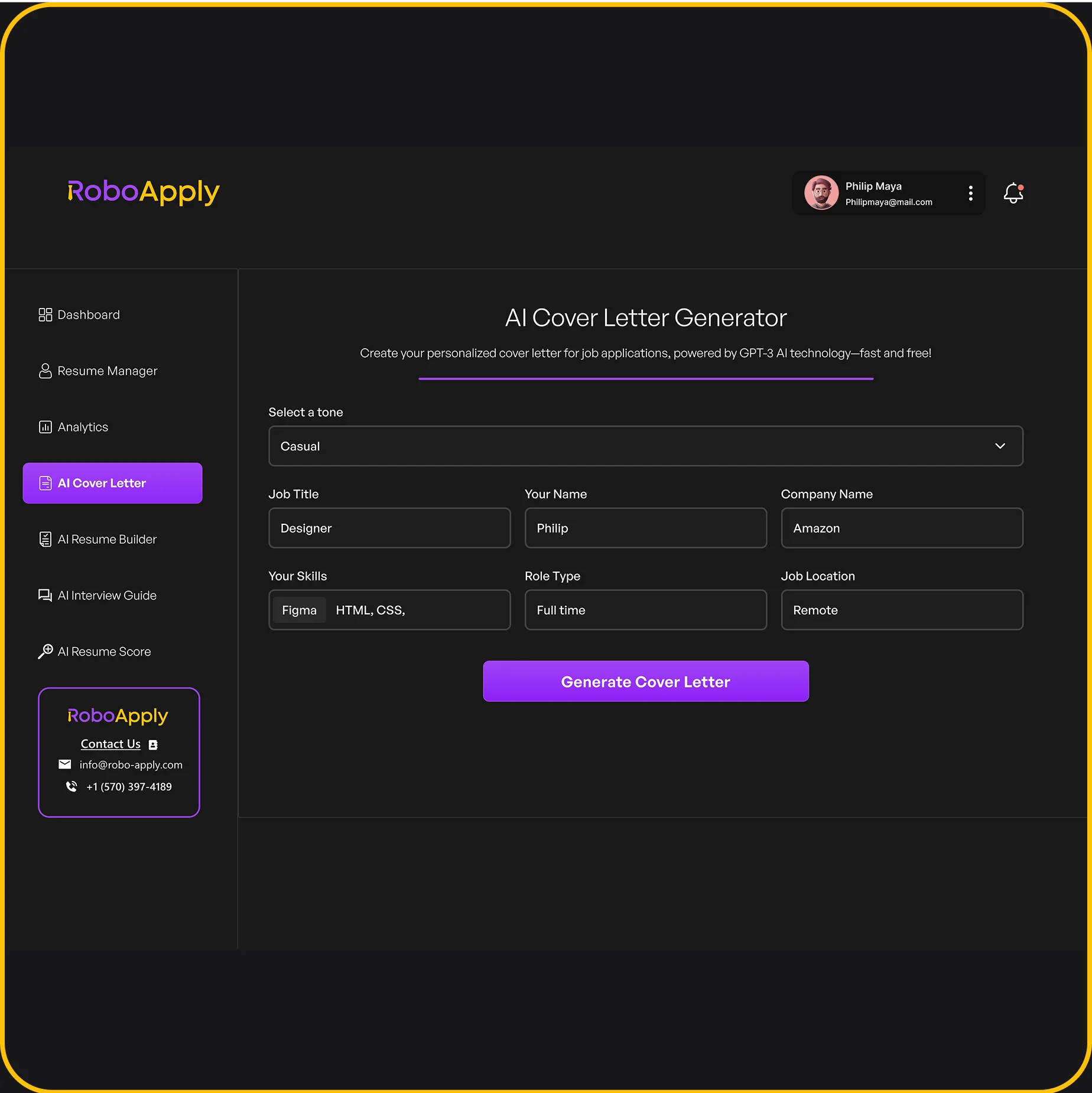
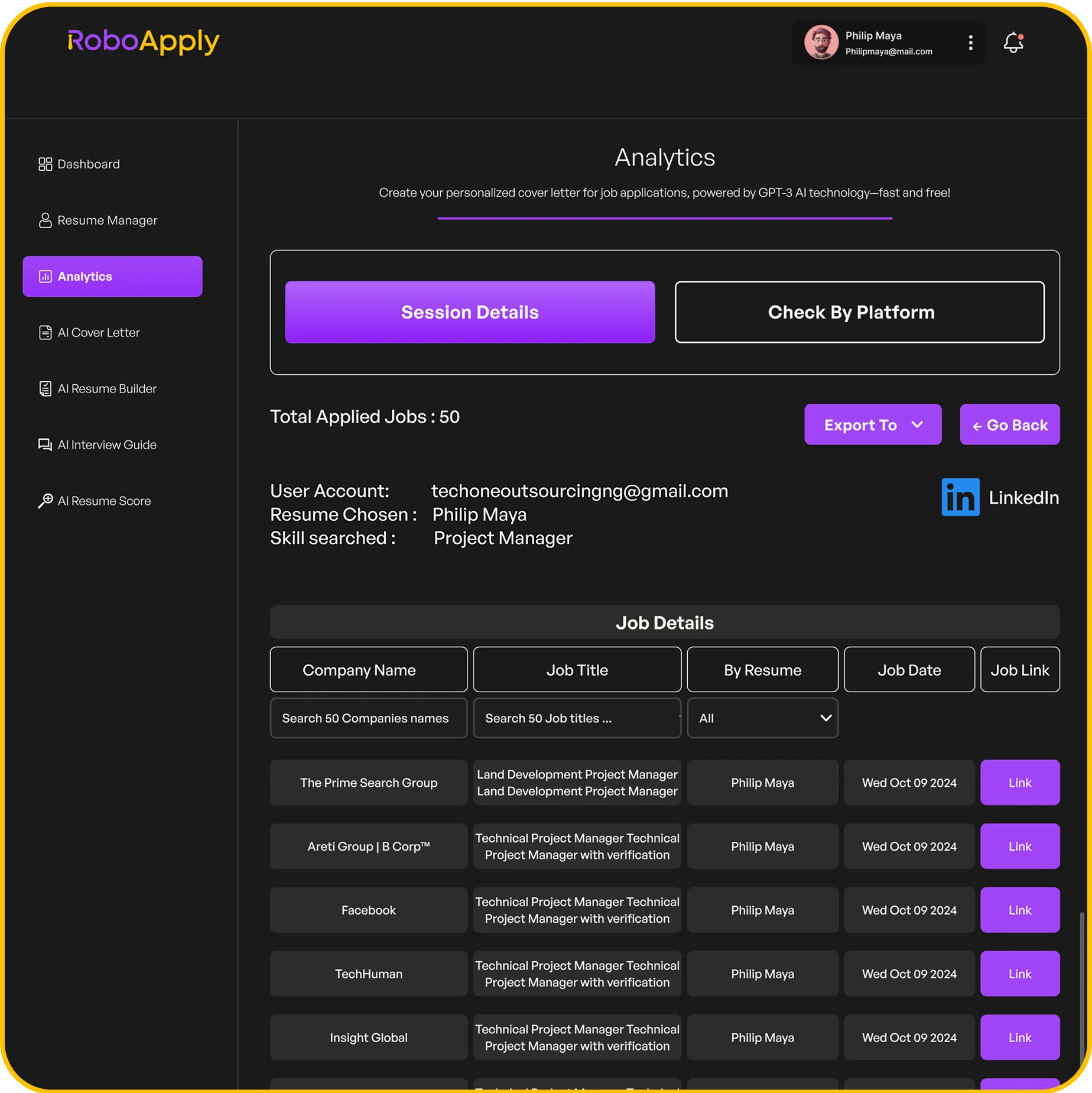
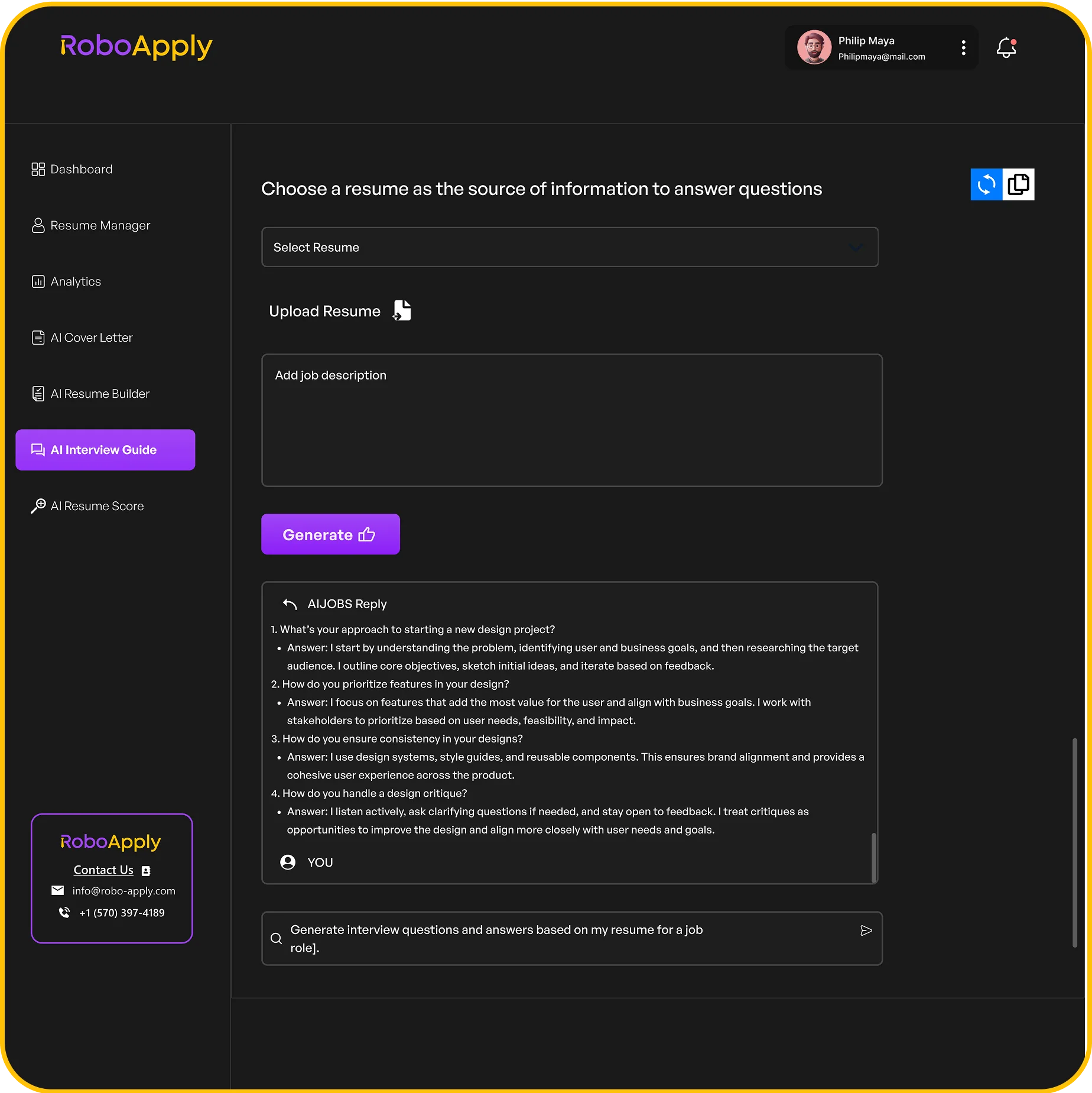
RoboApply’s AI Cover Letter Generator solves this problem efficiently. Input your civil engineering background and the job description. The AI creates a customized cover letter highlighting your most relevant projects and skills for that specific position.
The platform understands civil engineering terminology and can adapt your experience to different specialties. Whether applying for structural, transportation, or water resources roles, it emphasizes the right qualifications for each position.
You maintain full control over the final content. Review and edit the generated letter to add personal touches or specific project details. The system handles the structure and initial customization, saving hours while maintaining quality.
The AI Resume Builder creates matching resumes that work alongside your cover letters. This consistency across application documents presents a professional, coordinated package to employers.
When you’re applying to multiple positions, the AI Auto Apply feature submits complete applications automatically. This lets you focus on preparing for interviews rather than repetitive application tasks.
For guidance on other application elements, check out how many bullet points per job on resume and whether you should put references on a resume. Understanding how many jobs are available in basic industries helps you target your applications strategically.

Download Professional Civil Engineer Cover Letter Templates
Frequently Asked Questions
How long should a cover letter for civil engineer positions be?
A civil engineer cover letter should be one page maximum, typically 3-4 paragraphs. Focus on your most relevant projects and achievements rather than comprehensive career history.
Should I include my PE license in a civil engineer cover letter?
Yes, mention your PE license prominently in the opening paragraph if you have one. Include your EIT status if you’re pursuing licensure. Professional credentials matter significantly in civil engineering.
What technical skills should appear in a civil engineering cover letter?
Include software proficiency (Civil 3D, Revit, analysis programs), relevant codes and standards, design methodologies, and project management capabilities. Match skills to the specific job requirements.
How do I address employment gaps in my civil engineer cover letter?
Address gaps briefly and positively if they’re significant. Mention relevant activities during the gap like additional training, certifications, or professional development. Focus primarily on your qualifications.
Should I mention salary expectations in my civil engineer cover letter?
No, avoid salary discussions in your cover letter unless the job posting specifically requests this information. Salary negotiations happen after you’ve demonstrated your value through interviews.