


A customer service cover letter introduces your skills to hiring managers before they read your resume. Most people send the same boring letter to every company. Big mistake. Your letter needs to stand out in those first few seconds or it’s going straight to the trash.
Hiring managers get hundreds of applications. They spend maybe six seconds looking at each one. That’s your window to prove you can talk to customers, solve their problems, and handle pressure. Your letter has to show these things fast with real examples.
This guide shows you how to write a customer service cover letter that gets interviews. You’ll see examples for different experience levels and learn what to write in each section. No fluff, just what works.
What Hiring Managers Actually Look For
Your cover letter needs to answer one question: can you handle customers? Employers want proof you’ll make their brand look good, fix problems fast, and keep customers happy. Saying “I’m great with people” means nothing.
Good letters show real examples. Don’t write “I resolved customer complaints.” That’s boring. Instead, say something like “I turned an angry customer into a repeat buyer by replacing their damaged item same-day and throwing in a 15% discount code.” Now that tells a story.
Keep it to one page with three or four short paragraphs. Use Arial or Calibri at 11-point size. One-inch margins all around. Find the hiring manager’s name if you can instead of writing “To Whom It May Concern.”
Skills That Get You Noticed
Customer service jobs need specific abilities. Your letter should show these with proof, not just claims you can’t back up.
Here’s what matters:
- Talking clearly in person and in writing
- Fixing problems when customers get upset
- Staying calm when things get crazy
- Juggling multiple tasks at once
- Learning new stuff quickly
- Working with other teams
- Spotting mistakes before they blow up
- Keeping upbeat when it’s busy
Pick two or three skills the job posting mentions. Add real numbers. “I handled 60 calls daily” beats “I answered lots of calls” every time. Numbers prove you can actually do the work.
Mistakes That Kill Your Chances
Small screw-ups can end your shot before you get an interview. Watch out for these problems.
Sending the same letter everywhere is the worst mistake. Hiring managers spot copy-paste jobs instantly. They want to see you read their posting and get what they need. Use the company name a few times and talk about stuff from their job listing.
Focusing on what you want instead of what you offer turns people off fast. Nobody cares that you need flexible hours. They care about fixing their customer problems. Every sentence should be about helping them.
Repeating your resume word-for-word wastes time. Your letter should add details and context. Tell the stories behind those resume bullet points.
Typos tell employers you’re sloppy. That’s terrible for customer service where one wrong number wrecks a relationship. Read it three times. Have a friend check it too.
Download Your Free Customer Service Cover Letter Templates
Get templates you can use right away. We’ve got versions for entry-level people, experienced pros, and career changers.
Download the files, swap out the placeholder text with your info, and adjust the examples to fit your background. Simple as that.
Entry-Level Customer Service Cover Letter Example
Your first customer service cover letter feels tough when you don’t have much experience. Maybe you think retail or restaurant work doesn’t count. Wrong. It totally counts. You just need to show how that work built the right skills.
Sarah worked retail at a bookstore for three years. She didn’t say sorry for being new. She led with her best stat: helping 75 customers every day during busy times. That proved she could handle lots of people and stay cool under pressure.
Her smartest move was telling a specific story. She noticed customers kept getting frustrated about the same inventory problem. She came up with a new labeling system that cut complaints by 40% in two weeks. That showed she takes initiative and gets results.
She also looked up the company and mentioned their training programs. That told the hiring manager she wants to stick around and grow, not just grab a paycheck.
What Makes This Work
Good entry-level letters focus on skills you can transfer, not fancy job titles. Sarah’s inventory story proved she solves problems. That’s what hiring managers want to see.
Numbers make everything more believable. “Helped many customers” sounds weak. “Assisted 75 customers daily” gives proof you can handle the load.
Show you actually care about this specific company. Mention something from your research. Talk about their values or programs or recent news.
Don’t say stuff like “I know I don’t have experience, but…” That makes them doubt you before you even start. Just present what you’ve got confidently.

Experienced Professional Example
When you’ve got years of customer service under your belt, your letter needs to show results and leadership. Entry-level tactics won’t cut it anymore.
James had seven years in financial customer support. He opened strong: he consistently beat performance targets. Then he backed it up fast with proof.
He handled tough account questions for high-value clients while training five newer people. Last year, he fixed 98% of problems on the first try. He kept a 4.8 out of 5 satisfaction score. Those numbers prove he’s legit way better than just saying he’s good.
His best example showed he thinks bigger than just his own work. When the company got a new system, he wrote training guides that cut new hire onboarding by three days. That’s the kind of contribution that gets you hired.
He tied everything to what the company needed. He’d researched them and saw they focus on personal service for premium clients. He explained how his style matched that perfectly.
Standing Out at This Level
Experienced people need to build letters around real achievements with numbers. “I’m excellent at customer service” means zero at this stage. You need stuff like “98% first contact resolution” or “4.8 out of 5 satisfaction score.”
Show how you’ve grown. If you started basic and now handle complex stuff or train others, talk about that. It proves you learn and take on more.
Name specific tools you know. Salesforce, Zendesk, whatever systems you’ve used. Details show expertise and mean they’ll spend less time training you.
Connect your background to what they need. If they’re rolling out new tech, mention times you’ve handled system changes. Match your experience to their situation.
Career Change Example
Switching careers means you need to connect your old job to customer service without making people worry about why you’re leaving.
Maria moved from nursing to customer service. She mentioned the switch in one sentence without making a big deal about it. Then she immediately showed how nursing built customer service skills.
She turned healthcare experience into customer service experience. Talking to patients became talking to customers. Calming down worried families became handling difficult customers. Medical knowledge became an asset for healthcare customer service jobs.
She used patient satisfaction ratings to prove her customer skills. Those work exactly like customer satisfaction scores anywhere else. Her awards for compassionate care showed she handles stress well and stays professional.
Making Your Switch Work
Career changers should mention the switch once, then move straight to transferable skills and what you’ve achieved.
Find connections between your old field and customer service. Teachers manage tough personalities and explain complicated stuff simply. Accountants stay accurate under pressure. Salespeople already know relationship-building.
Target companies where your background helps. Maria’s nursing works great for healthcare customer service because medical knowledge actually matters there. Teachers applying to education companies can talk about understanding student needs.
Don’t explain why you’re leaving unless they ask. Hiring managers care about what you’ll do for them, not your personal reasons. Stick to skills and value.
How to Write Each Section
Breaking your letter into sections makes it easier. Each part does something specific.
Opening Paragraph
Your first paragraph needs three things in two or three sentences. Say the exact job title, mention how you found it, and give one strong qualification.
Start with punch, not fluff. “I am excited to apply” is boring. “I am applying for the Customer Service Representative position at TechCorp, bringing five years resolving technical issues for software users” sets you up right away.
If someone at the company told you about the job, say their name first thing. Referrals matter because companies trust their people’s judgment.
Skip “I am writing to express my interest” or “Please consider this letter.” Everyone knows what a cover letter is. Use the space to prove you’re qualified.
Middle Paragraphs
This part proves you can do the job. Use one or two paragraphs with specific examples and real numbers.
Pick examples that match what they want. If they keep mentioning “difficult customers,” show a time you rocked that. Read the posting carefully and see what they emphasize.
Keep it simple: situation, action, result. Say what happened, what you did, what changed. Add numbers when you can. This gives context without dragging on forever.
Use metrics. Satisfaction scores, how fast you fix things, how many customers you help, improvements you made. “I handled complaints” is weak. “I resolved 35 complaints weekly with 93% satisfaction” proves you’re good.
Don’t list duties. They know what customer service people do. Show what you accomplished and how well you did compared to others.
Closing Paragraph
Wrap up by saying you want an interview and thanking them. Keep it short.
Suggest next steps without being pushy. “I’d love to discuss how my experience can help your team” works well. Shows interest, stays professional.
Thank them for their time. “Thank you for considering my application” does the job.
Don’t sound desperate. Skip “Please call me ASAP” or “I really need this job.” That hurts your position and makes you look weak.
End with “Sincerely” or “Best regards” and your name.
Industry-Specific Tips
Different customer service jobs need different approaches. Retail isn’t the same as tech support. Adjust based on the industry.
Retail Customer Service
Retail wants speed, multitasking, and face-to-face skills. Show you handle fast-paced environments where you’re helping multiple people at once.
Mention point-of-sale systems, inventory stuff, or loss prevention if you’ve done it. Retail employers want to know you handle tech aspects, not just chitchat.
Talk about sales if that’s part of the job. Many retail roles mix sales with support. If you hit sales goals while keeping customers happy, that’s gold.
Bring up busy times you’ve handled. Black Friday, holidays, back-to-school rush. Proves you perform when it gets crazy.
Call Center Jobs
Call centers need phone skills and following scripts without sounding like a robot. Mention any phone customer service or sales experience.
Say your typing speed if it’s 50 words per minute or better. Call centers need you to type while talking. Fast typing without losing track matters.
Include phone metrics if you have them. Handle time, calls per hour, first call resolution. That’s how managers measure performance.
Mention CRM systems or help desk software you know. Zendesk, Freshdesk, whatever. Shows you’ll get up to speed fast.
Technical Support
Tech support needs people who can explain hard stuff simply. Show you troubleshoot step-by-step and guide customers through fixes patiently.
List tech skills, programs, or systems you know. Even if they use different products, general tech skills help. Programming languages or IT certs matter too.
Talk about staying patient with confused users. Tech support means staying calm when people are upset because stuff’s broken.
Mention documentation or tutorials if you’ve made them. Lots of tech support includes writing help articles, not just talking to customers.

Tools That Make This Faster
Writing custom letters for every job takes forever. You research companies, adjust examples, make sure everything fits. It slows you down when you’re applying to lots of places.
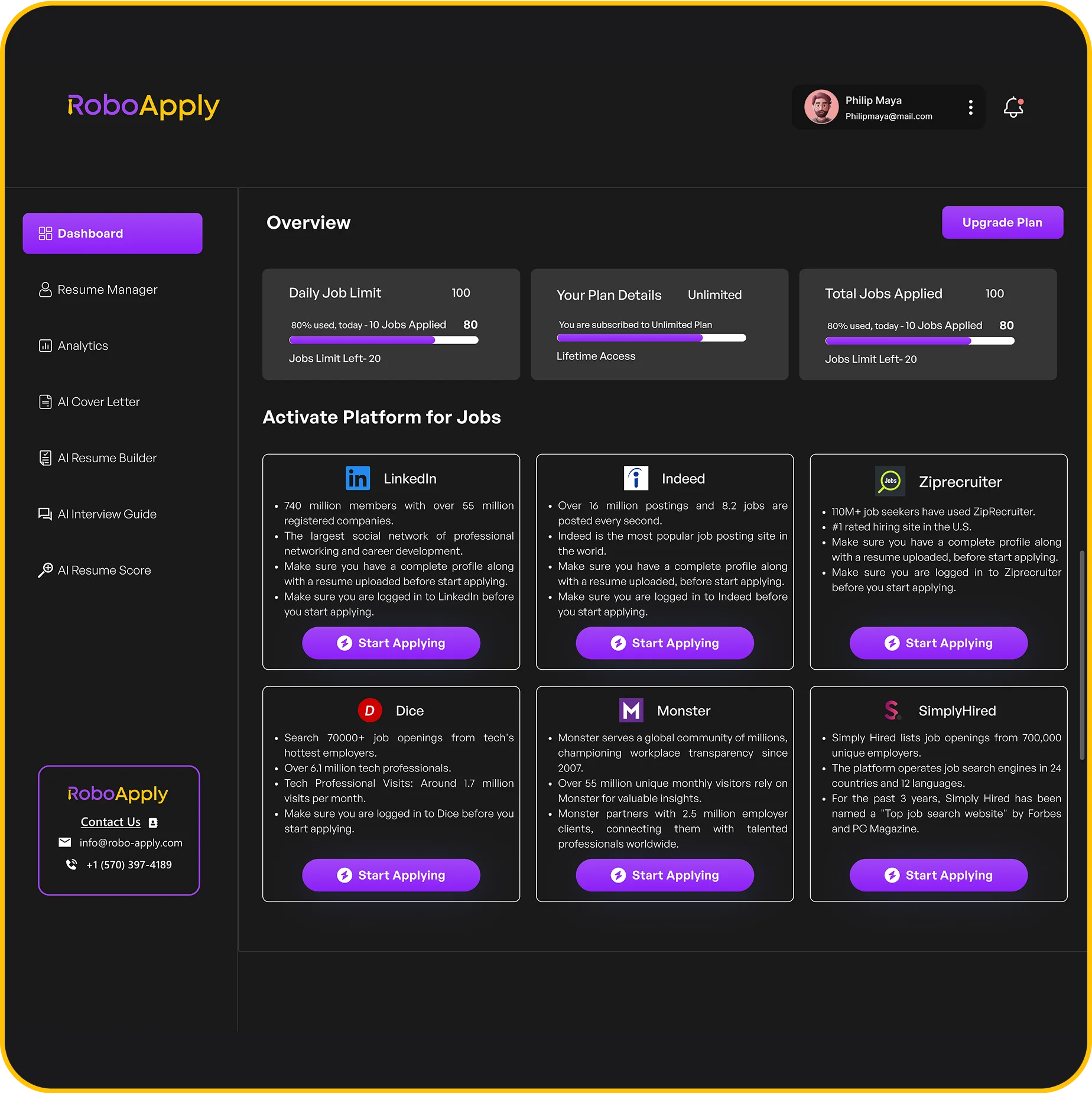
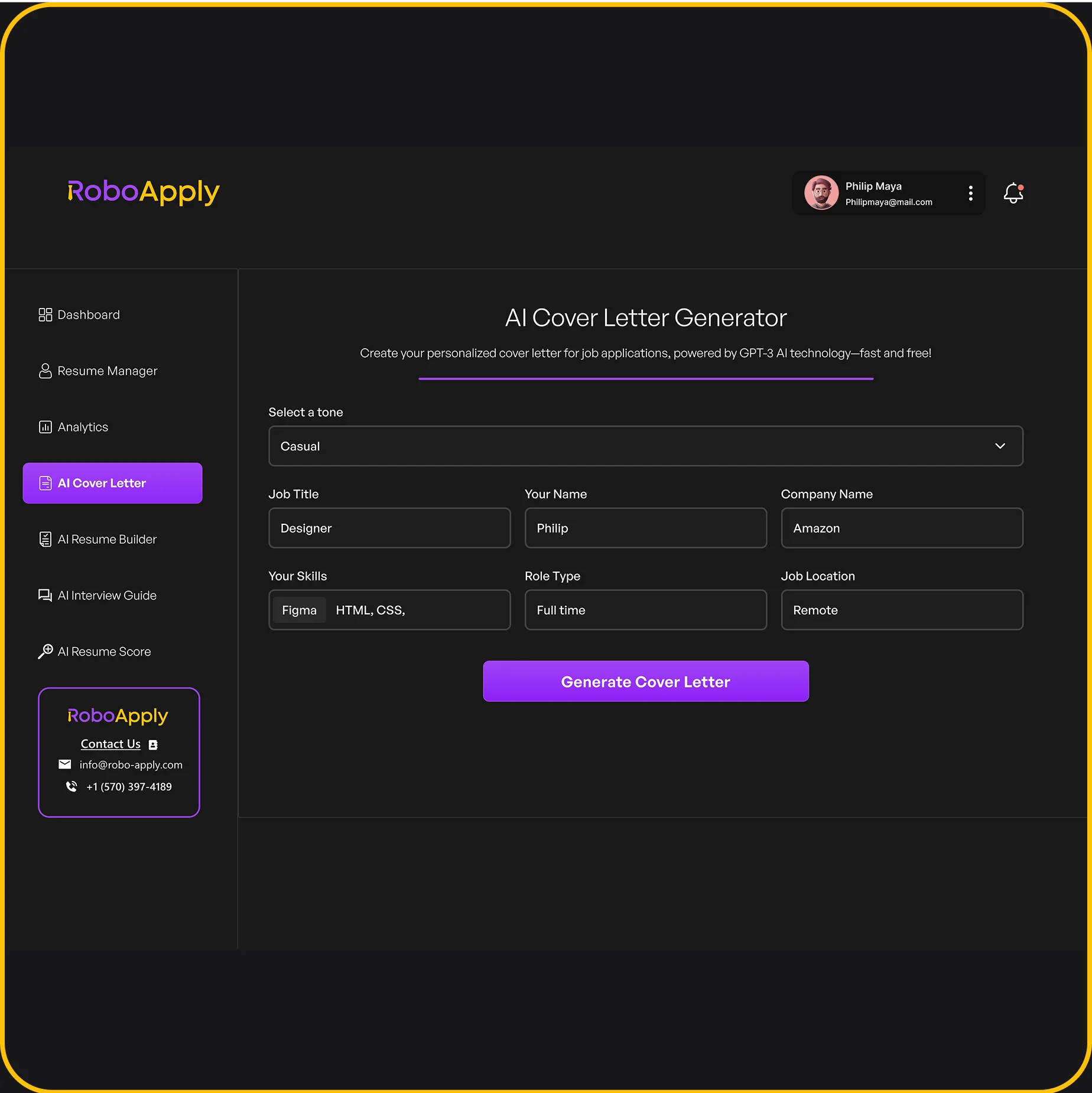
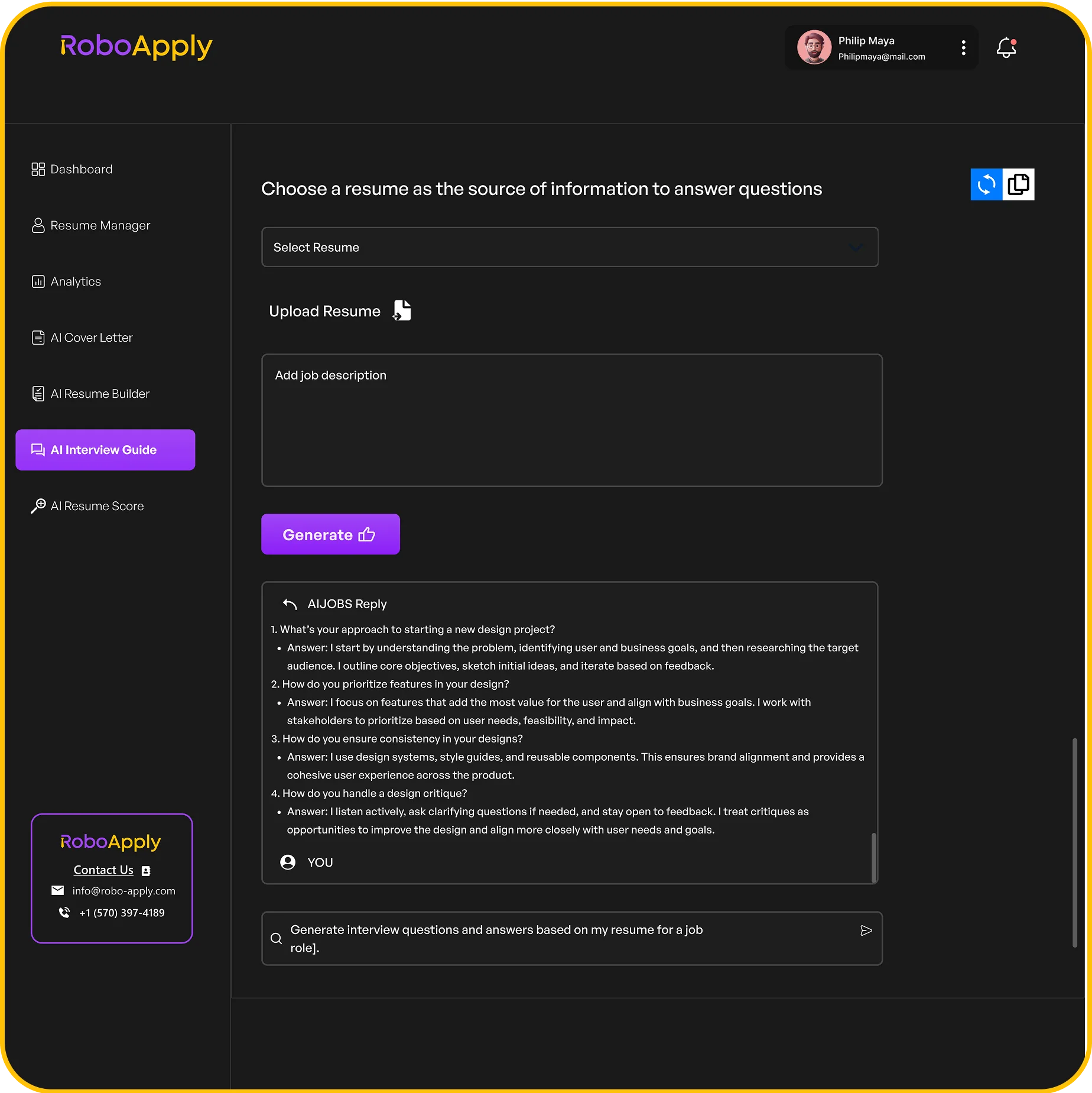
RoboApply’s AI Cover Letter Generator makes personalized customer service cover letters in under a minute. Upload your resume, paste the job description. The AI writes a custom letter highlighting your best stuff for that job.
It adds keywords from the posting so you pass applicant tracking systems. Pick from professional, confident, or friendly styles. Every letter is ATS-optimized and ready to send.
More Features That Help
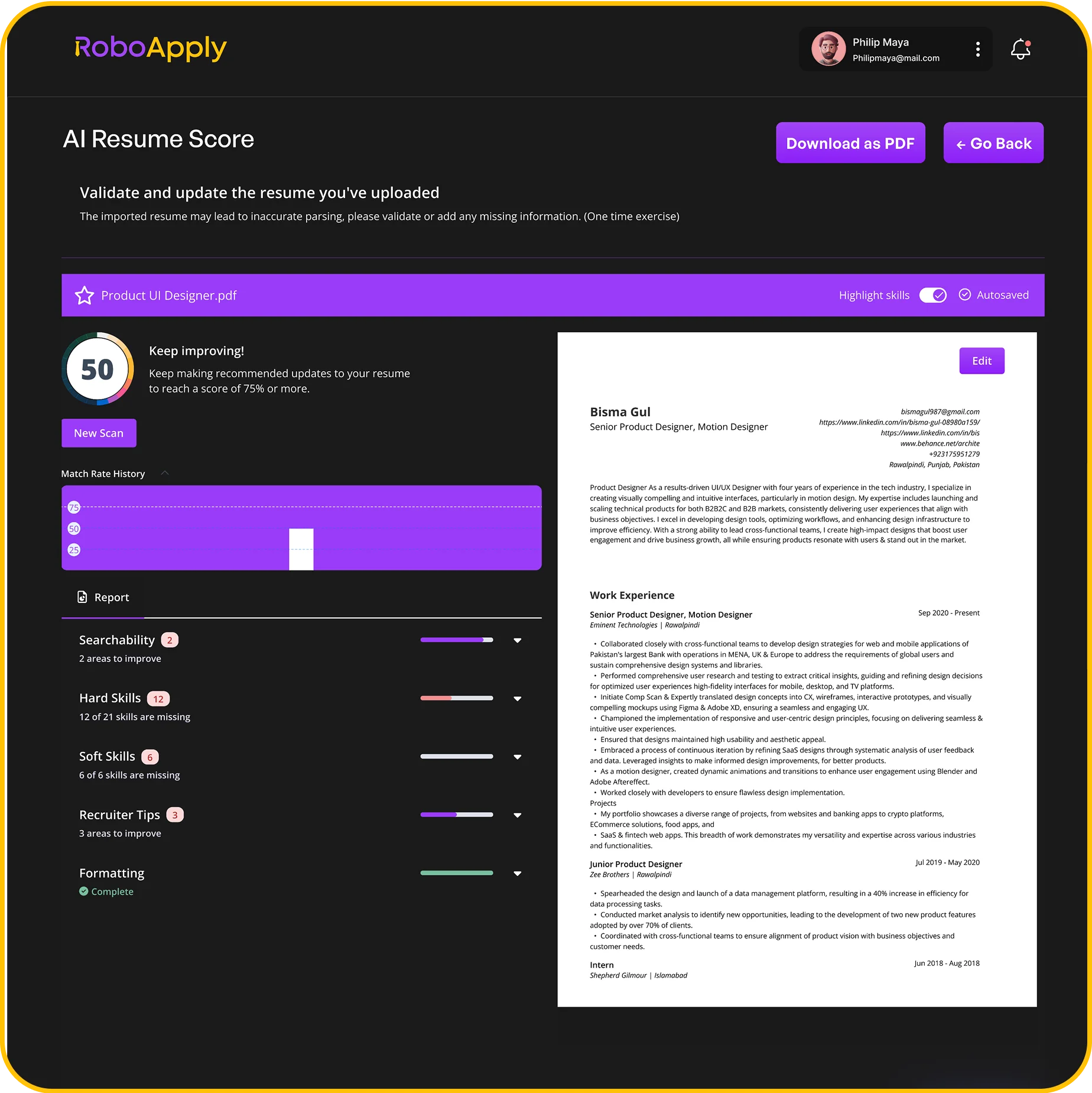
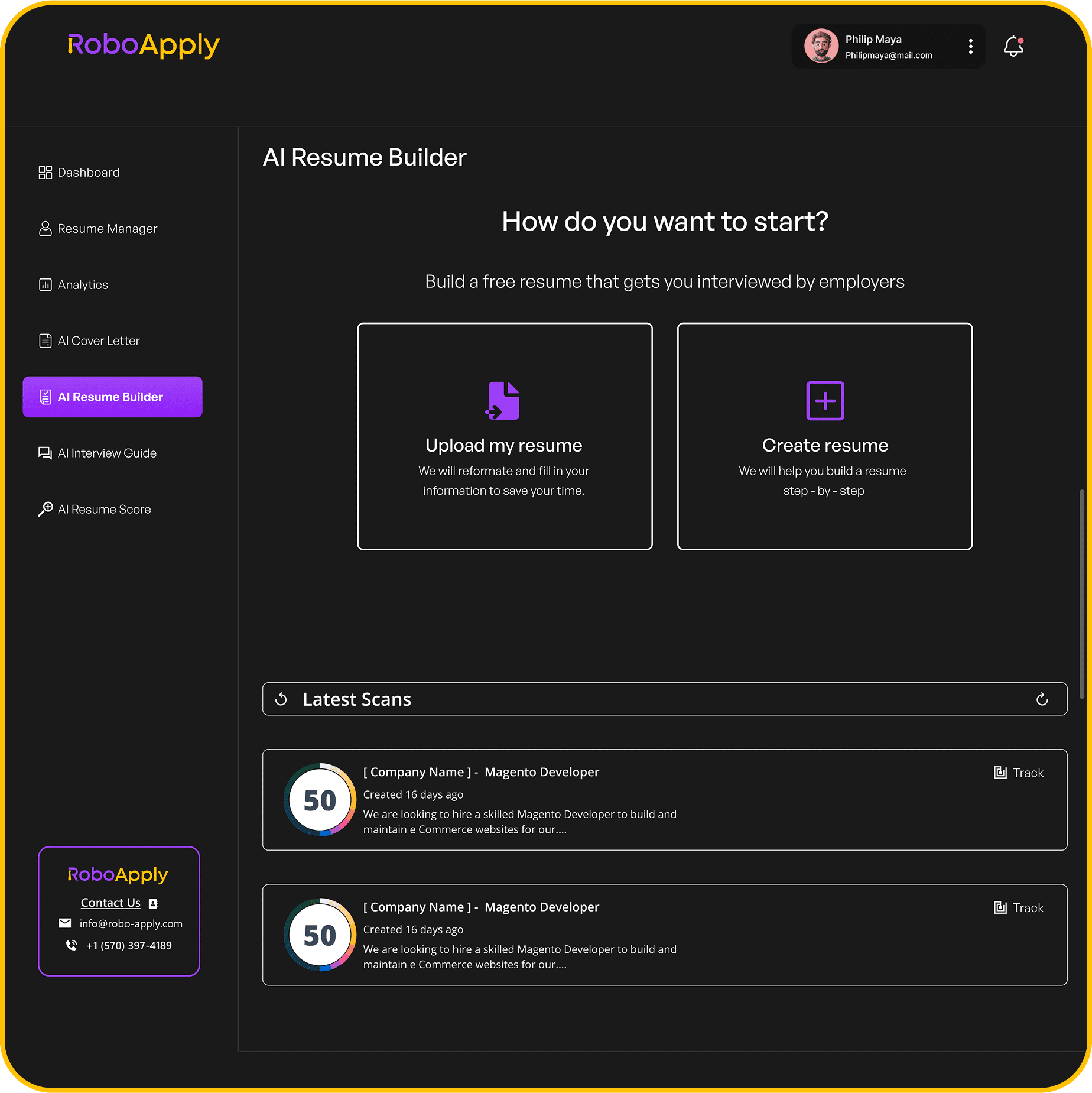
RoboApply does other annoying job search stuff too. The AI Resume Builder makes ATS-friendly resumes matching your target jobs. Generate different versions for different job types without starting over.
AI Tailored Apply adjusts your resume for each application automatically. It reads job descriptions and changes your resume to match without messing up your core info. Gets you way more interviews.
AI Auto Apply goes further by applying to jobs automatically. Set preferences for job type, location, salary. It finds matching jobs and submits applications with custom resumes and letters while you prep for interviews.
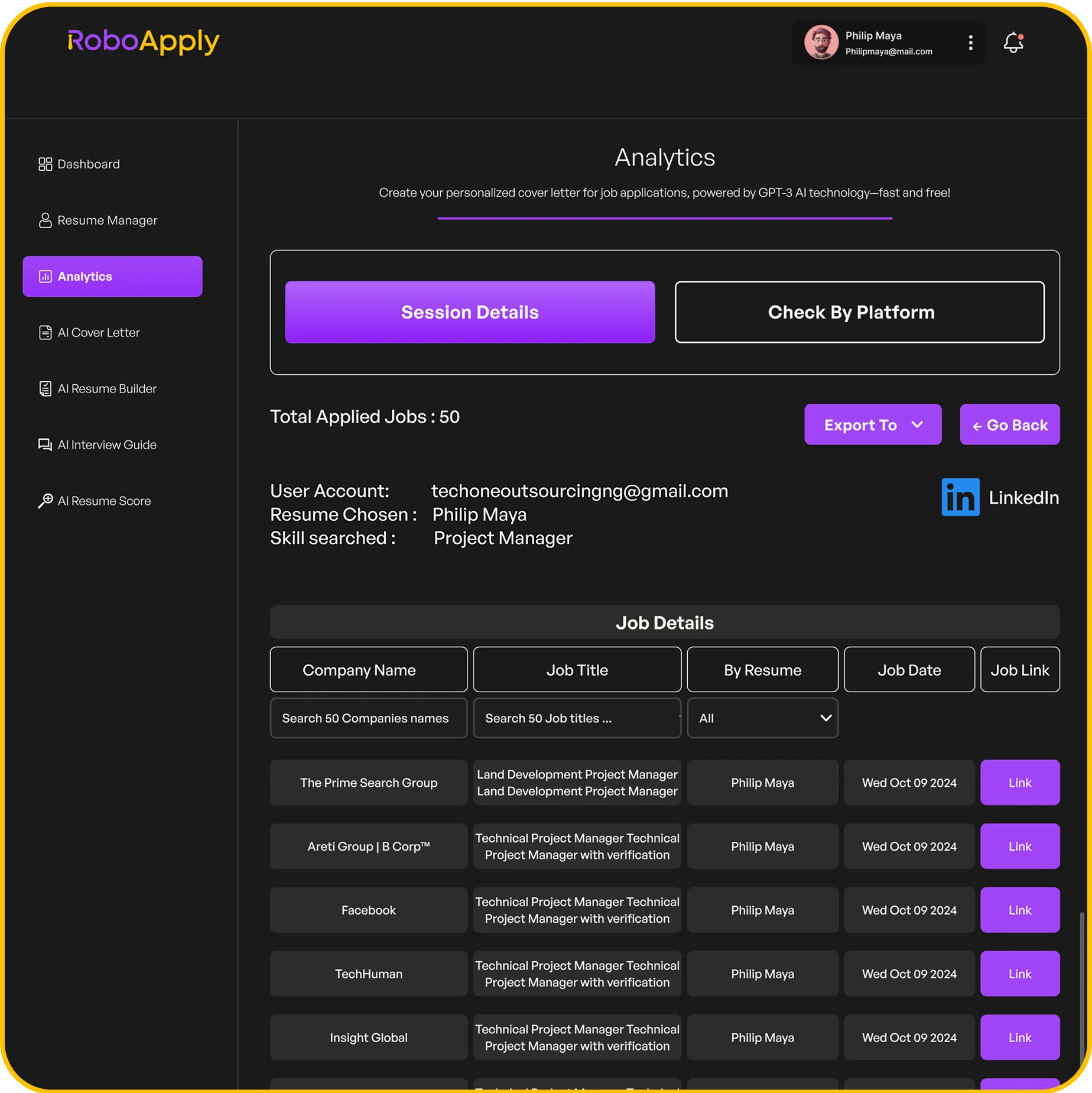
Track everything in one dashboard with analytics. See where you applied, monitor response rates, export your history. Keeps you organized without spreadsheets.
Frequently Asked Questions
How long should a customer service cover letter be?
One page max. Around 250-400 words in three or four short paragraphs works best.
Should I mention salary requirements?
Only if the posting asks for it. Otherwise save that talk for interviews.
Can I use the same letter for multiple jobs?
Never. Customize each one with company names, job requirements, and examples for that specific position.
What if I don’t know the hiring manager’s name?
Check the company website or LinkedIn. Use “Dear Hiring Manager” only if you really can’t find it.
How soon should I follow up?
Wait one week after the deadline. Then send a quick professional email saying you’re still interested.